

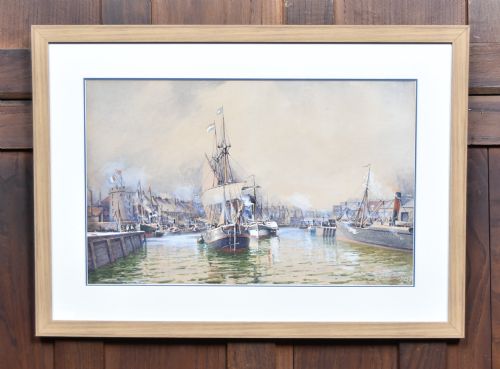
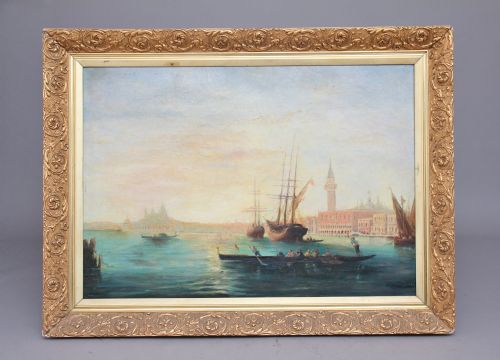


Antique Maritime Water Scene
An antique maritime water scene brings the motion of the sea, rivers and canals directly into a room through nineteenth-century and early twentieth-century works.
Antique Maritime Water Scene
When you search for an antique maritime water scene, you encounter paintings on canvas, card and paper capturing coastal views, rough waters, and calm rivers. These works span the nineteenth century and the Edwardian era, showing both British and European subjects.
You are most likely to meet oil paintings on canvas and watercolours depicting vessels ranging from steamships and frigates to barges and fishing boats. The water ranges from stormy seas to tranquil Venetian canals and French river landscapes.
The styles recorded across these pieces include Impressionism, Victorian marine art, and works by the British and European schools. Whether painted plein air in Normandy or rendered in the studio, each piece records a distinct aquatic atmosphere.
How they were made
Artists painted these scenes using oil paint on canvas or card, and watercolour on paper, often framed beneath glass within wood and gesso frames. The handling of the medium determines how water, light, and sky are rendered.
Plein air techniques allowed painters to capture atmospheric conditions directly beside rivers and canals, while studio works built up oil paint and grisaille tones to depict turbulent open seas and shipwrecks.
Antique Maritime Water Scene Retail Price Guide 2026
Typical asking prices for maritime water scene among the pieces listed under this phrase on Sellingantiques today, from the lower quarter to the upper quarter. They describe what is for sale here now, not the wider market.
Listings feature works from the nineteenth century, the Victorian period, and the Edwardian era, spanning watercolours and oil paintings.
What varies in quality
Quality depends on the precision of the brushwork and the artist's ability to convey movement in water and weather in the sky. Works with confident handling of light and atmospheric depth stand apart from simpler decorative pieces.
The preservation of the medium, whether oil on canvas or watercolour on paper, alongside the condition of the original wood and gesso frames, influences the overall character of the piece.
F Corpuz·Jan van Couver·Armand Guillaumin·Marie-Edouard Adam·William Knox·Arthur Joseph Meadows·Carleton Grant
The Antique Maritime Water Scene Glossary
- Oil on Canvas
- Pigment mixed with drying oil applied to a stretched cloth surface. This technique allows for rich textures and deep colour layering.
- Watercolour
- Pigment suspended in a water-based solution applied to paper. It creates luminous, transparent washes particularly suited to coastal light.
- Grisaille
- Painting executed entirely in shades of grey or neutral monochrome. This method often serves to study light and form before adding colour.
- Plein Air
- Painting outdoors to capture direct natural light and atmosphere. Artists using this approach worked on site beside rivers and canals.
- Gesso
- A paint mixture consisting of a neutral binder mixed with chalk or plaster. It forms the smooth base layer often gilt on period frames.
Antique Maritime Water Scene: Frequently Asked Questions
How do I date a maritime painting?
Dating relies on the recorded period, the style of the vessel depicted, and the materials used such as canvas, paper, or gesso frames.
Examining the artist's recorded active years and the framing techniques provides further context for the age of the work.
What is the difference between watercolour and oil?
Watercolour works utilise water-based pigments on paper under glass, offering a transparent and luminous finish suited to calmer canal scenes.
Oil paintings use pigment bound in oil on canvas or card, allowing for heavier impasto textures to render stormy seas and rough waters.
Where were these water scenes painted?
These scenes originate from British and European locations, recording coastal views, Venetian lagoons, French rivers, and Welsh shores.
Artists frequently travelled to specific ports and riverbanks to paint plein air or gathered studies for studio compositions.
How should I hang an antique painting?
Hang these works away from direct sunlight and moisture to protect the paper, canvas, and original wood or gesso frames.
Ensure the wall fixings safely support the combined weight of the artwork and its period frame.