



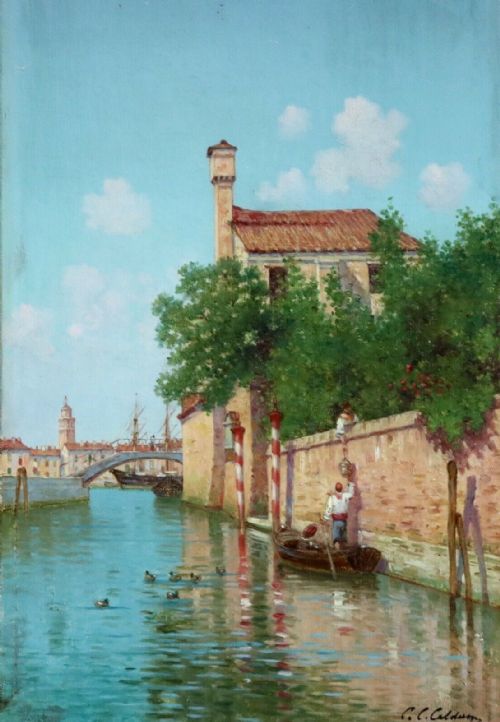


Vintage Italian Cityscape Oil
A vintage italian cityscape oil captures the light and architecture of historic southern streets and canals, bringing immediate character and colour to a room.
Vintage Italian Cityscape Oil
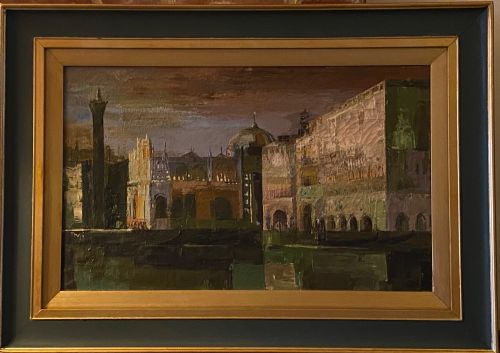
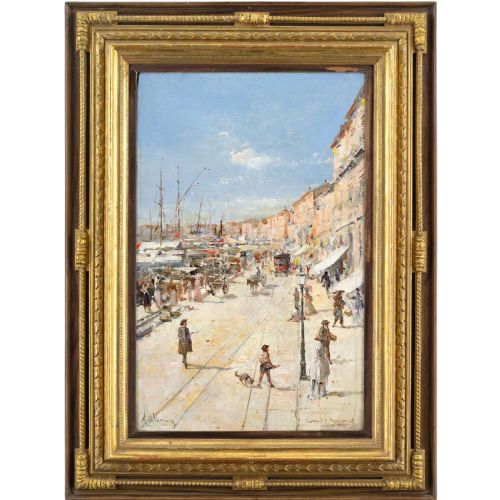
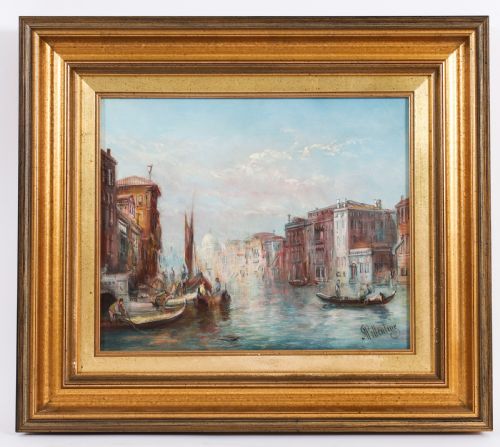
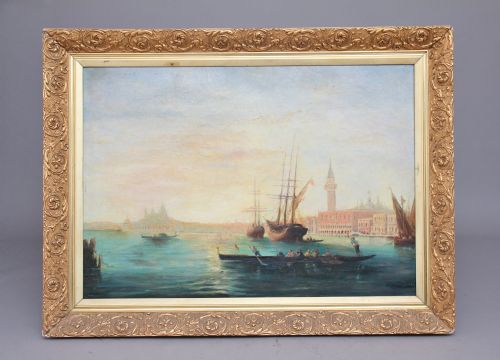
A vintage italian cityscape oil draws the eye to familiar historic locations such as Venice, Messina, Padua, and various Italian coastal or urban settings. These works range from nineteenth-century realism and Victorian interpretations to mid-century impressionism, capturing changing decades of artistic observation.
The most common subjects encountered here focus on Venetian canals, lagoons, and palazzos, rendered with varied handling of light and water. Painters depict gondolas beneath bridges, cathedral facades, and bustling thoroughfares from periods spanning the late nineteenth century through to the mid-twentieth century.
Works appear on canvas and wood panels, sometimes housed in giltwood and gesso frames that reflect the decorative tastes of their respective eras. Buyers encounter pieces bearing specific artist signatures alongside anonymous topographical studies created during the same decades.
Materials and construction
Painters applied oil paint directly onto stretched canvas or wooden supports, layering pigments to achieve depth in water, stone, and sky. The medium allows for both smooth, realistic detail and thick, impressionistic brushwork depending on the chosen style.
Surviving frames combine carved wood with applied gesso and gilt finishes, providing structural support and framing appropriate to the period. These frames frequently show the original patination and minor wear consistent with age.
Vintage Italian Cityscape Oil Retail Price Guide 2026
Typical asking prices for vintage italian cityscape oil among the pieces listed under this phrase on Sellingantiques today, from the lower quarter to the upper quarter. They describe what is for sale here now, not the wider market.
Gondolieri frequently peer out from beneath historic bridges in these canvases, seemingly unbothered by centuries of artistic scrutiny.
Assessing quality
Quality rests in the confidence of the brushwork and the artist's ability to capture natural light and atmospheric perspective across architectural surfaces and water. Stronger compositions demonstrate careful control of tone and proportion, whereas simpler works rely on repetitive formulaic details.
The preservation of the pigment layer and the originality of the canvas support influence the overall integrity of the piece. Period frames that complement the painting without later alterations contribute further to the historical completeness of the artwork.
Augusto Alberici·Alfred Pollentine·Antonio DeVity·Claude Jousset·William Raymond Dommersen·Emanuele Cappello·Charles Clement Calderon
The Vintage Italian Cityscape Oil Glossary
- Canvas
- A heavy woven fabric stretched across a wooden frame to serve as a support for oil painting. It provides a flexible and durable surface for the application of pigmented oils.
- Giltwood
- Wood that has been coated with a thin layer of gold leaf or gold paint. It appears frequently on the decorative frames enclosing period paintings.
- Gesso
- A traditional paint mixture consisting of a binder mixed with chalk, gypsum, or pigment. It was applied to wood frames to create a smooth surface before gilding.
- Impressionism
- An artistic style characterised by relatively small, thin yet visible brush strokes and an emphasis on accurate depiction of light. This approach appears frequently in mid-century interpretations of Italian urban scenes.
- Realism
- The attempt to represent subject matter truthfully without artificiality, avoiding artistic implausibility. Nineteenth-century examples often employ this approach to document specific architectural landmarks.
Vintage Italian Cityscape Oil: Frequently Asked Questions
How do I identify the date of an oil painting?
Examine the style of the brushwork, the preparation of the canvas, and any framing materials characteristic of specific decades. Signatures and inscriptions on the reverse often provide further clues to the period of creation.
Compare the architectural details and clothing depicted in the cityscape with historical records of the named Italian location to narrow down the timeframe.
Are these paintings created on canvas or wood?
The works utilise both stretched canvas and wooden panels as supports for the oil paint. Canvas remains the most frequent surface found among these topographical scenes.
Support types can often be identified by examining the reverse of the artwork where stretcher frames or wooden boards are exposed.
How should I care for an antique oil painting?
Keep the artwork away from direct sunlight and dramatic fluctuations in temperature and humidity to protect the canvas and paint layers. Dust the surface gently with a soft, dry brush without applying moisture or cleaning solutions.
Ensure the frame remains structurally sound and supports the painting evenly from the rear.
What subjects are most common in these cityscapes?
Venetian scenes featuring canals, lagoons, bridges, and historic palazzos dominate the available topographical views. Other works depict Sicilian streets, cathedral squares, and coastal towns across Italy.
Artists frequently returned to famous viewpoints along the Grand Canal or near major civic monuments.