
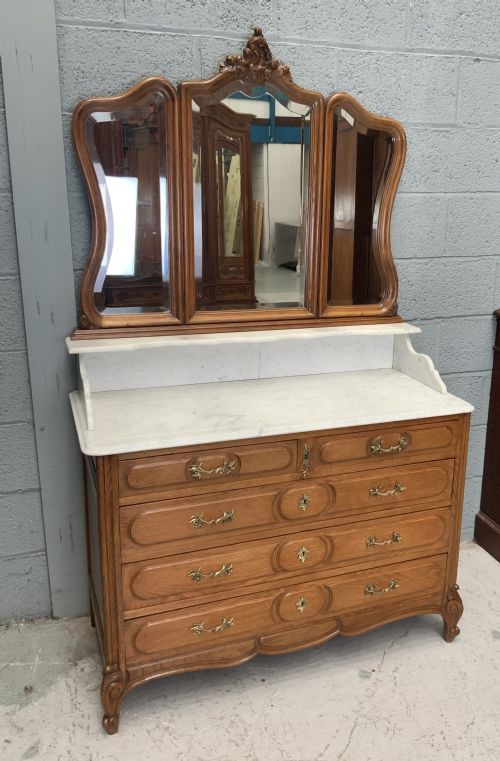


Antique Marble Vanity Table
An antique marble vanity table brings enduring stone surfaces and timber frames into the bedroom, offering a solid spot for grooming routines.
Antique Marble Vanity Table
When you search for an antique marble vanity table, you encounter pieces that historically functioned as washstands or dressing tables with stone surfaces. These domestic items span the Victorian, Edwardian, and nineteenth-century periods, reflecting shifting interior fashions.
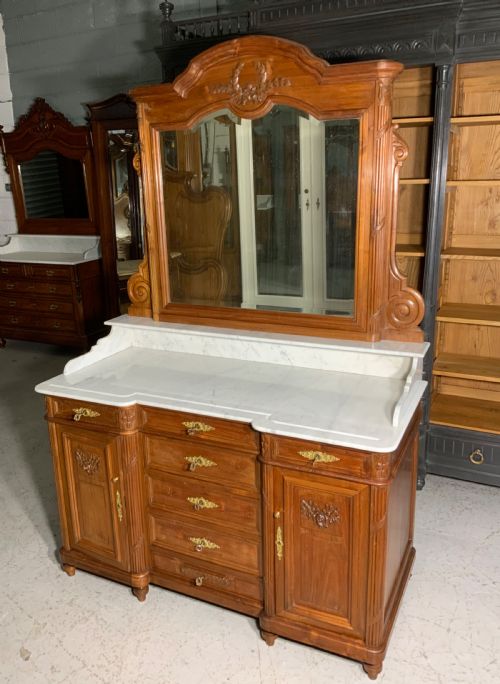
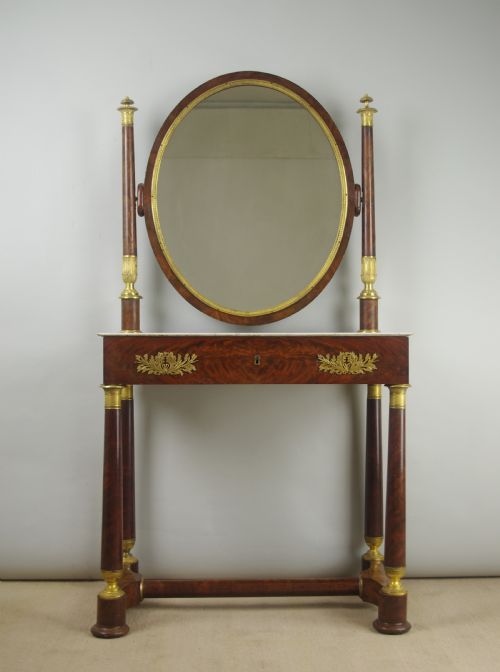
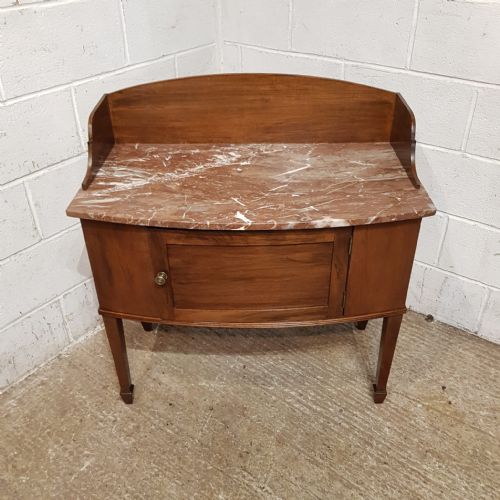
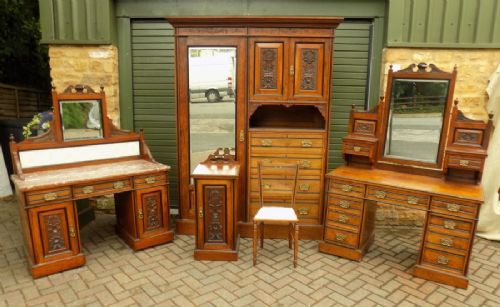
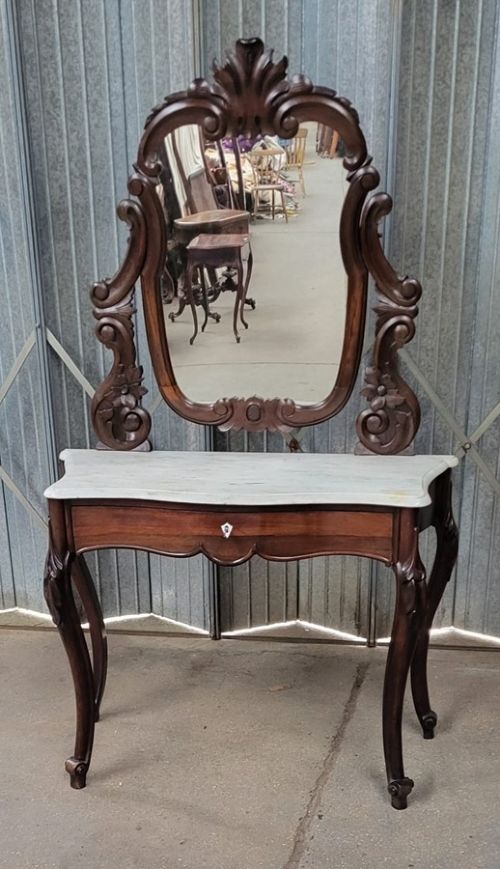
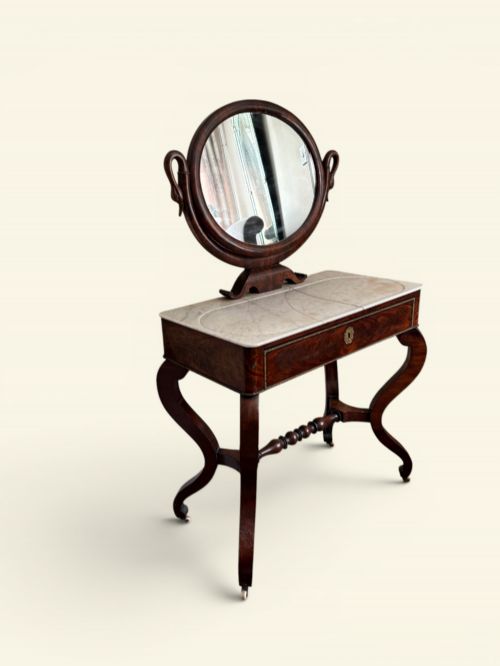
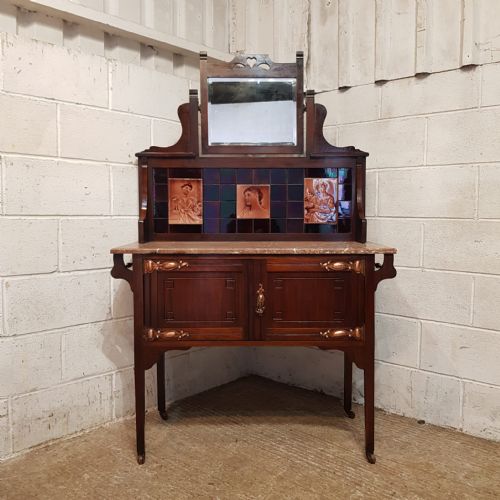
The most frequent form on this page combines a timber framework with a heavy stone top, often accompanied by tiled backs or swing mirrors. Examples range from French Empire mahogany formats to straightforward English pine and oak pieces.
Materials and construction
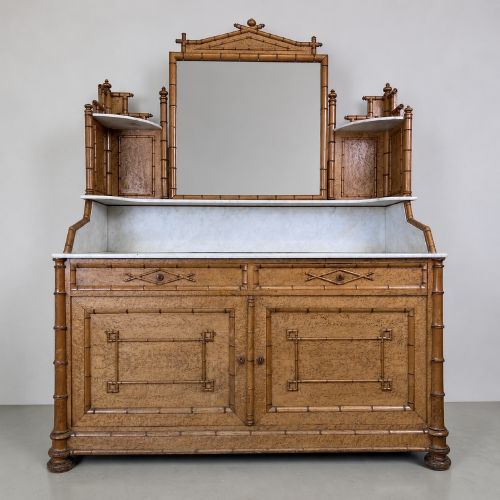
Cabinetmakers built the foundational frames using hardwoods and softwoods such as mahogany, walnut, oak, satinwood, and pine. Selected pieces incorporate decorative techniques like faux-bamboo turning or inlay work.
Slabs of marble form the defining upper surface, paired occasionally with ceramic tiles, brass mounts, or ormolu details. These heavy stone tops provided a durable, water-resistant counter for washing and grooming items.
Period styles recorded across the inventory include Victorian, Edwardian, French Empire, Art Deco, and the Aesthetic Movement.
Judging quality in construction
Superior examples display careful timber selection, such as burr walnut or bird's-eye maple, matched with finely figured marble slabs. The integration of bronze, brass, or ormolu mounts separates standard utility furniture from high-status decorative commissions.
Joinery standards dictate the longevity of these tables, visible in drawer construction and the stability of the stone-supporting frame. Pieces retaining original hardware, tiles, and mirrors demonstrate higher integrity than altered items.
The Antique Marble Vanity Table Glossary
- Washstand
- A piece of bedroom furniture designed to hold a basin and jug, frequently adapted today as a vanity table. Many incorporate marble tops to protect the wood from water splashes.
- Ormolu
- Gilded bronze mounts applied to the exterior of French and English furniture frames. This decorative detail adds metallic contrast to mahogany and walnut surfaces.
- Faux-bamboo
- A carved and painted wood finish imitating natural bamboo stems. This technique gained popularity during the nineteenth-century aesthetic movement.
- Duchess
- A grand style of dressing table featuring an attached mirror and supportive tiers. They often combine mahogany or satinwood with marble inserts.
- Tiled back
- A vertical section behind the marble top inset with ceramic tiles to protect bedroom walls. These tiles frequently display floral or geometric patterns.
Antique Marble Vanity Table: Frequently Asked Questions
How do I clean an antique marble top?
Wipe the stone surface using a soft cloth dampened with warm water and a neutral, pH-balanced soap. Avoid acidic cleaners, vinegar, or harsh abrasives that etch or dull the polished finish.
Dry the marble thoroughly after washing to prevent water spotting. For heavier grime, apply a specialised stone soap recommended for historic surfaces.
Were these tables originally used for washing?
Many pieces catalogued here served as washstands before functioning as modern vanity tables. They held ceramic basins, water jugs, and washing accessories.
The marble tops were selected specifically because stone resisted water damage better than bare timber during daily washing routines.
How can I date an antique vanity table?
Examine the timber species, hardware fixings, and overall stylistic movement to determine the era. Victorian and Edwardian examples often feature distinct design markers such as aesthetic tiles or satinwood crossbanding.
Construction methods within the drawers and the thickness of the marble slab also offer clues to the manufacturing decade.
Can I place these tables in a modern bathroom?
These tables adapt well to modern bathrooms or dressing areas when paired with appropriate plumbing and careful placement. The original marble top handles ambient moisture effectively if kept wiped down.
Ensure the timber frame avoids standing water on the floor and remains protected from excessive steam.