




Antique Marble Urn Lamps
These antique marble urn lamps bring classical form and warm light to a room through sculpted stone and cast metal mounts.
Antique Marble Urn Lamps
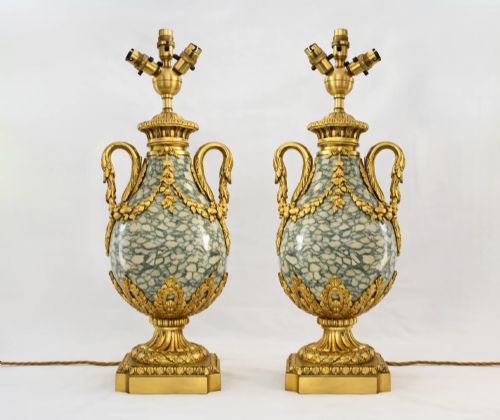
When you search for antique marble urn lamps, you encounter decorative vessels adapted for illumination during the nineteenth and early twentieth centuries. These pieces combine carved stone bodies with metal fittings to serve as prominent table lights.
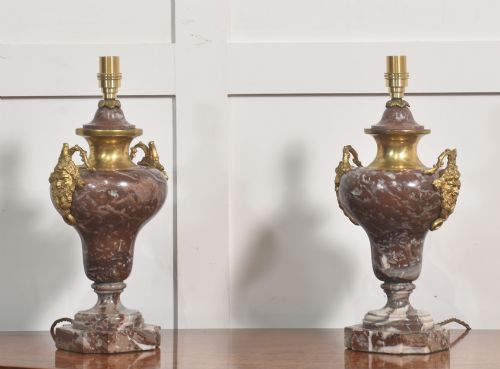
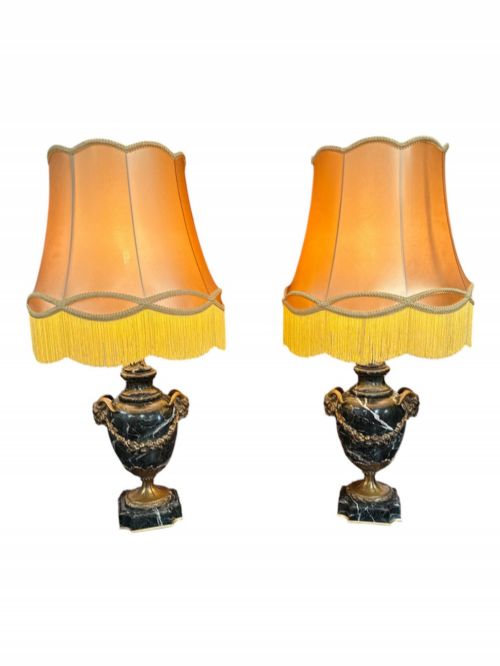
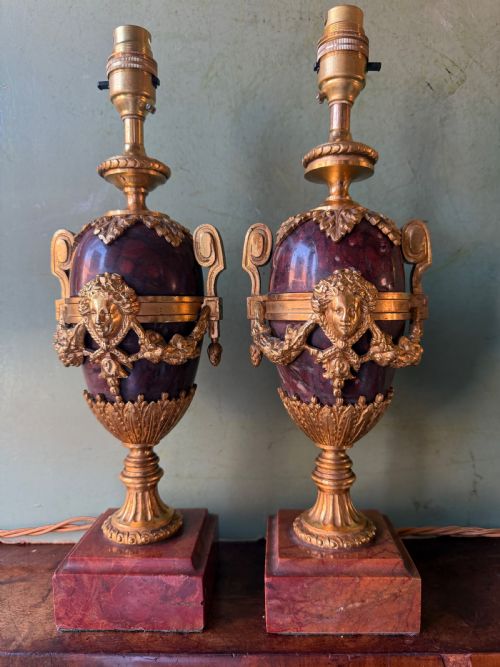
You are most likely to meet French examples styled after the Louis XVI period, often paired as matching sets. These pieces utilise rouge, white, or green marble paired with gilt bronze or ormolu mounts.
The form originates from classical urns and cassolettes, transformed through later adaptation into functional lighting. Alongside these, you find occasional Chinese export pieces incorporating stone and hardwood.
How they were made
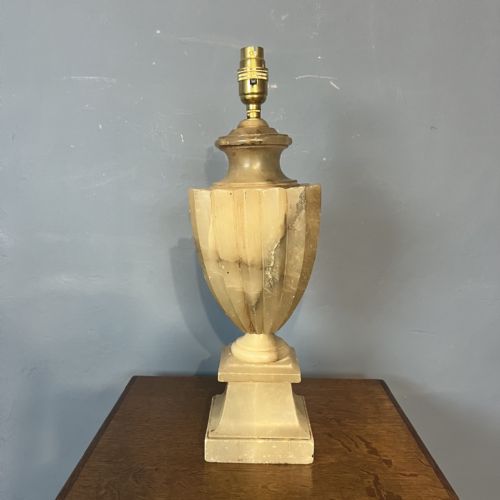
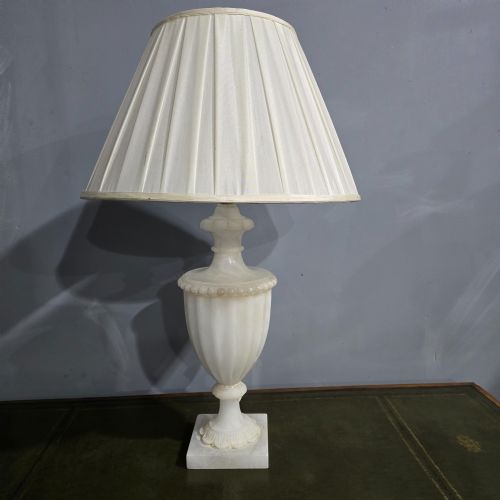
Maker's workshops turned solid blocks of marble and alabaster on lathes to create the central urn bodies, then polished the stone to a smooth finish. Craftsmen selected materials such as rouge marble, white marble, and translucent alabaster for their colour and grain.
Foundries cast brass, bronze, and ormolu mounts to embellish the stone bodies with classical motifs like acanthus leaves and paw feet. These metal components were fastened to the marble bases with threaded rods and nuts.
Several pieces stand on cast bronze paw feet, bringing a surprisingly beastly touch of the classical menagerie to the drawing room.
What varies in quality
The crispness of the bronze and ormolu casting dictates the visual depth of the mount work. Superior pieces display sharply chased details in the metalwork, whereas lesser examples show softer edges from worn moulds.
The choice of stone and the symmetry of the turning separate standard pieces from the finest examples. Richly figured marble matched across a pair indicates greater deliberation in selection.
The Antique Marble Urn Lamps Glossary
- Cassolette
- A decorative vessel with a reversible lid that functions as either an urn or a candle holder. In lighting conversions, these bodies house the electrical wiring.
- Ormolu
- Finely ground high-carat gold mercury-gilded to a bronze base. This technique gives the metal mounts a warm, enduring lustre.
- Rouge Marble
- A rich red limestone featuring white and grey veining. French makers frequently employed this stone for neoclassical garnitures.
- Alabaster
- A fine-grained translucent stone used for carved vessels. Its soft quality allows light to diffuse gently through the material.
Antique Marble Urn Lamps: Frequently Asked Questions
How do I choose a pair?
Look for matching stone grain and identical metal mounts when selecting pairs. Even slight variations in height or marble colour can disrupt the symmetry on a sideboard.
Examine the proportions of the urn body relative to the base and any visible metal mounts to ensure they originate as a matching set.
Where should I place them?
These lamps suit large sideboards, entrance halls, or drawing rooms where their vertical presence commands attention. Their classical proportions anchor heavier mahogany or walnut furniture.
Ensure the surface area is deep enough to accommodate the wide footprint of the marble bases and any projecting ormolu feet.
How do I date these lamps?
Dating relies on the style of the metal mounts and the turning of the stone body. Nineteenth-century pieces frequently adopt French Louis XVI revival motifs, while early twentieth-century examples show simpler proportions.
Examine the internal wiring channels and base construction for evidence of original period assembly methods.
Are these lamps heavy?
Solid stone bodies and cast bronze mounts give these pieces substantial weight. This heaviness provides stability on tables and stands.
Take care when lifting or moving them, supporting both the marble urn and the base simultaneously to avoid straining the central mounting rod.