
Antique Marble Drawers
Antique marble drawers combine solid cabinet-making with cool stone surfaces, offering practical storage topped by durable, veined display space.
Antique Marble Drawers
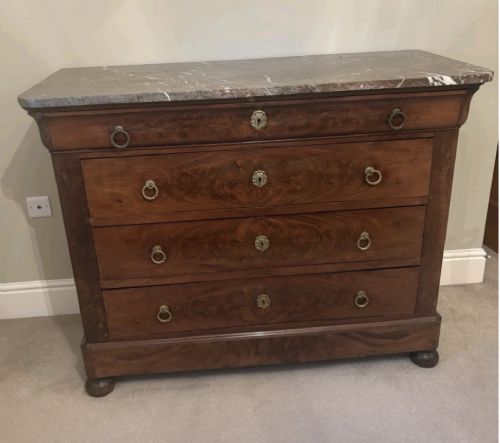
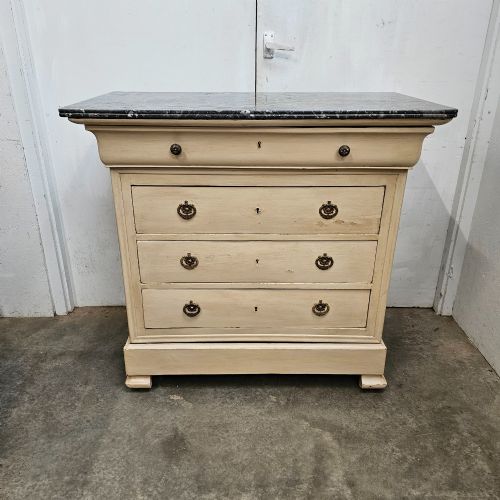
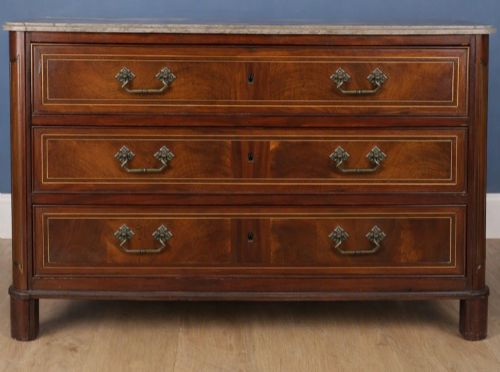
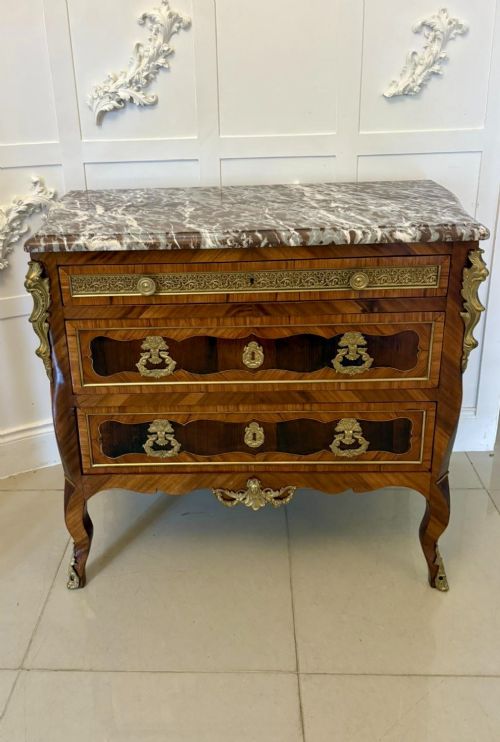
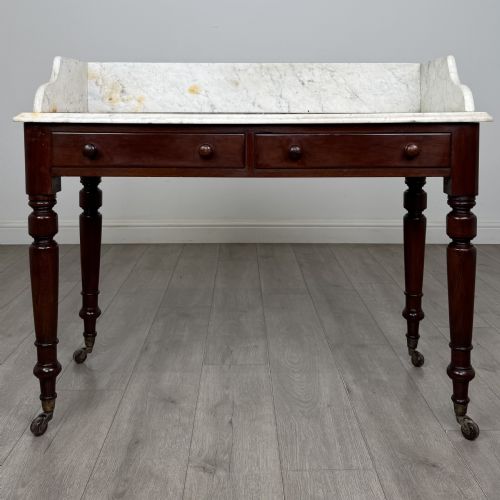
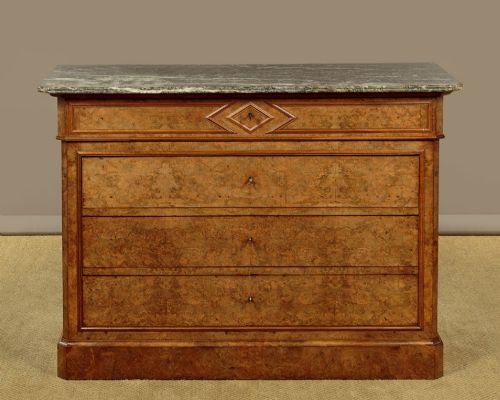
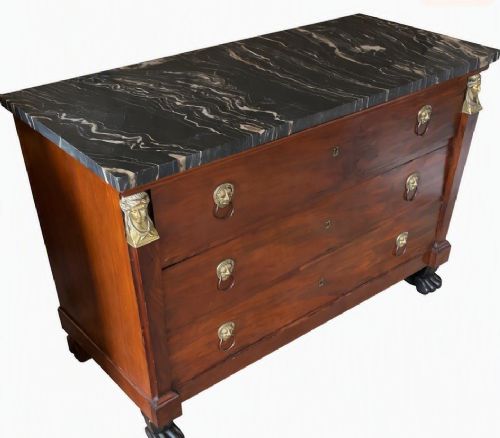
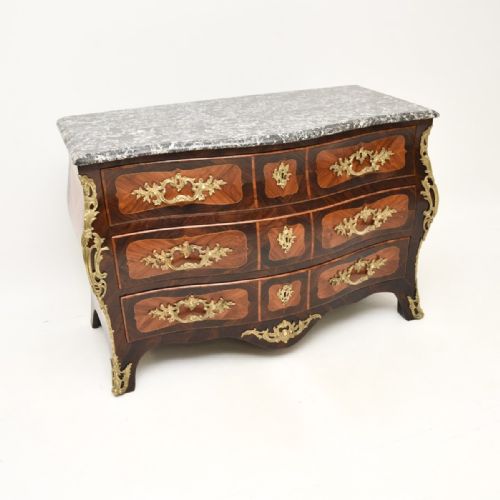
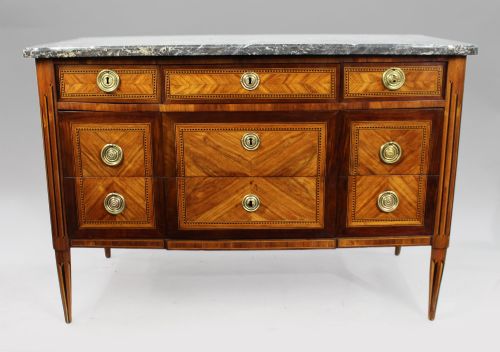
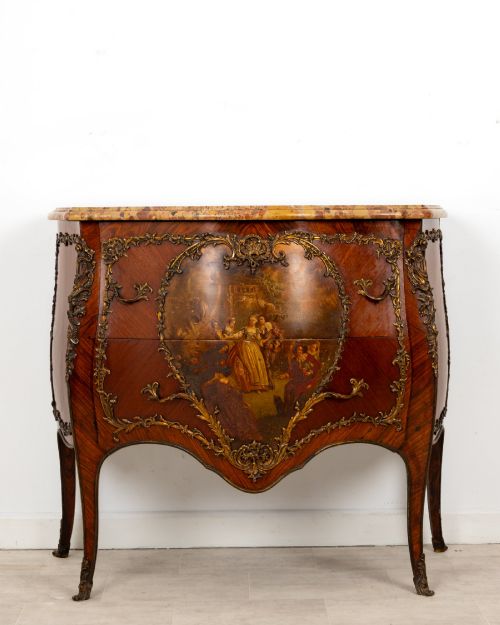
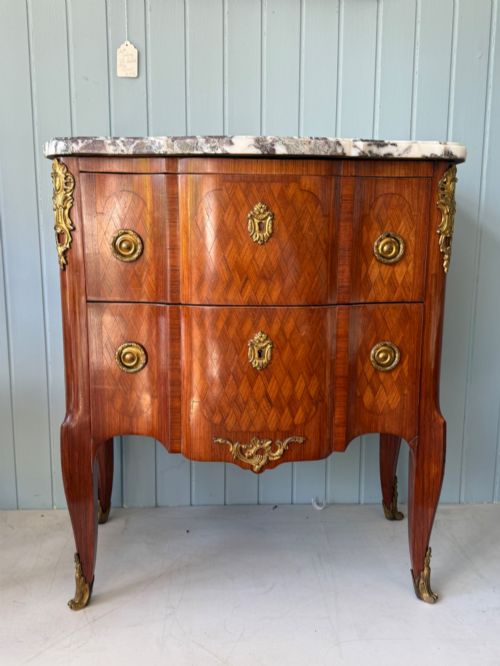
When you search for antique marble drawers, you encounter a selection of case furniture centred on commodes, chests of drawers, and bedside cabinets. These pieces span the eighteenth, nineteenth, and early twentieth centuries, drawing heavily upon French cabinet-making traditions from periods such as Louis XV, Louis XVI, and the Empire. Most examples pair a timber carcase with a fitted stone slab, functioning as bedroom storage, washstands, or side tables.
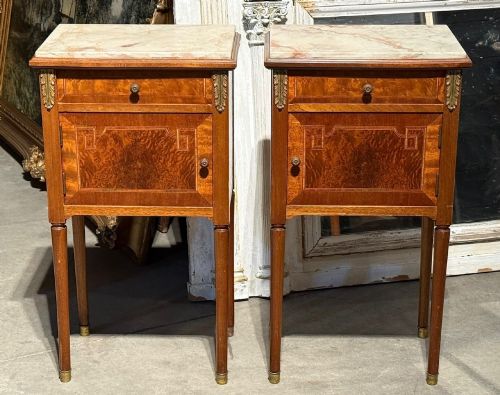
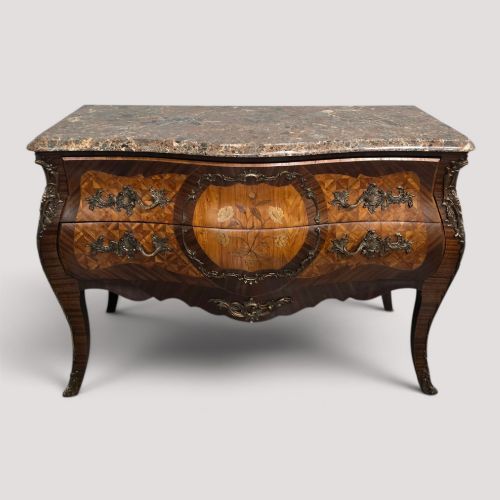
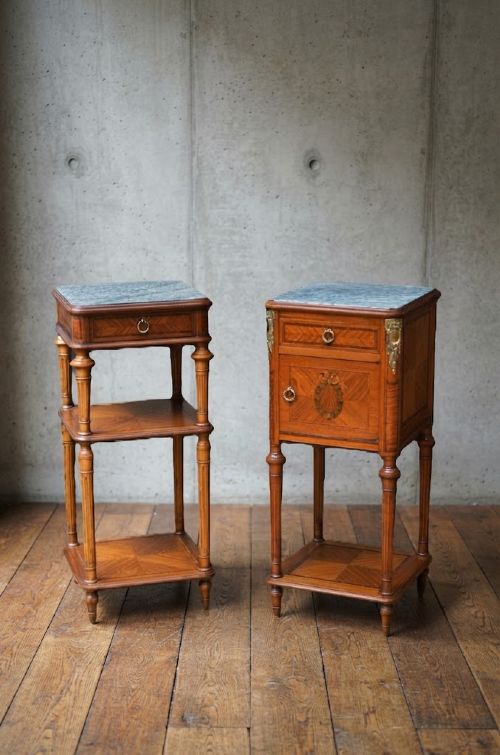
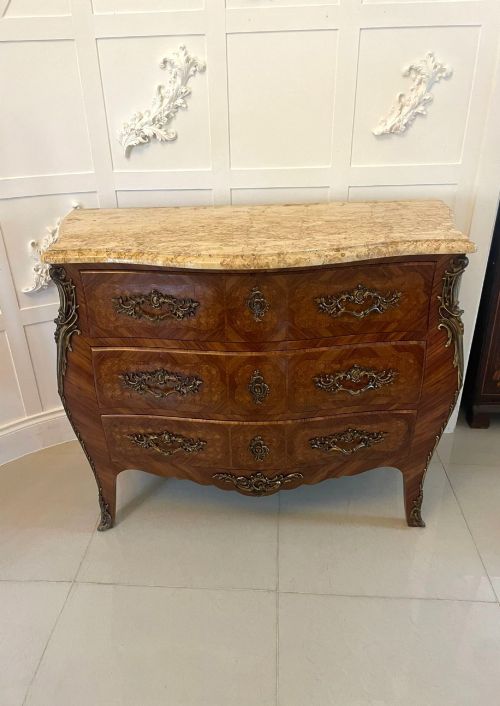
The format ranges from formal parquetry commodes with shaped serpentine fronts to simpler oak, walnut, or mahogany bedside pedestals. Smaller bedside cabinets and lamp tables appear frequently alongside grander multi-drawer chests. Continental workshops produced the vast majority of these items, integrating stone tops designed to resist water and wear.
What varies in quality
The refinement of the timber veneers and the complexity of the marquetry patterns set finer pieces apart from simpler domestic storage. Elaborate geometric parquetry or floral marquetry demands precise hand-cutting, whereas plain mahogany or walnut carcases represent more utilitarian production.
Hardware and stone selection also dictate the standing of a piece. Finely chased ormolu mounts and thick, specifically selected marble slabs indicate higher workshops, while standard brass pulls and thinner stone tops point to standard commercial manufacturing.
Some nineteenth-century cabinets hide secret drawers behind drop-front panels, keeping midnight secrets safely out of view beneath the heavy stone.
Jacques Bircklé
The Antique Marble Drawers Glossary
- Commode
- A low chest of drawers, typically of French origin, featuring a flat or serpentine marble top. These pieces developed from seventeenth-century coffers into decorative bedroom and reception furniture.
- Parquetry
- A geometric mosaic of wood veneer arranged in repeating patterns such as squares, lozenges, or cubes. Cabinet-makers applied these designs to the drawer fronts and sides of commodes.
- Ormolu
- Gilded bronze used for decorative mounts, handles, and escutcheons on eighteenth and nineteenth-century furniture. The technique involves applying a mercury-gold amalgam to cast bronze.
- Vernis Martin
- A simulated Japanese lacquer technique developed in France, utilising resin-based varnishes to create glossy panels. It appears on elite revival commodes alongside kingwood and gilt-bronze.
- Serpentine
- A furniture front curved in a concave-convex-concave wave shape. This contour requires skilled carpentry to match the timber grain and fit the corresponding marble top.
Antique Marble Drawers: Frequently Asked Questions
What are marble top commodes?
Marble top commodes are decorative chests of drawers originating primarily from French design traditions. They combine functional timber storage with a heavy stone surface that provides a durable finish.
Craftsmen utilised woods like walnut, mahogany, and kingwood for the carcases, mounting the stone securely on top. These pieces served as primary storage in bedrooms and reception rooms across the eighteenth and nineteenth centuries.
How do I clean the marble top?
Cleaning antique marble requires mild soap and warm water applied with a soft cloth. Avoid acidic cleaners, vinegar, or harsh abrasives that etch or dull the polished stone surface.
Dry the slab thoroughly after washing to prevent water spotting. Because historical marble is porous, wiping up spills promptly protects the polished finish from staining.
Are bedside cabinets standard?
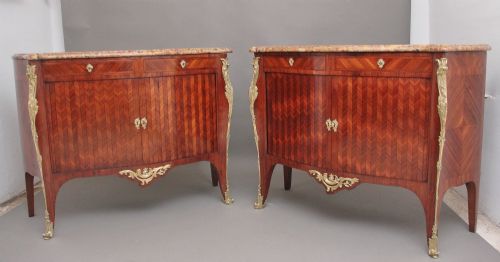
Bedside cabinets and nightstands appear frequently alongside larger commodes in eighteenth and nineteenth-century styles. These smaller drawer pedestals provided enclosed bedside storage for private items.
Many survive as matched pairs, featuring the same timber veneers, brass hardware, and fitted marble tops as their larger chest counterparts.
How do I date a commode?
Dating a commode involves examining the construction methods, timber species, and stylistic revival cues. Eighteenth-century pieces display hand-cut joinery and period-specific marquetry, while nineteenth-century items often reflect Louis XV or XVI revival tastes.
Hardware styles, secondary woods inside the drawers, and the cut of the marble slab offer further clues to the manufacturing decade.