
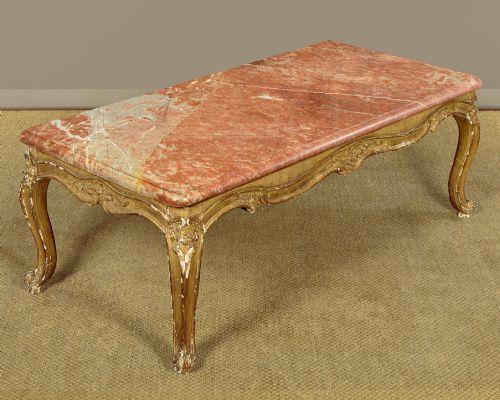
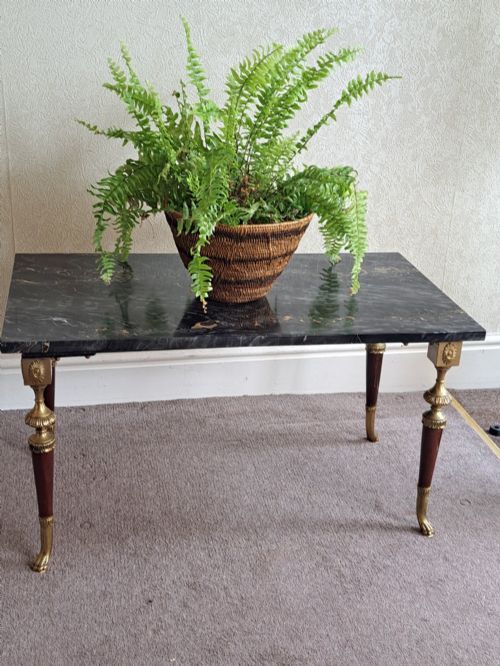
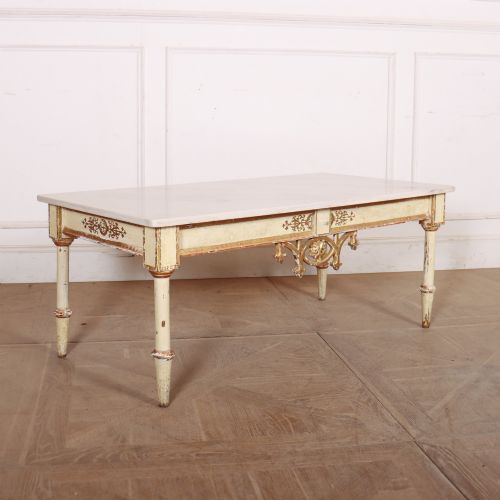
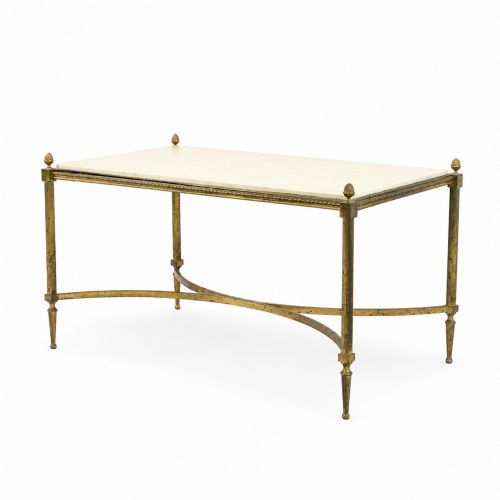


Antique Marble Cocktail Table
An antique marble cocktail table brings a cool stone surface and a touch of period elegance to a sitting room.
Antique Marble Cocktail Table
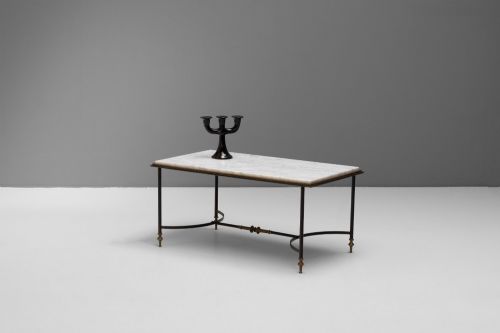
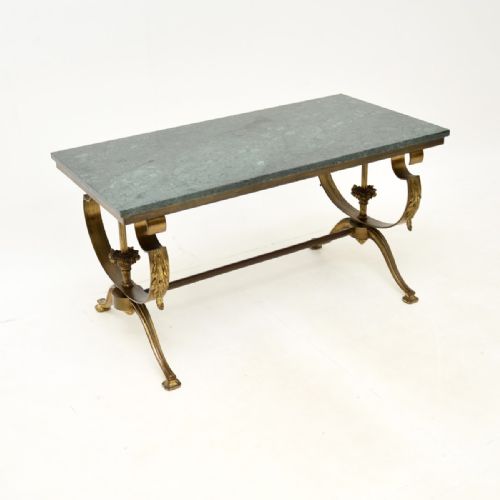
An antique marble cocktail table combines a sturdy stone top with a supportive base fashioned from wood, iron, or brass. When you search for this phrase, you encounter low tables designed for resting drinks and books in a reception room.
The selections on this page span the Victorian era, the Edwardian period, and the early twentieth century up through the nineteen-fifties. Many examples draw on French provincial, Neoclassical, and revival styles.
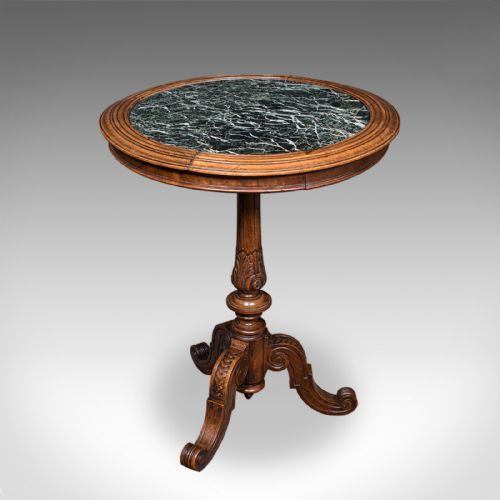
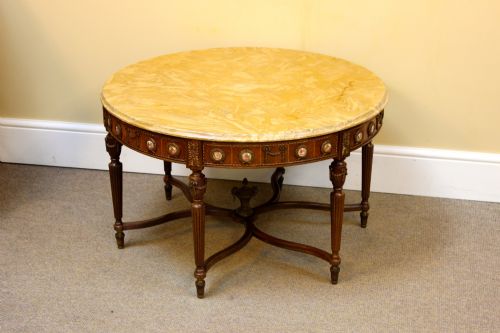
Forms vary from simple round coffee tables to low rectangular cocktail pieces and occasional side tables adapted for modern living. Walnut, mahogany, giltwood, and painted wood frequently form the underframes.
How they were made
Cabinetmakers and metalworkers shaped these tables using traditional timber framing, cast brass, and forged wrought iron. Walnut and mahogany provide the wooden structures, often enriched with carved details or gilt finishes.
Stone masons cut and polished the marble slabs that form the tabletops, occasionally incorporating specimen inlays or contrasting black marble. Giltwood and painted wood surfaces received decorative treatments typical of French and Italian workshops.
Dolphins make an unexpected appearance beneath the stone, proving that even a cocktail table likes to swim.
What varies in quality
The distinction between standard examples and superior pieces rests on the weight and figuring of the marble alongside the crispness of the base. Hand-carved walnut frames and finely chased brass mounts demonstrate greater artisan skill than simpler production methods.
Condition of the stone surface and the stability of the joinery determine the overall integrity of the piece. Tables featuring specialist elements like specimen marble tops or wrought iron scrollwork occupy the higher end of the range.
The Antique Marble Cocktail Table Glossary
- Giltwood
- Wood that has been coated with a thin layer of gold leaf. This finish appears frequently on French revival frames.
- Specimen top
- A tabletop composed of various coloured marbles or stones arranged in geometric or pictorial patterns. These pieces require meticulous stonemasonry.
- Wrought iron
- Iron beaten into shape by hand using tools and heat. This material provides sturdy support for heavy marble slabs.
- Neoclassical
- A style drawing inspiration from the classical art and culture of ancient Greece and Rome. It emphasises symmetry, restraint, and classical motifs.
Antique Marble Cocktail Table: Frequently Asked Questions
Are antique marble cocktail tables sturdy enough for daily use?
These tables utilise solid wooden frames, iron, or brass to support heavy stone tops, making them robust for daily placement in a sitting room.
While the stone surface resists moisture well, owners should still use coasters to protect polished finishes from acidic rings.
How do I identify the period of a marble cocktail table?
Makers of different eras employed distinct decorative vocabularies, such as Victorian carving or mid-century metal designs, to shape the bases.
Examining the underside of the wooden frame and the method of securing the marble slab often reveals construction clues.
What styles are most common for these tables?
French revival styles, including Louis XVI and Rococo interpretations, appear frequently alongside Italian Neoclassical and Victorian designs.
Plain painted wood and wrought iron versions offer a more understated aesthetic compared to heavily gilded frames.
How should I care for an antique marble top?
Marble requires gentle cleaning with mild, pH-neutral soap and water to preserve the polished surface without etching the stone.
Avoid abrasive cleaners and acidic substances like citrus juice that can permanently dull the antique finish.