


Antique Marble Buffet
An antique marble buffet brings solid weight and polished stone together to anchor a room.
Antique Marble Buffet
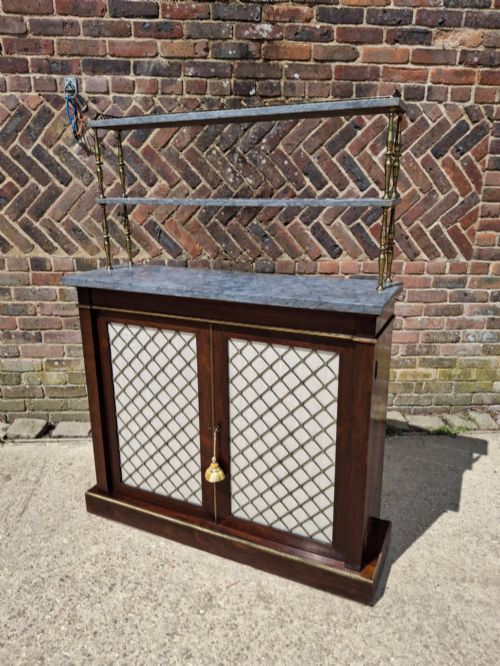
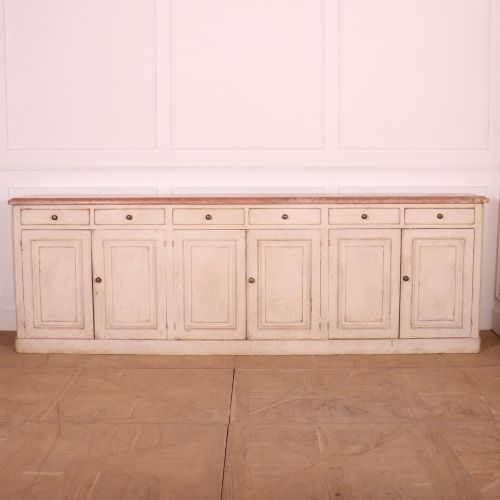
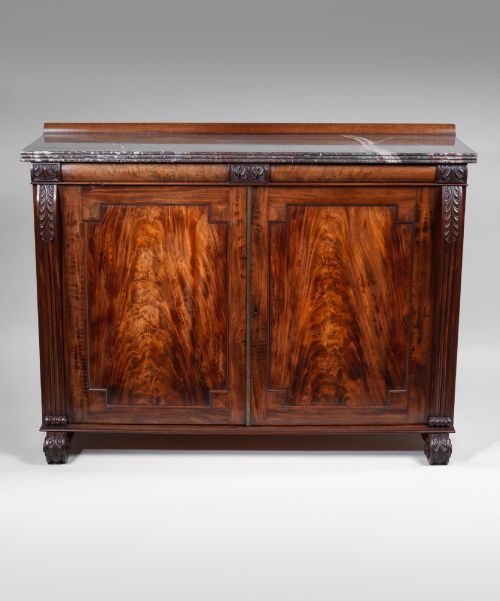
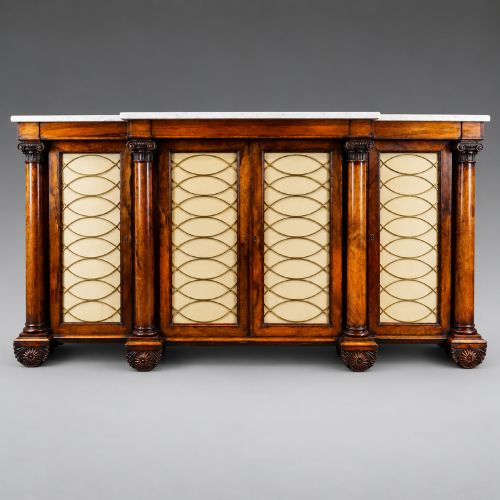
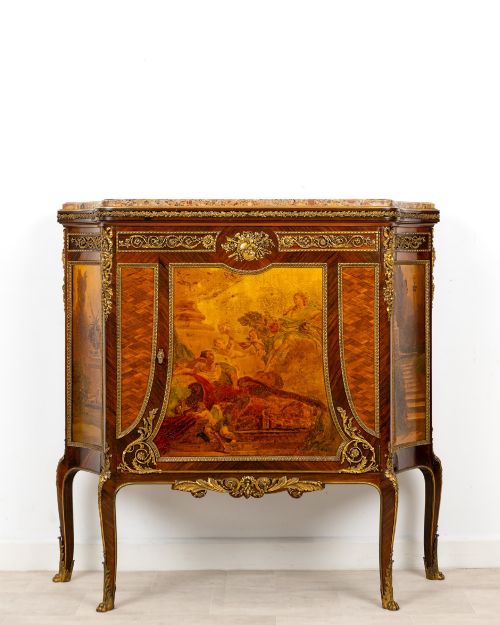
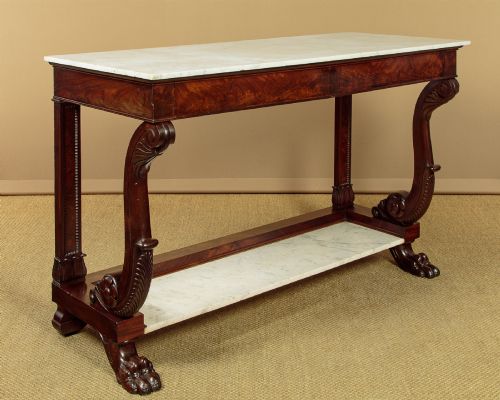
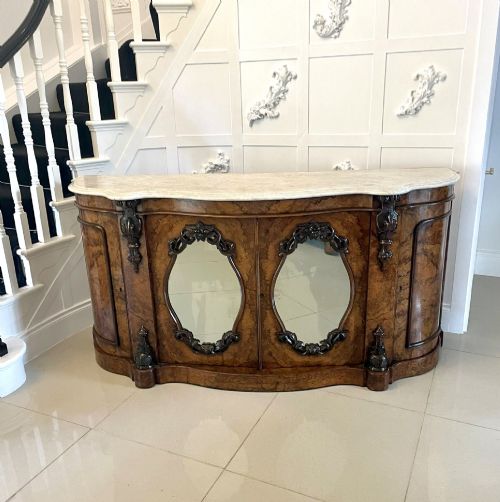
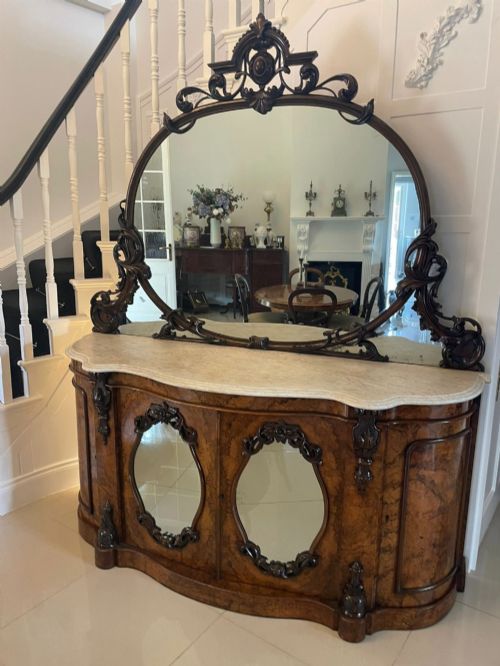
An antique marble buffet serves as a substantial storage piece, combining timber cabinetry with a smooth stone surface designed for display and serving. These items emerge in forms such as sideboards, credenzas, and commodes across the nineteenth century and into the early twentieth century.
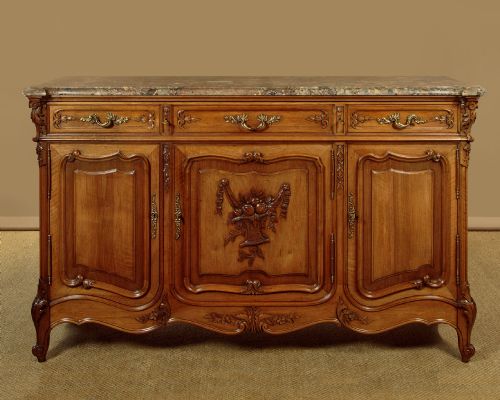
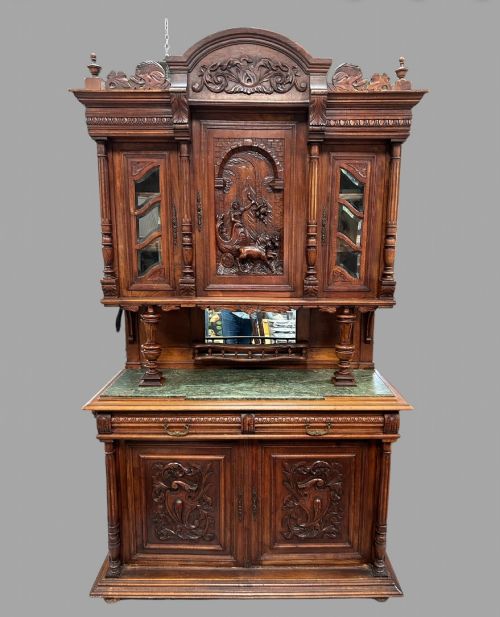
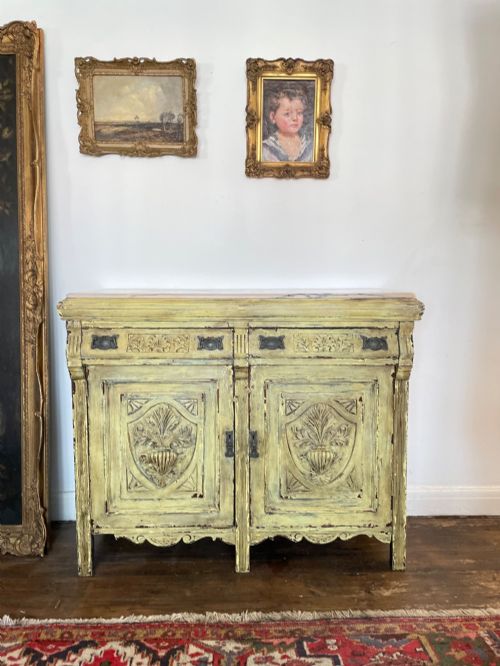
The varieties met most often on this page stem from French and Victorian workshops, utilising timbers like walnut, mahogany, and burr walnut alongside contrasting stone tops. Regional variations span from French provincial walnut dressers to inlaid marquetry cabinets from later decades.
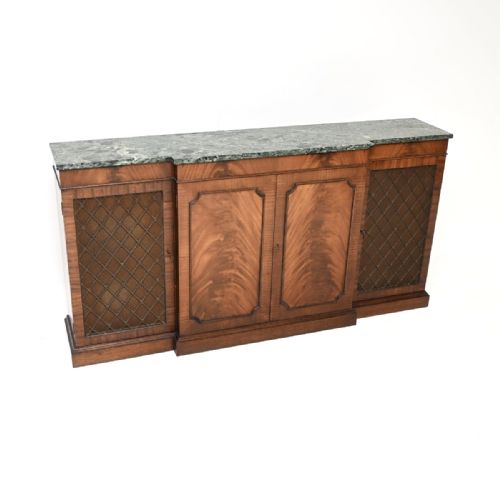
Makers shaped these surfaces for dining rooms and grand hallways, employing heavy marble slabs that range from plain white to variegated pink tones. The integration of stone gives each cabinet a distinct presence, separating them from standard wooden storage units.
How they were made
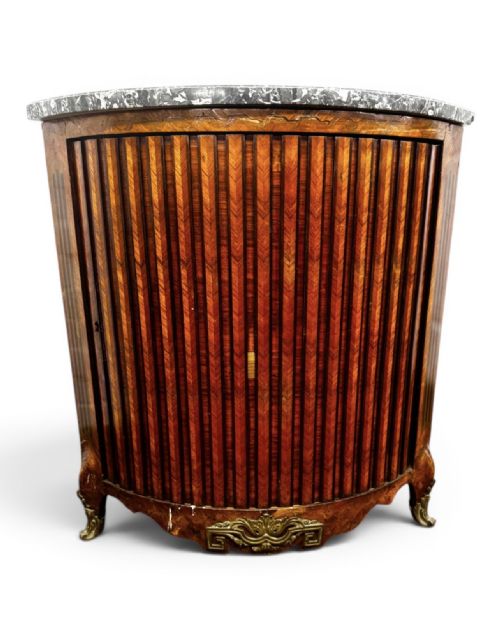
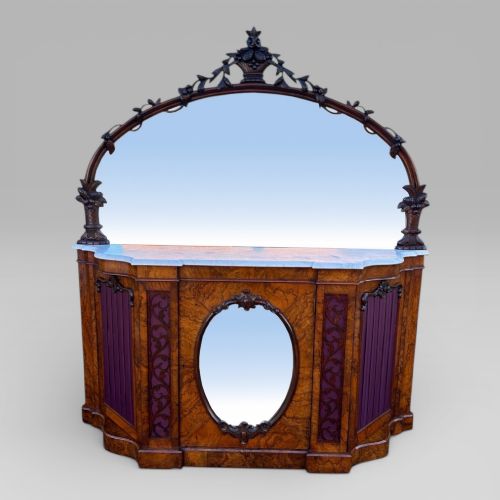
Cabinetmakers constructed the main body using seasoned hardwoods like walnut and mahogany, frequently applying burr walnut veneers or detailed marquetry and parquetry patterns across the doors and panels. Carved mirror backs and brass mounts appeared on select pieces to enhance the architectural silhouette.
Heavy marble slabs were cut and polished to fit precisely over the timber base, serving as a durable and cool surface for food and drink preparation or display. Ormolu and gilt-bronze mounts were cast and applied to corners and framing edges, securing decorative mounts to the wood.
Antique Marble Buffet Retail Price Guide 2026
Typical asking prices for marble buffet among the pieces listed under this phrase on Sellingantiques today, from the lower quarter to the upper quarter. They describe what is for sale here now, not the wider market.
Cabinets span diverse styles including French Provincial, Regency, Louis Philippe, and Art Deco.
What varies in quality
The distinction between tiers rests upon the depth of hand-carving in the timber and the complexity of the wood veneers chosen for the facade. Elaborate marquetry patterns and intricate ormolu mounts indicate workshop production of a higher order compared to plain boarded carcasses.
Stone selection plays a role, with thick, highly figured marble slabs indicating a higher grade of production than standard uniform stone. The precision of the joinery in the drawers and the weight of the brass hardware further separate standard domestic furniture from exhibition-level pieces.
François Linke·KRIEGER of Paris
The Antique Marble Buffet Glossary
- Ormolu
- Gilt-bronze mounts applied to furniture for decorative effect. This technique was widely utilised in French cabinet making during the nineteenth century.
- Marquetry
- The art of creating decorative patterns by fitting together small pieces of wood veneer. Makers used contrasting timbers to form floral or geometric scenes.
- Credenza
- A low cabinet, often with glass doors or mirror backs, used for storage and display in Victorian and continental interiors. These pieces frequently feature stone tops.
- Parquetry
- Geometric mosaic woodwork used for ornamenting floors and cabinet doors. It differs from marquetry by relying on angular patterns rather than pictorial designs.
- Enfilade
- A long sideboard or buffet designed for dining rooms. The form provides extensive surface and cupboard space.
Antique Marble Buffet: Frequently Asked Questions
What rooms suit an antique marble buffet?
These cabinets suit dining rooms, large hallways, or spacious kitchens where the heavy stone top can withstand daily use and display items.
The substantial timber base provides enclosed storage for crockery or linens while the stone surface offers a practical working area.
How do I clean the marble top?
Cleaning requires warm water and a soft cloth, avoiding acidic substances that can etch the polished surface of the stone.
Regular wiping preserves the natural finish of the marble without damaging the historical patina of the surrounding timber.
Are these pieces purely French?
While many examples originate from French workshops following various revival styles, English Victorian and Italian variants also appear.
Craftsmen across Europe adopted the combination of timber cabinetry and heavy stone tops during the nineteenth century.
How do I distinguish Victorian pieces?
Victorian examples frequently employ dark burr walnut or mahogany, often incorporating carved mirror backs and generous proportions.
French equivalents tend to favour lighter fruitwoods, marquetry inlay, and distinct ormolu mounts reflecting regional design periods.