

Antique Marble Bowl
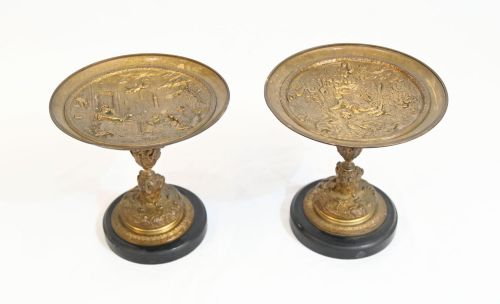
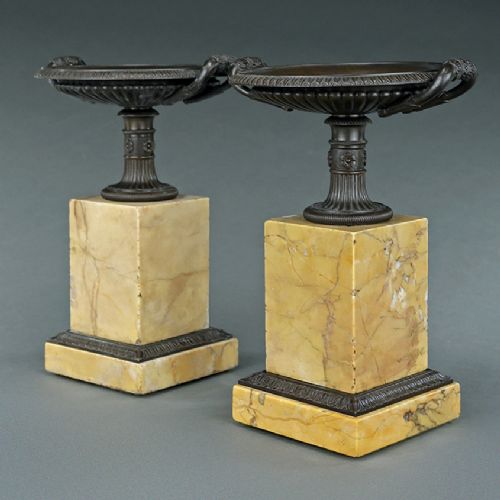
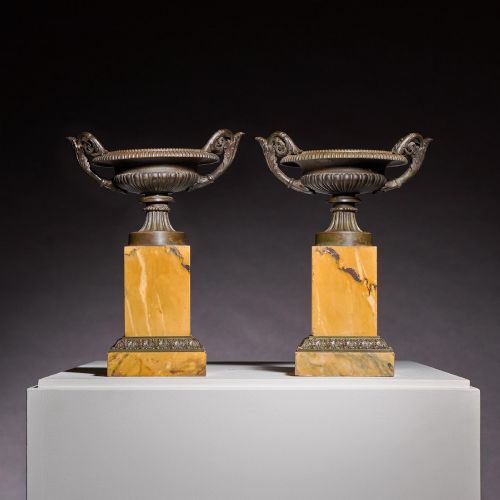
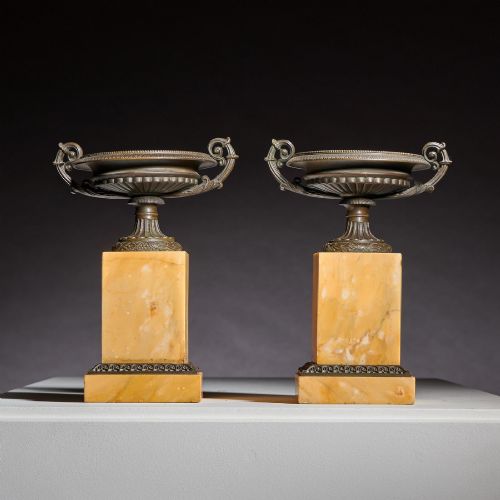
An antique marble bowl brings classical weight and timeless mineral depth to a room, serving as a striking decorative vessel or tazza.
Antique Marble Bowl
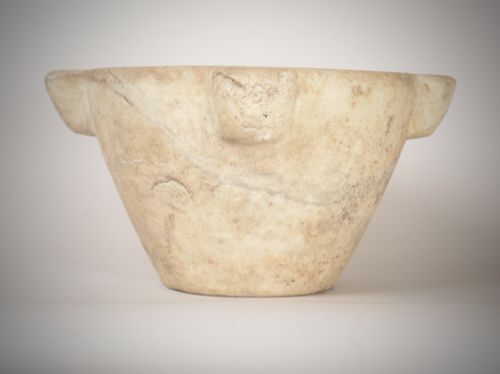
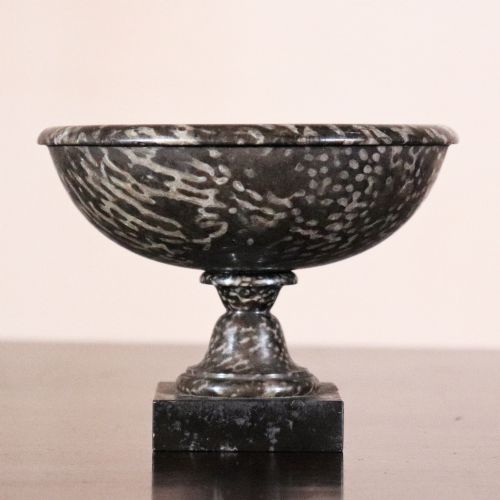
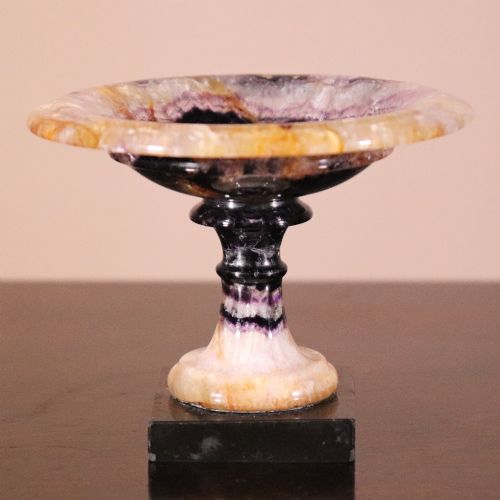
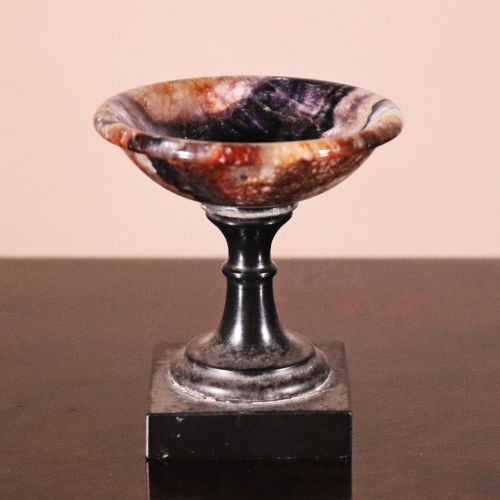
When searching for an antique marble bowl, you encounter various forms including classical tazzas, heavy mortars, and pedestal bowls carved from natural stone. The pieces available span several centuries, with nineteenth-century examples and Grand Tour souvenirs appearing frequently alongside eighteenth-century kitchenware and decorative items.
Many of these vessels draw directly on ancient models, referencing classical architecture and sculpture through restrained neoclassical lines. Others take the form of utilitarian mortars, showing how durable stone served practical kitchen and apothecary functions before entering drawing rooms as purely decorative objects.
The selection ranges from small-scale cabinet pieces in specialised mineral stones to monumental urns and pedestals designed for prominent display. Italian workshops and French foundries dominate the origins, producing souvenir items for travellers alongside substantial domestic wares.
Materials and construction
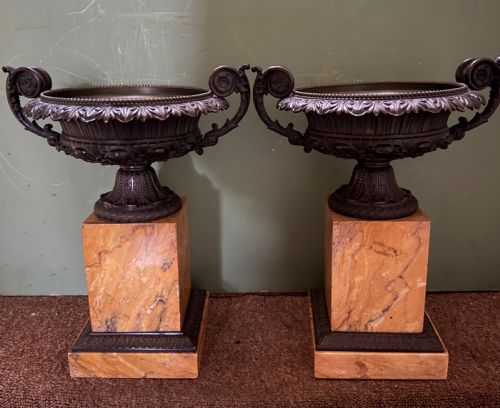
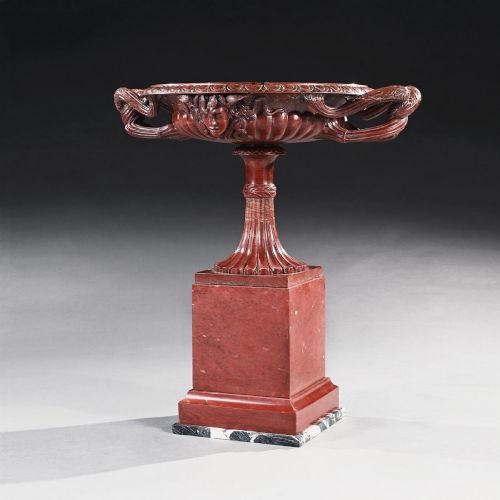
Makers shaped these bowls from a wide variety of stones, utilising white marble, black marble, Sienna marble, Rosso Antico, and highly-figured alabastro egiziano. Artisans selected these dense minerals for their rich veining and capacity to take a high polish, often turning them on a lathe before hand-finishing the surface details.
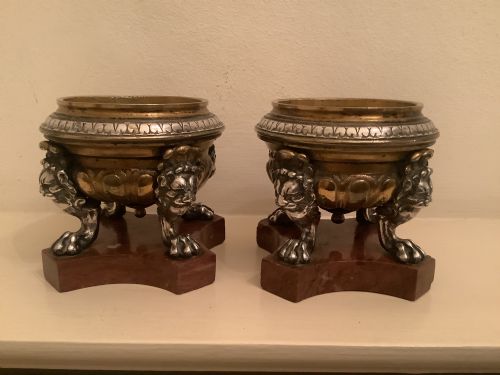
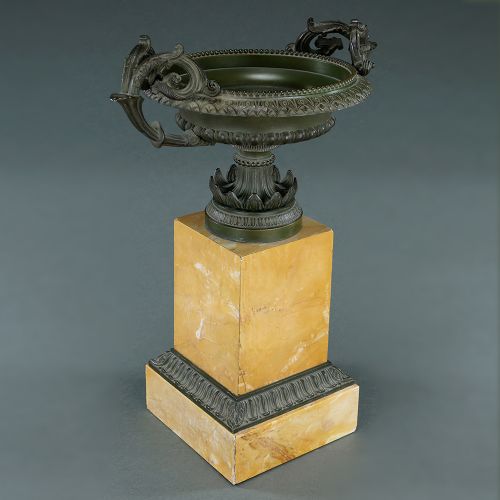
Bronze, gilt bronze, ormolu, and silvered mounts frequently combine with the stone bases and bowls, particularly on French Empire and Grand Tour pieces. These metal elements require precise casting and chasing, anchoring the stone vessels and providing structural contrast to the cool mineral surfaces.
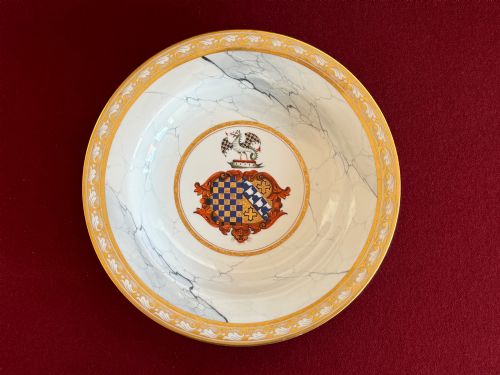
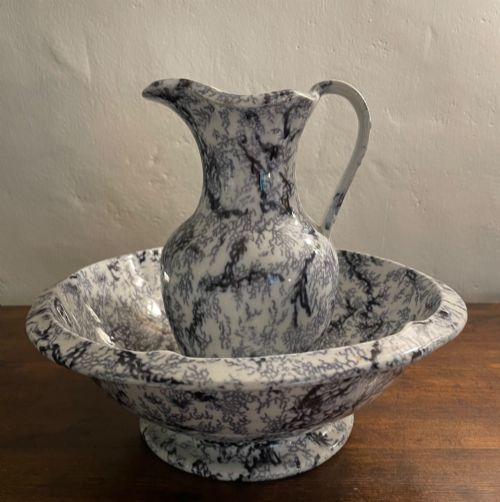
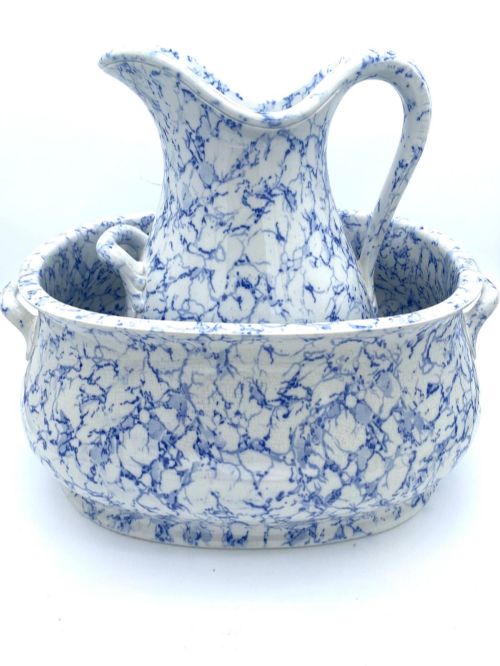
Some decorative items incorporate additional media, such as Limoges enamel plaques set into ormolu frames or glazed earthenware bodies imitating stone patterns. Each material demands distinct handling, from the stonecutter's chisel to the bronze founder's crucible.
Antique Marble Bowl Retail Price Guide 2026
Typical asking prices for marble bowl among the pieces listed under this phrase on Sellingantiques today, from the lower quarter to the upper quarter. They describe what is for sale here now, not the wider market.
One persistent eighteenth-century mortar arrives carrying centuries of culinary ambition straight from the kitchen table to the drawing room.
Judging quality in stone vessels
Quality rests principally on the choice and figure of the mineral, with intensely patterned stones and uniform coloration commanding attention. The depth and clarity of the natural veining dictate how successfully the stone holds the light across a curved tazza rim.
The precision of the carving separates standard workshop production from exceptional pieces produced for the Grand Tour market. Crisp mouldings on bronze mounts and sharply defined leaf or fluting details on the marble indicate the skill of the original hand.
Proportion and scale play a crucial role in the overall success of a piece, particularly when stone and metal components meet. A well-balanced tazza integrates its pedestal, stem, and bowl into a coherent architectural silhouette that reflects its classical inspiration.
Benedetto Boschetti·Ferdinand Preiss
The Antique Marble Bowl Glossary
- Tazza
- A shallow bowl or cup mounted on a stem and foot, originating from classical antiquity and frequently revived during the nineteenth century. These vessels serve primarily as decorative centrepieces.
- Grand Tour
- A cultural journey undertaken by wealthy young Europeans through France and Italy, collecting souvenirs such as carved alabaster and marble tazze. These items reflect a fascination with classical antiquity.
- Ormolu
- Gilt bronze produced by applying a finely ground high-carat gold mercury amalgam to a bronze object. The technique creates a rich, durable golden surface on decorative mounts.
- Rosso Antico
- A deep red antique marble prized by classical sculptors and later nineteenth-century revivalists. Its rich colour makes it particularly desirable for decorative tazze.
- Mortar
- A heavy, thick-walled bowl used with a pestle for grinding and crushing substances. Eighteenth-century examples in white marble often show substantial wear from practical kitchen use.
Antique Marble Bowl: Frequently Asked Questions
How were marble bowls used historically?
These vessels served diverse functions ranging from utilitarian kitchen food preparation in heavy stone mortars to ceremonial display as decorative tazzas on dining tables and libraries.
Grand Tour travellers also collected smaller souvenir tazze simply to display classical taste within domestic interiors.
How do I distinguish eighteenth-century pieces?
Eighteenth-century examples often show greater functional wear, particularly heavy stone mortars bearing the marks of active culinary or apothecary use over generations.
Their proportions tend to follow simpler, sturdier lines compared to the highly ornate, multi-material Grand Tour pieces produced later.
What is a Grand Tour tazza?
A Grand Tour tazza is a souvenir carved in Italian workshops during the nineteenth century, reproducing ancient classical forms for foreign travellers.
These pieces frequently combine coloured marbles like Sienna or Rosso Antico with cast bronze mounts.
How should I clean an antique marble bowl?
Dust the surface regularly with a soft, dry cloth to prevent accumulation in the carved details and natural fissures of the stone.
Avoid acidic cleaning agents or harsh commercial polishes that can etch the marble or damage integrated bronze and ormolu mounts.