


Antique Mantelpiece Dog Ornaments
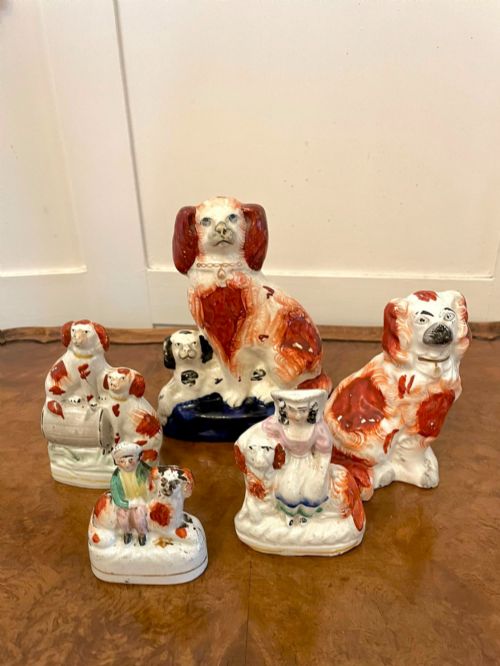
These antique mantelpiece dog ornaments bring familiar hearthside charm into a room, featuring Staffordshire pottery spaniels and poodles from the Victorian period.
Antique Mantelpiece Dog Ornaments
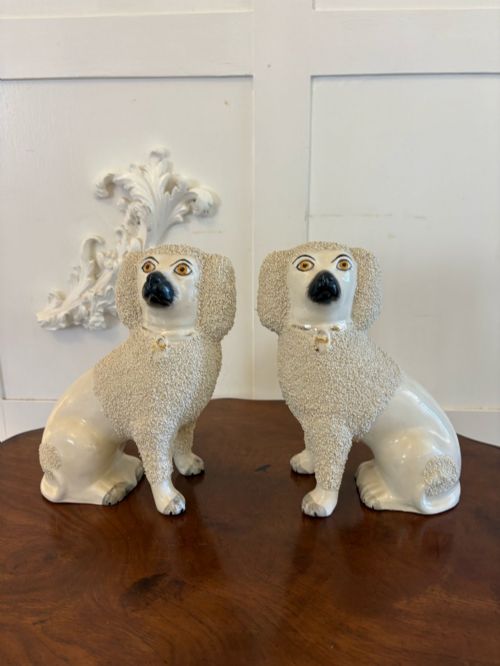
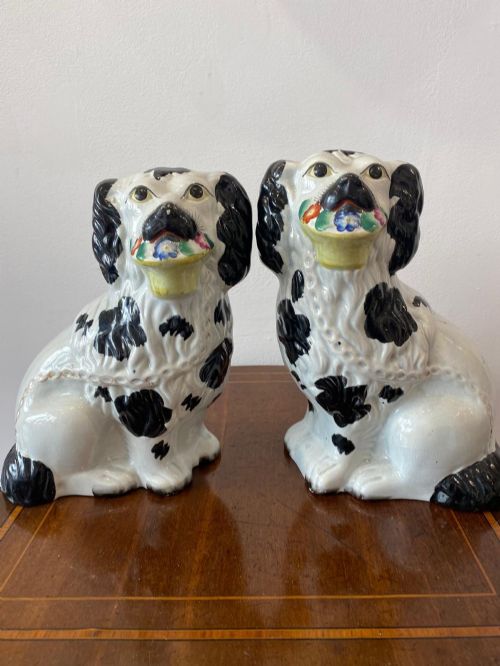
When you search for antique mantelpiece dog ornaments, you meet ceramic figures designed to sit guard upon a fireplace hearth or shelf. The most common examples on this page are pairs of Staffordshire spaniels and poodles, modelled in various sizes and often finished with hand-painted markings.
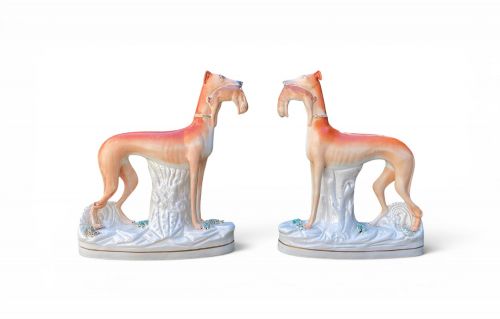
Makers produced these decorative objects predominantly during the nineteenth century, capturing popular breeds like King Charles spaniels and greyhounds. Collectors also encounter figure groups featuring children alongside setters or musicians accompanied by dogs, alongside pieces from factories such as Royal Doulton and Capodimonte.
How they were made
Potters shaped these earthenware figures using moulds before applying lead glazes and enamel paint by hand. Many examples display copper lustre accents or touches of gold leaf applied to collars and chains.
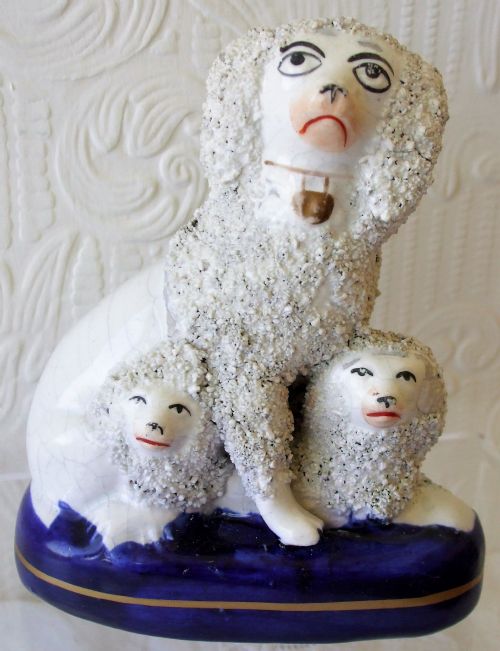
Several Staffordshire poodles feature distinct clay curls resembling gathered wool, modelled individually by nineteenth-century hands.
What varies in quality
The precision of the hand-painting largely separates standard figures from superior examples, particularly in the rendering of facial expressions and gilt highlights. Crisp moulding lines and well-preserved enamel paint indicate careful production.
Pairs holding their original matched appearance and consistent glaze coloration command greater attention than mismatched assemblies gathered together later. The depth of the copper lustre and the complexity of modelled details, such as textured poodle curls, further distinguish individual pieces.
The Antique Mantelpiece Dog Ornaments Glossary
- Staffordshire pottery
- Ceramic wares produced in the pottery towns of Staffordshire, England, famous for earthenware figures and animals.
- Copper lustre
- A metallic glaze technique that produces a reflective, coppery sheen on pottery surfaces when fired.
- Lead glaze
- A glossy coating containing lead oxide, commonly applied to earthenware to waterproof the body and impart shine.
- Earthenware
- A porous type of pottery fired at lower temperatures, requiring a glaze to hold liquids.
- Enamel paint
- Opaque paint applied over the glaze and fired at a lower temperature to fix the colours.
Antique Mantelpiece Dog Ornaments: Frequently Asked Questions
How do I display mantelpiece dogs?
Place pairs facing inwards towards each other at either end of a mantelpiece or sideboard.
Traditionally, these ornaments sat upon cottage hearths, watching over the room from the fireplace shelf.
Are these dogs marked on the base?
Most nineteenth-century Staffordshire figures remain unmarked, as factories rarely stamped commercial mantel ornaments.
Later pieces from twentieth-century makers often bear factory stamps or printed signatures beneath the glaze.
How do I clean antique ceramic dogs?
Dust gently with a soft dry brush to remove surface accumulation without disturbing the glaze.
Avoid using water or liquid cleaners, which can damage aged enamel paint and nineteenth-century earthenware.
Why do Staffordshire dogs come in pairs?
Potters manufactured these spaniels and poodles as matching pairs designed to mirror each other on domestic hearths.
Victorian households placed them facing one another to symbolise loyalty and watchfulness in the home.