


Antique Mantel Shelf
An antique mantel shelf piece brings proportion and presence to a room, holding clocks, mirrors, and ornaments with enduring weight.
Antique Mantel Shelf
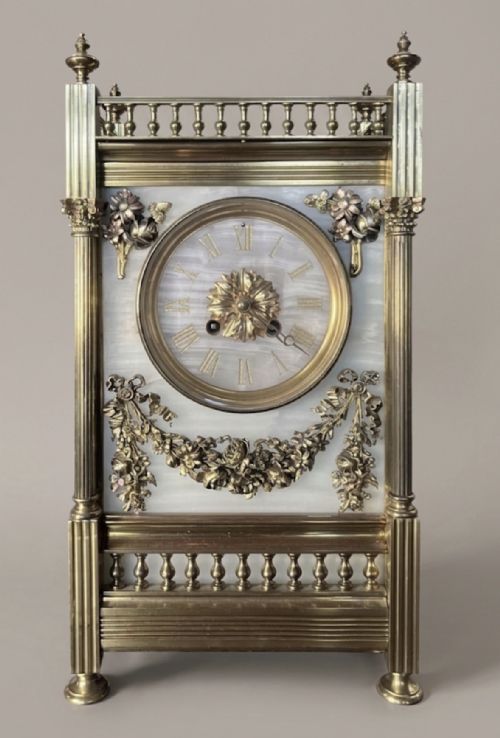
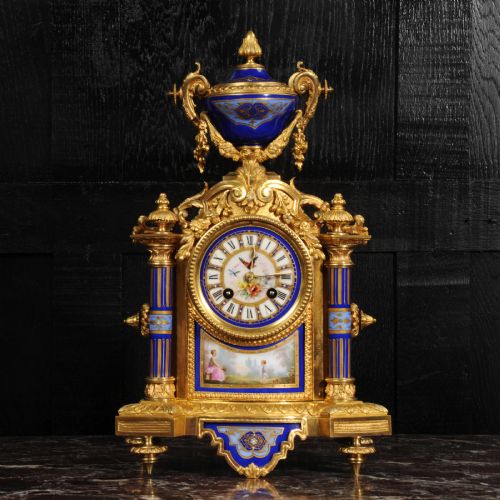
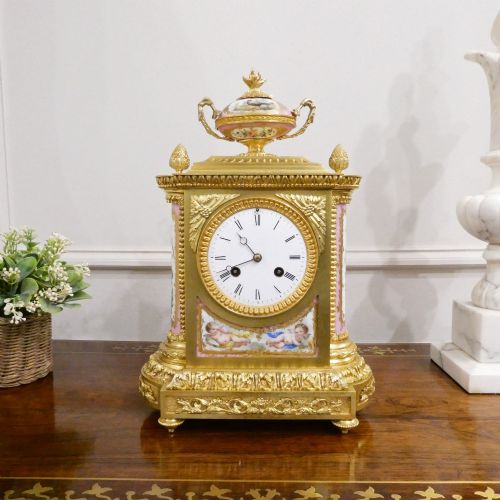
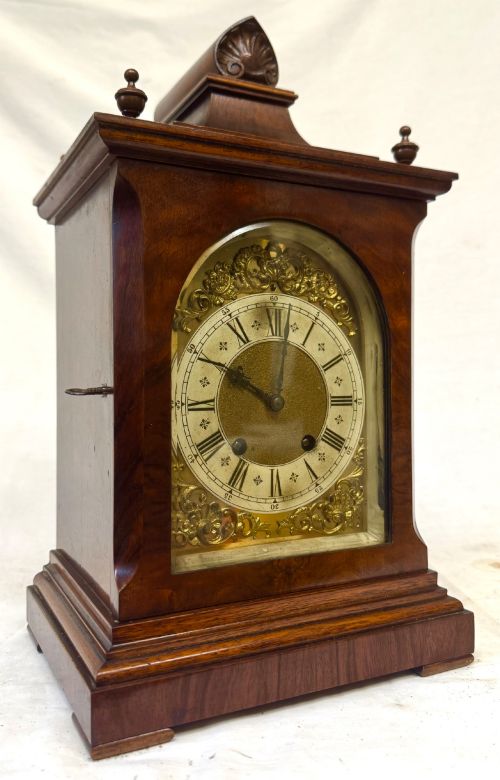
When you search for an antique mantel shelf, you encounter pieces designed to anchor the hearth or display surface, primarily spanning the nineteenth and early twentieth centuries. The selection centres on timepieces and decorative accessories originating from Victorian, Edwardian, and Art Deco periods, alongside French interpretations of the nineteenth century.
The category extends beyond clocks to include mantel lustres and fireplace ornaments manufactured in glass, enamel, brass, and porcelain. Each object serves to dress a chimney breast or shelf, demonstrating the craftsmanship of makers across Britain, France, and Germany.
Materials and construction methods
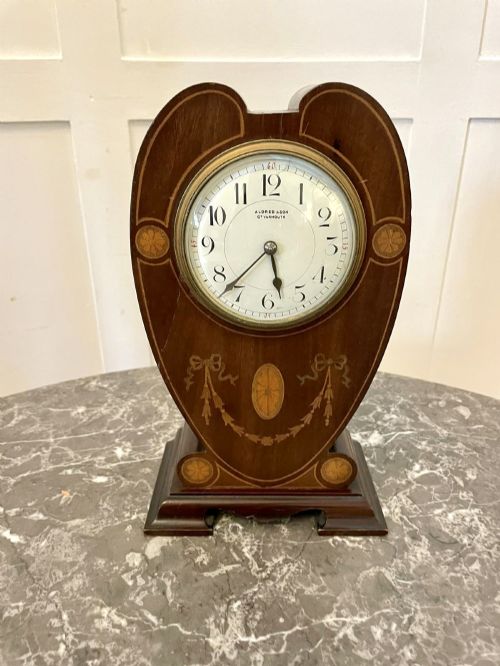
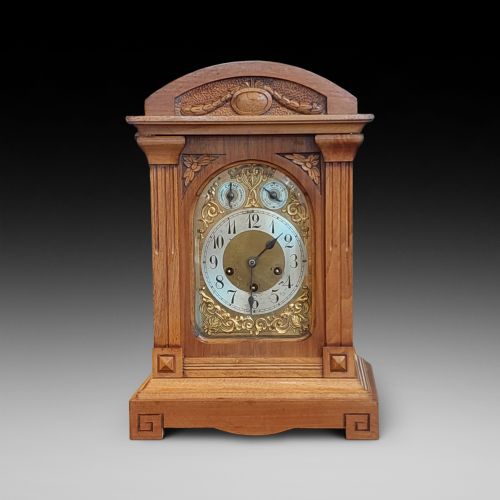
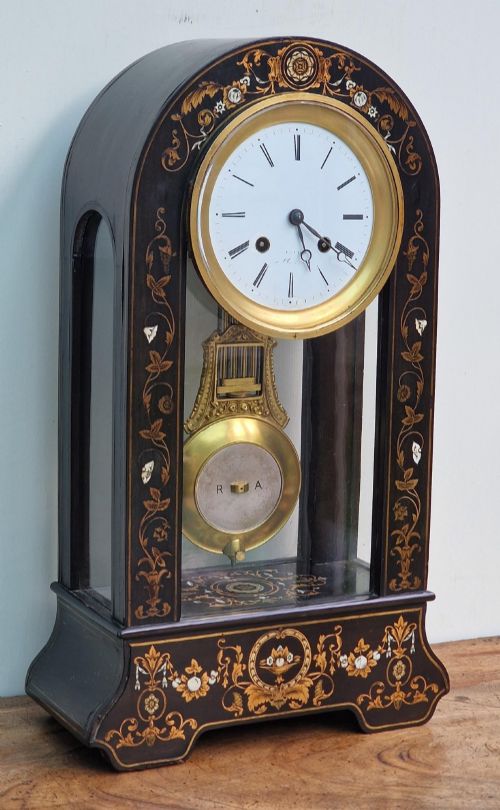
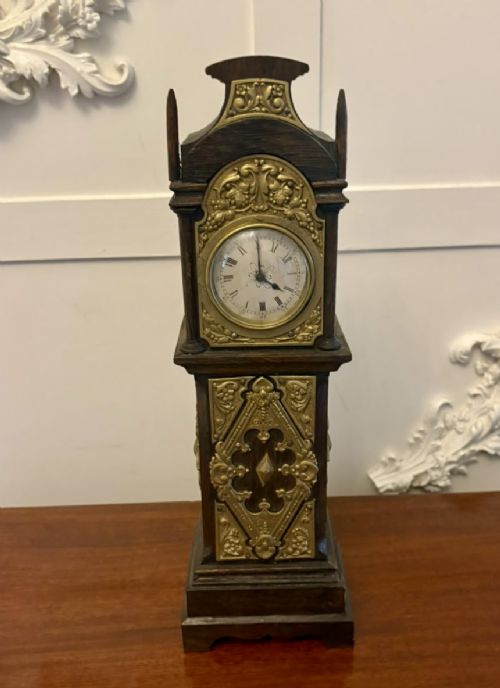
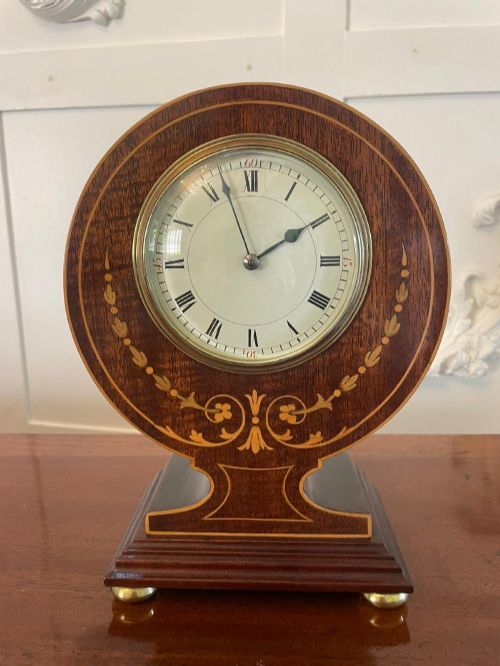
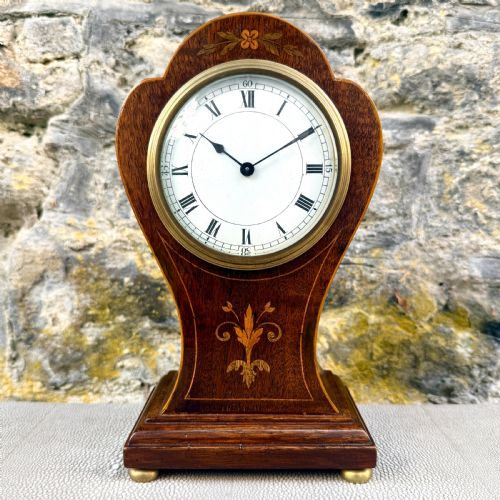
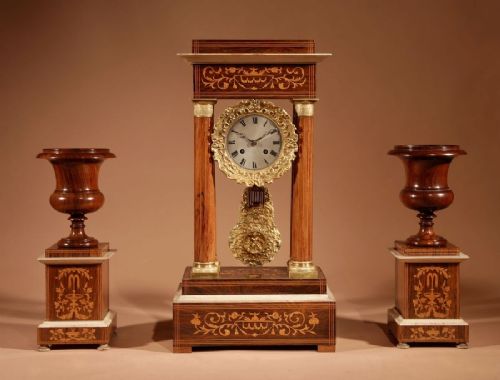
Makers utilised dense timbers such as mahogany, walnut, and oak for clock cases and mirror frames, frequently applying marquetry, ebonising, or brass inlay to enrich the surface. Case construction often involved housing mechanical movements behind glazed doors or architectural stone facades.
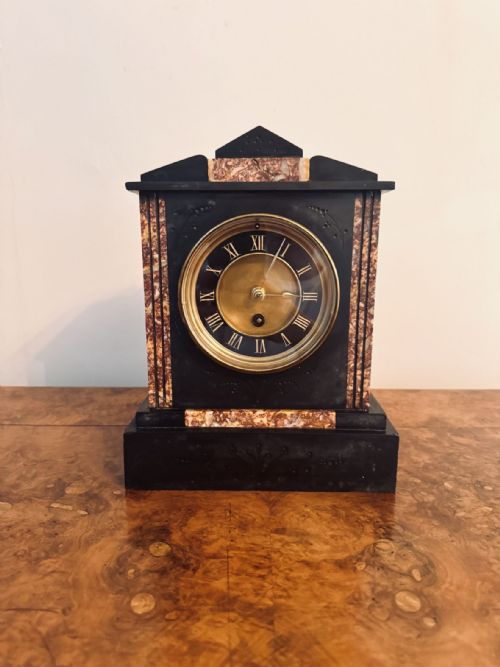
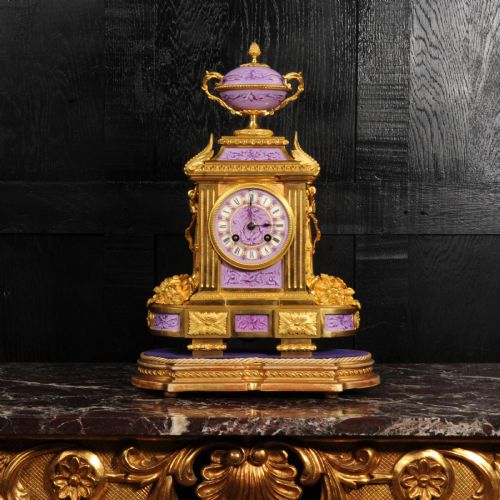
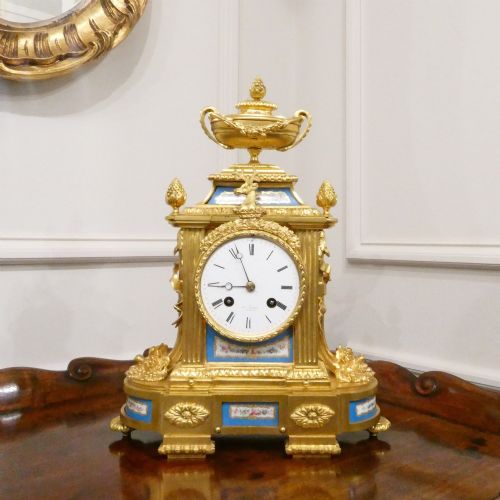
Foundries cast ormolu, gilt bronze, and brass to form mountings, figural ornaments, and dial bezels, while ceramic specialists supplied Sèvres and other painted porcelain panels. Glass and marble provided contrasting textures, seen in four-glass clock enclosures and rouge or black marble bases.
Pierrot and Columbine watch the room from an Art Deco figural clock, bringing a touch of theatrical romance to the shelf.
Distinctions in craftsmanship and design
Quality rests in the precision of the mechanical movement, the integrity of the cabinetwork, and the clarity of the cast bronze or carved detail. Finer examples display signed movements by recognised makers, crisp chasing on metal mounts, and well-proportioned timber veneers.
Lower tiers often show simpler secondary woods, cast metal lacking hand-chased definition, or dial work that has lost its original sharpness. The distinction lies in whether the piece was built as a bespoke architectural furnishing or produced as a standard commercial item.
Achille Brocot·Henry Marc·Charles à Orléans·Samuel Marti·Brockbanks and Atkins·Charles Pratt London·Sega
The Antique Mantel Shelf Glossary
- Mantel clock
- A portable clock designed to stand on a shelf or mantelpiece above a fireplace. These mechanisms are housed in decorative cases of wood, marble, or metal.
- Bracket clock
- A portable spring-driven clock originally designed to sit upon a wall bracket or shelf. Later examples retain the name despite resting directly on furniture surfaces.
- Ormolu
- Gilded bronze produced by applying a mercury-gilding process to a base of cast bronze. This technique creates a rich, enduring gold-coloured finish characteristic of French decorative objects.
- Boulle
- A form of marquetry utilising tortoiseshell and brass inlaid in contrasting patterns. The method takes its name from the seventeenth-century cabinetmaker André-Charles Boulle.
- Garniture
- A set of matching decorative objects, typically a central clock flanked by two matching vases, urns, or candelabra. Such sets created symmetry when placed upon a mantel shelf.
Antique Mantel Shelf: Frequently Asked Questions
Where should I place an antique mantel shelf clock?
These timepieces suit stable, flat surfaces away from direct heat sources and dampness, such as a sideboard, console table, or deep shelf.
Ensure the location allows adequate room for winding keys and pendulum swing where applicable.
How do I wind a mechanical mantel clock?
Use the correct key provided for the movement and turn it gently in the direction specified by the winding arbor until resistance is felt.
Avoid over-winding, as this can damage the mainsprings inside antique movements.
Can I adjust the timekeeping on an antique clock?
Most pendulum-driven clocks feature a small adjustment nut on the pendulum rod to raise or lower the bob, altering the speed.
Moving the bob up makes the clock run faster, while moving it down slows the beat.