

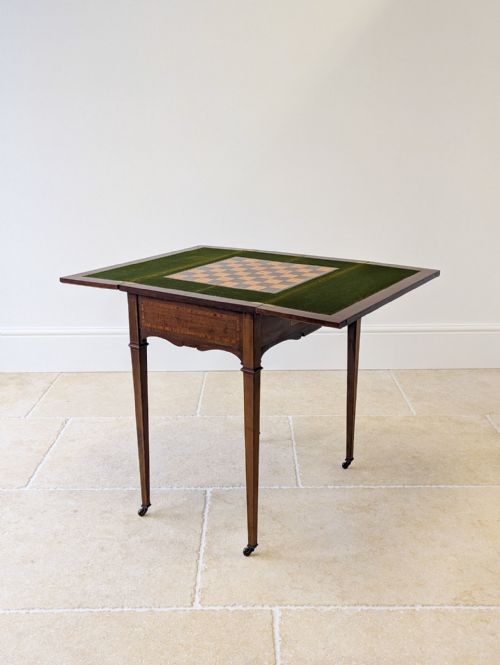
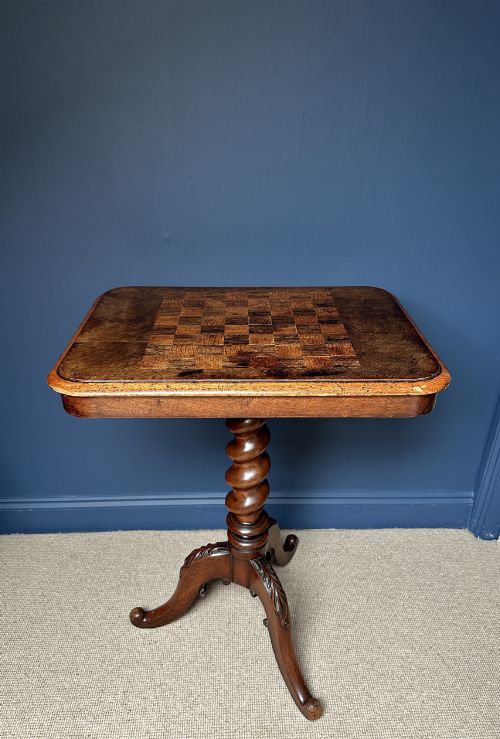


Antique Mahogany Chess
These antique mahogany chess pieces and boards are solid timber equipment built for traditional play, offering tactile weight and historical craftsmanship.
Antique Mahogany Chess
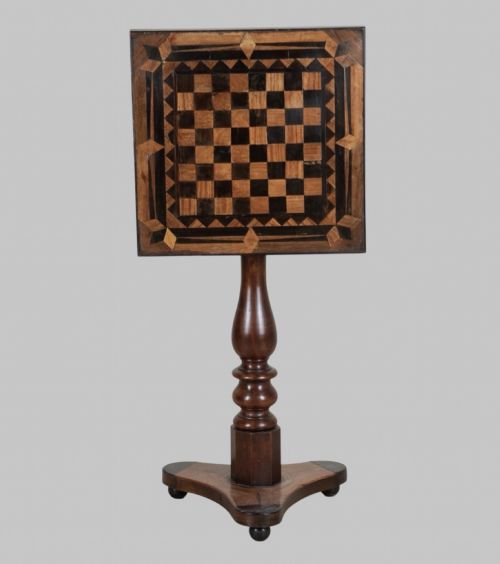
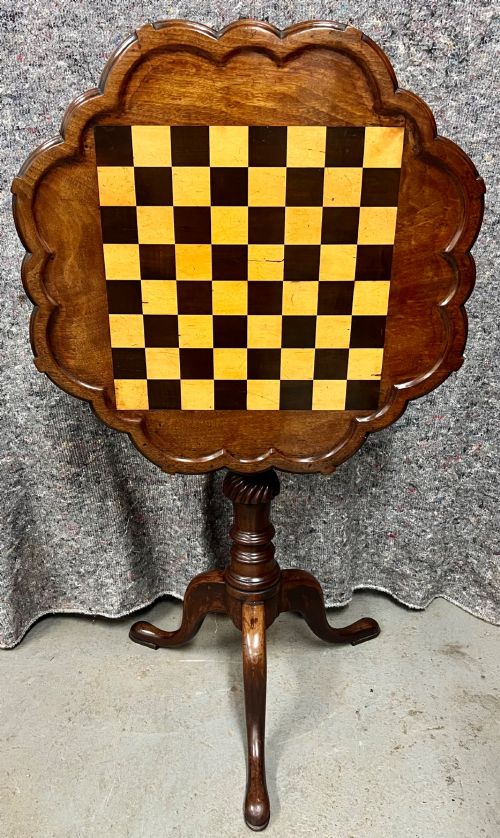
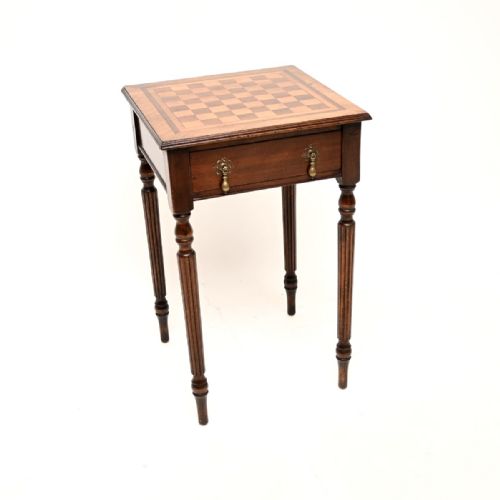
When you search for antique mahogany chess, you encounter a selection of turned sets, inlaid boards, and multifunctional tables designed for pastimes. The material serves primarily as the structural timber for folding tables, tripod stands, and cabinet work, complemented by contrasting woods on the playing squares.
You are most likely to meet 19th-century specimens, including Georgian and Regency games tables featuring integrated or removable boards, alongside Victorian and Edwardian sets carved from boxwood and ebony. These objects bridge the gap between functional game apparatus and domestic furniture.
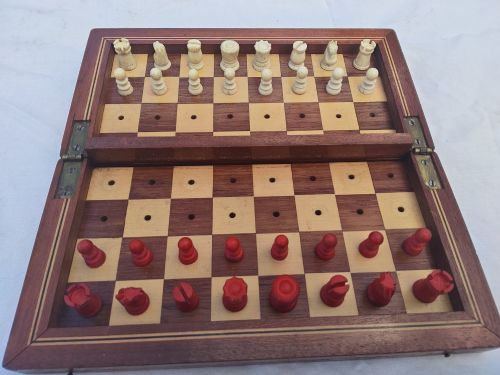
The assortment includes portable travelling sets with bone pieces and miniature chess sets alongside substantial pedestal tables. Each form reflects the domestic social habits of its respective period, from the early nineteenth century onward.
Materials and construction
Makers utilised mahogany as the primary carcass and framing timber, frequently pairing it with boxwood, ebony, walnut, and rosewood for parquetry and inlaid squares. Bone also appears in the construction of specific travelling set pieces.
Carpenters employed sophisticated joinery for folding mechanisms, tripod bases, and removable boards, incorporating brass hardware where necessary. Turning lathes shaped the individual chess pieces, ensuring balance and standardisation in patterns such as the Staunton design.
Antique Mahogany Chess Retail Price Guide 2026
Typical asking prices for mahogany chess among the pieces listed under this phrase on Sellingantiques today, from the lower quarter to the upper quarter. They describe what is for sale here now, not the wider market.
Some nineteenth-century players trusted folding travel tables so implicitly they risked losing their knights on bumpy stagecoach journeys.
Assessing quality and execution
The distinction between ordinary and superior pieces lies in the precision of the parquetry inlay and the depth of the mahogany grain. Finer examples display meticulous attention to the alignment of timber squares and the crispness of turned details on the chess pieces.
Attribution to known makers or structured workshops elevates a piece, as seen in items bearing specific pattern designations or historical attribution. The integrity of the original polish and the preservation of contrasting woods determine the visual strength of the object.
F. H. Ayres·British Chess Company
The Antique Mahogany Chess Glossary
- Staunton
- The standard design of chess piece introduced in the mid-nineteenth century, characterised by realistic architectural proportions and a weighted base. This pattern remains the tournament standard used by players globally.
- Parquetry
- A geometric mosaic of wood pieces used for ornamentation on table tops and chess boards. Craftsmen cut contrasting timbers such as mahogany and boxwood to create the playing grid.
- Tripod table
- A small freestanding table supported by a central pillar and three legs. These often feature tilting mechanisms and inlaid chess boards on the circular top.
- Campaign style
- Furniture designed for easy dismantling and transport, typically featuring brass flush handles and folding legs. This construction suited military officers on the move during the nineteenth century.
Antique Mahogany Chess: Frequently Asked Questions
How do I date a mahogany chess table?
Dating relies on examining the construction methods, leg style, and secondary timbers used in the carcass. Georgian and Regency pieces show specific turning and veneer characteristics distinct from later Edwardian examples.
Hardware, such as brass hinges or locks, also provides chronological clues when assessing the overall piece.
Are these sets suitable for regular play?
Many antique sets remain entirely functional for daily games, provided they are handled with reasonable care. Wooden pieces offer a stable weight, particularly when weighted versions are used on compatible boards.
Collectors often balance the desire to use historical items with the need to preserve delicate antique finishes and materials.
How should I care for antique mahogany furniture?
Maintain a stable indoor environment away from direct sunlight and strong temperature fluctuations to prevent timber splitting. Regular dusting with a soft, dry cloth preserves the polished surface.
Avoid placing damp items directly onto antique table tops to protect the historic polish and inlaid veneers.