



Antique Mahal Floor Carpet
An antique mahal floor carpet brings enduring Persian artistry and rich wool texture into large domestic spaces.
Antique Mahal Floor Carpet
An antique mahal floor carpet is a substantial woven textile originating from Persian weaving traditions, particularly associated with the workshops and villages of the Chahar Mahal region in western Persia. Buyers searching for this phrase seek large floor coverings, room size carpets, and occasionally runners that anchor a major interior space with historical character.
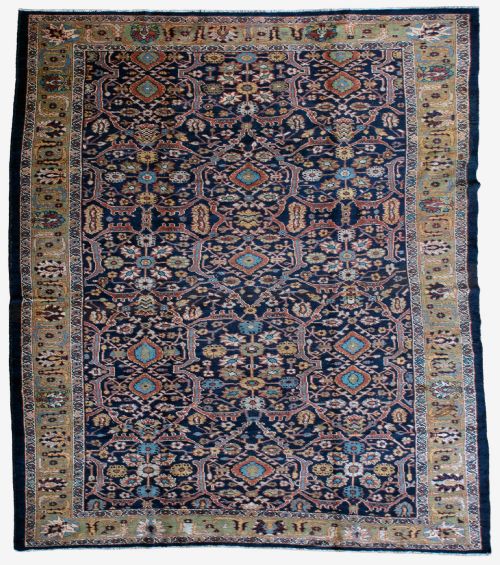
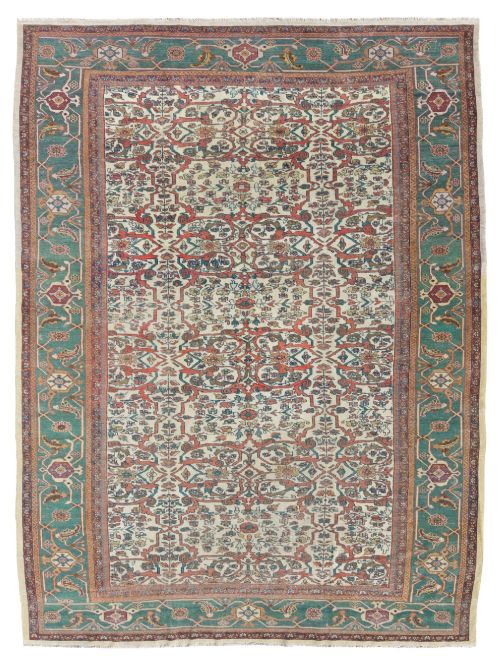
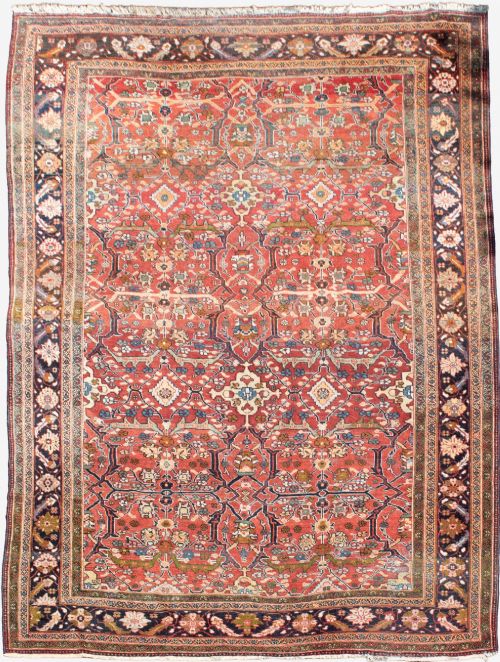
The pieces appearing on this page span several decades from the late nineteenth century through the early twentieth century, encompassing related regional styles such as Sultanabad, Ziegler, and Bakhtiari. These woven floor coverings range from compact area rugs measuring just over two metres to grand room size carpets exceeding five metres in length.
Most examples present traditional Persian designs, including all-over shrub motifs, Mustafi patterns, and distinct terracotta or blue and green colour grounds. They function practically as heavy floor coverings while serving as focal points for traditional and eclectic interiors alike.
How they were made
The construction of these floor coverings relies entirely on natural materials, utilising wool for the dense pile and cotton for the foundational warps and wefts. This combination provides the structural stability required for large room size carpets to lie flat and endure decades of foot traffic.
Weavers knotted the wool pile by hand onto cotton foundations, incorporating natural dyes that yielded characteristic terracotta, blue, and green grounds. The resulting textiles exhibit the robust handle and organic colour variation typical of Persian tribal and village production from the nineteenth and early twentieth centuries.
Current listings feature Persian wool and cotton carpets dated from the 1870s through the 1930s, including room size formats and runners.
What varies in quality
Quality in these woven carpets relates to the precision of the knotting and the integrity of the wool foundation across the entire field. Finer room size examples demonstrate greater density in the pile and tighter structural weaving that maintains the geometric or floral layout over extensive dimensions.
The depth and consistency of the natural dyes also distinguish individual pieces, particularly where scarce blue and green grounds or complex Mustafi designs are employed. The preservation of original edge finishes and overall pile retention further separate standard village rugs from exceptional room size carpets.
The Antique Mahal Floor Carpet Glossary
- Mahal
- A category of Persian carpet originating from the Sultanabad region and the wider Chahar Mahal valley in western Persia. These pieces are known for robust wool construction and large scale floral or all-over designs.
- Ziegler
- A commercial adaptation of traditional Persian carpet design, often characterised by muted palettes and grand room dimensions commissioned for Western markets. They share production roots with standard Mahal weaves.
- Sultanabad
- A nineteenth-century Persian carpet type from the same manufacturing centre as Mahal rugs, typically featuring bold, oversized floral motifs on spacious grounds. The terms frequently overlap in historical attribution.
- Bakhtiari
- A style associated with the nomadic and village tribes of the Chahar Mahal region, known for sturdy wool rugs and distinctive geometric or garden panel compositions. They represent the more rustic side of regional production.
- Mustafi
- A classical Persian repeating pattern featuring interconnected floral scrolls and trellis motifs across the field. This design appears frequently in sophisticated room size carpets from the late nineteenth century.
Antique Mahal Floor Carpet: Frequently Asked Questions
How do I clean an antique mahal floor carpet?
Professional specialist cleaning is essential for these delicate wool and cotton textiles to prevent dye bleeding and fibre distortion.
Vacuuming with standard beaters should be avoided in favour of gentle suction along the direction of the pile to remove embedded grit without damaging the knots.
Can I place these carpets in high traffic areas?
These robust wool textiles were originally built for heavy daily use in grand houses and domestic spaces.
Using a quality underlay helps absorb foot impact and prevents slipping, ensuring the cotton foundation and wool pile endure normal household activity.
What is the difference between a Mahal and a Ziegler?
Mahal carpets typically reflect traditional local Persian weaving patterns, whereas Ziegler pieces represent commercial adaptations specifically produced for Western decorative tastes.
Both originate from the same geographical region and share identical wool and cotton construction methods.
How do I date an antique carpet?
Dating relies on examining the specific dye palette, structural materials, knot density, and stylistic nuances recorded in the weaving.
Late nineteenth century examples often display more saturated natural colours and organic irregularities compared to early twentieth century production.