
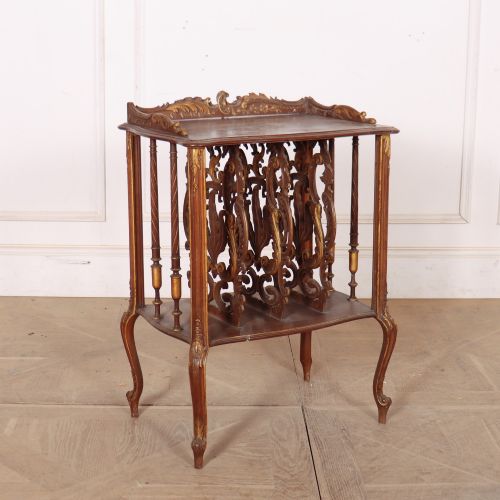


Antique Magazine Holder Table
An antique magazine holder table provides a dual-function surface and divided storage, bringing period timber to a sitting room.
Antique Magazine Holder Table
An antique magazine holder table combines a surface for books or lamps with partitioned sections underneath for papers, sheets, and periodicals. The evidence shows these pieces span the Regency, Victorian, and early twentieth-century periods, often taking the form of a Canterbury or a dedicated rack.
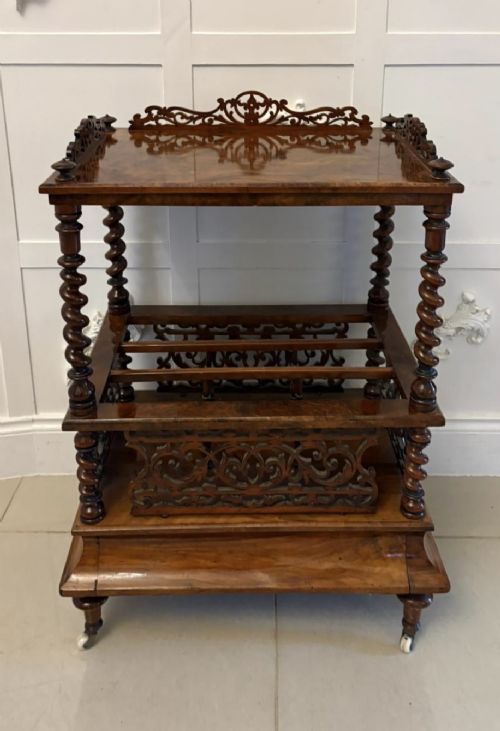
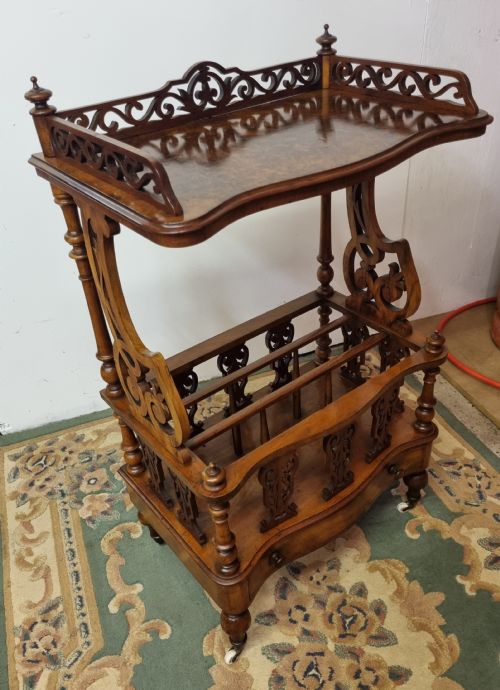
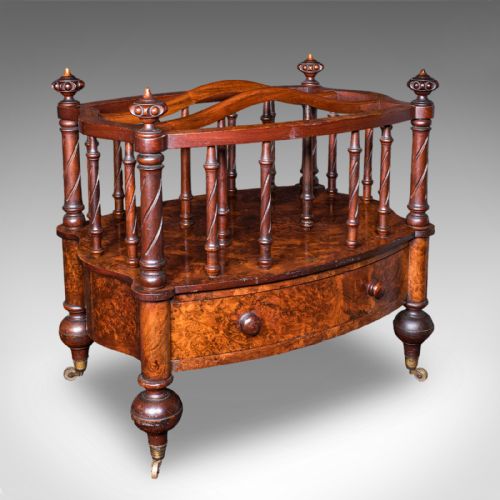
The version most commonly met on this page is the Victorian walnut or rosewood Canterbury, featuring multiple slatted dividers and frequently incorporating a lower drawer or small work top. These pieces originated as stands for sheet music or newspapers before transitioning to hold magazines in later decades.
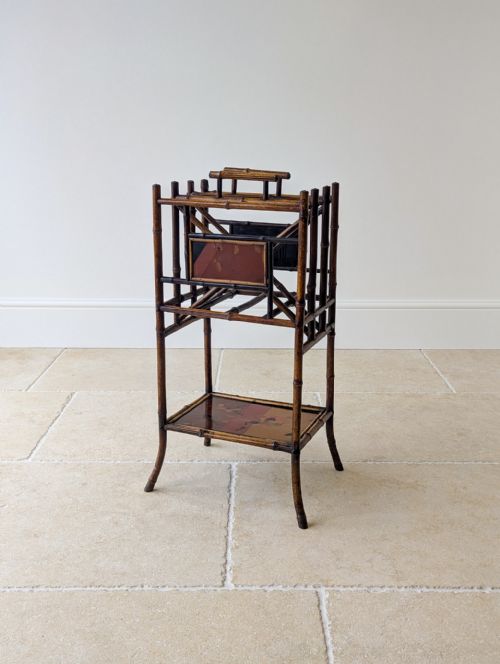
Makers utilised various timbers and styles, from George IV mahogany examples to Aesthetic Movement bamboo and French Rococo Revival designs. Buyers encounter side tables and occasional tables that integrate compartments for reading material directly into the frame.
How they were made
Cabinetmakers constructed these tables using dense hardwoods such as mahogany, walnut, burr walnut, and rosewood, frequently selecting figured veneers for the top surfaces and drawer fronts. Sections often combine turned wooden spindles with pierced or carved slats to form the vertical divisions.
Alternative materials appear in specific styles, including brass framing, ceramic details, and porcelain or bamboo elements used in later nineteenth and early twentieth-century pieces. Joinery relied on traditional mortise and tenon construction for the structural frames, ensuring stability beneath the weight of heavy paper collections.
Listings feature woods spanning mahogany, burr walnut, rosewood, and satinwood across the Victorian and Regency periods.
What varies in quality
The standard of timber selection largely dictates quality, separating pieces faced in richly figured burr walnut or dense rosewood from simpler mahogany or ebonised versions. Higher-grade examples display refined craftsmanship in the turned spindles, hand-carved mounts, and integrated drawers.
Structural complexity also separates standard utility stands from elaborate hybrid forms like the Canterbury whatnot or pieces featuring work tops and brass galleries. The crispness of the carving and the integrity of the divider slats indicate the original maker's investment of time.
The Antique Magazine Holder Table Glossary
- Canterbury
- A low stand with upright divisions, originally designed for holding sheet music and later utilised for newspapers and periodicals. This form frequently incorporates a small drawer or functions as an occasional table.
- Whatnot
- A piece of furniture consisting of a set of open shelves for displaying small objects, often combined with a Canterbury base in nineteenth-century designs.
- Burr walnut
- A veneer taken from the knotted growths of a walnut tree, highly prized for its swirling grain patterns on table tops and panels.
- Aesthetic Movement
- A late nineteenth-century design style that emphasised decorative art, visual beauty, and Japanese-influenced motifs, often using bamboo or ebonised wood.
- Regency
- A period of British design spanning the early nineteenth century, characterised by classical restraint, elegant proportions, and fine rosewood or mahogany execution.
Antique Magazine Holder Table: Frequently Asked Questions
What is a Canterbury?
A Canterbury is a low stand featuring partitioned vertical sections designed to hold papers, sheet music, or magazines beneath a flat surface.
Many examples include a small drawer at the base or take the form of an occasional table intended for placement beside seating.
How were these tables used?
These pieces served households as convenient bedside or parlour stands where reading materials, writing paper, and sheet music could be kept close at hand.
The flat top surface held lamps, decorative objects, or cups, while the lower racks kept periodicals upright and organised.
How do I date a Canterbury?
Dating relies on timber choice, architectural style, and construction details such as turned spindles or carved gallery work.
Earlier Regency and George IV examples tend to use solid mahogany or rosewood, while Victorian pieces frequently showcase burr walnut veneers, ebonised finishes, or bamboo.
Are these tables sturdy enough for daily use?
These pieces were built from hardwoods like mahogany and walnut to support the weight of heavy books and paper collections.
Careful placement and normal handling ensure they function reliably as side tables or magazine storage in modern rooms.