





Antique Louis Settee
An antique louis settee brings Parisian salon elegance into a room through carved timber frameworks, cabriole legs and upholstered or caned seats.
Antique Louis Settee
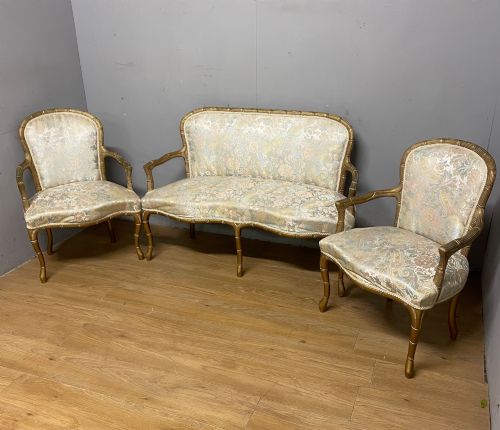
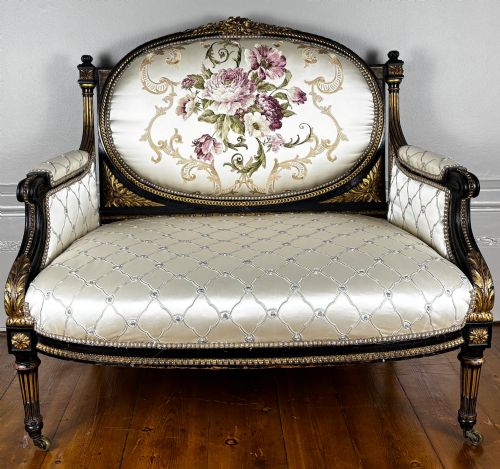
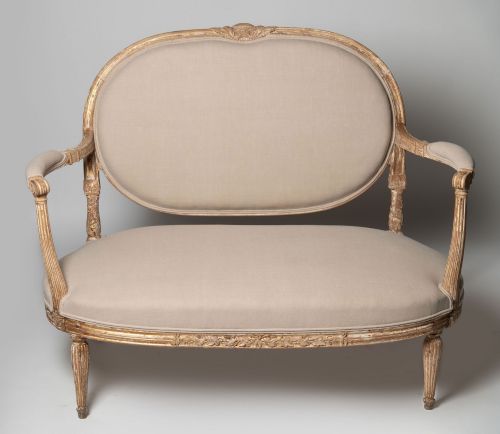
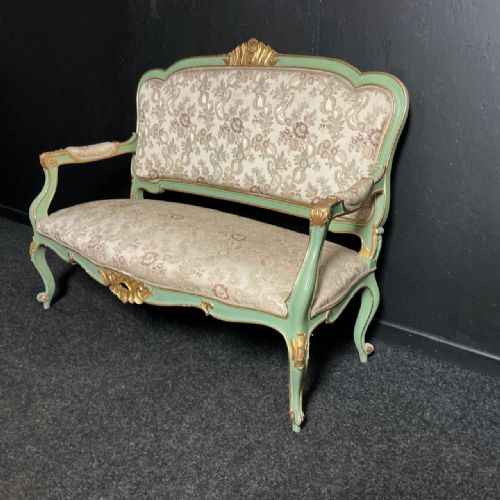
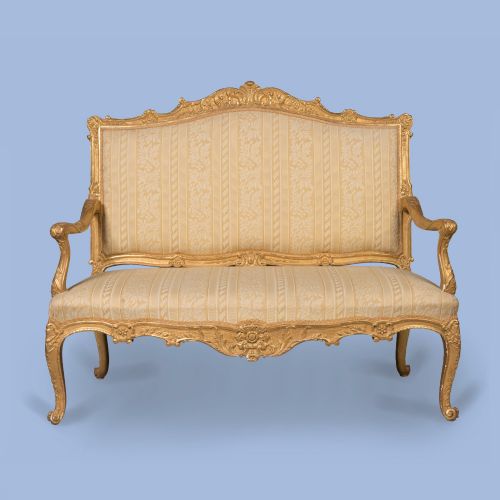
An antique louis settee represents formal French seating derived from court aesthetics, taking the form of two-seater or three-seater sofas, daybeds, and canapés. These pieces draw primarily on Louis XV and Louis XVI design vocabularies, featuring the flowing curves of Rococo revival or the straighter, neoclassical lines associated with later royal reigns.
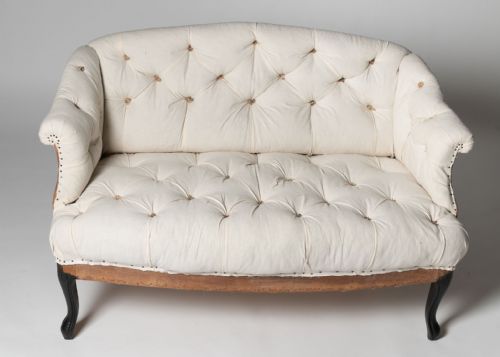
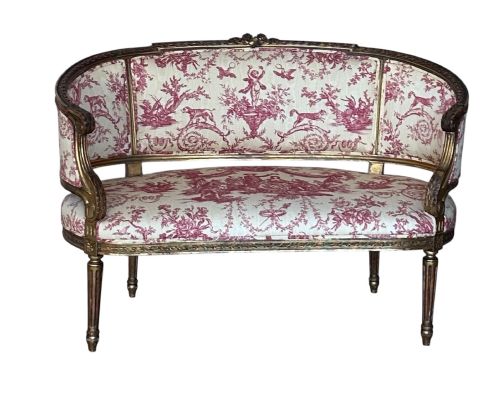
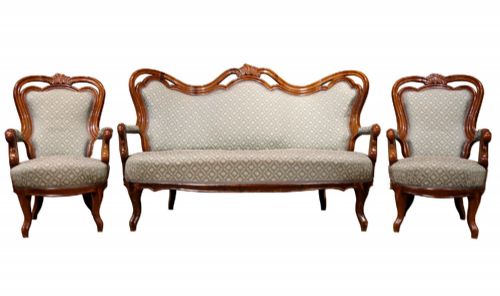
The inventory on this page spans from the nineteenth century into the twentieth century, capturing both period originals and later revivals executed in the French provincial or chateau manner. Forms range from compact boudoir love seats and triple-back settees to grand giltwood sofas upholstered in silk, linen, and traditional textiles.
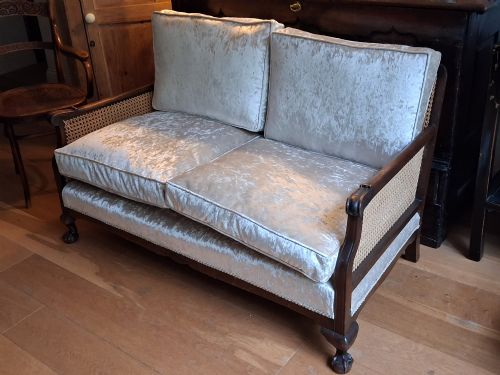
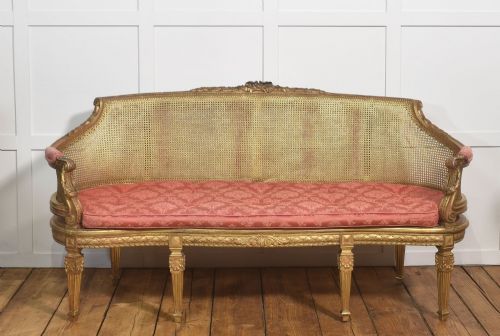
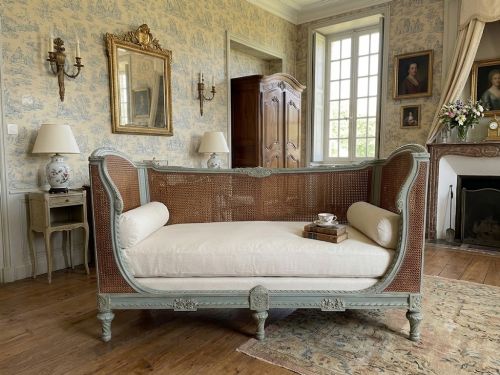
Buyers encounter walnut, beech, and mahogany frames alongside painted and ebonized surfaces, often accented with parcel gilding. Many examples incorporate cane work into the backrests and side panels, producing lighter structural profiles suited to drawing rooms and reception spaces.
Materials and construction methods
Makers constructed these frames from solid hardwoods like walnut, beech, and mahogany, selecting timber capable of supporting deep hand-carving along the crest rails, aprons, and cabriole legs. Giltwood finishes were applied using thin layers of gold leaf over preparation grounds on carved wood surfaces, while painted finishes utilised layered pigments on a prepared base.
Cane work involved hand-weaving natural rattan strands through drilled holes along the frame margins to create resilient, open-patterned backrests and side panels. Upholstered versions relied on traditional stuffing materials secured within timber frames, paired with textile coverings ranging from woven fabrics to silk.
Antique Louis Settee Retail Price Guide 2026
Typical asking prices for louis settee among the pieces listed under this phrase on Sellingantiques today, from the lower quarter to the upper quarter. They describe what is for sale here now, not the wider market.
Boudoir love seats were originally proportioned for voluminous nineteenth-century skirts.
Distinctions in craftsmanship and design
Quality rests in the precision of the hand-carving across the wooden frame, where crisp floral motifs and flowing structural lines separate superior joinery from simpler production. The depth of the gilding and the fineness of the cane work further distinguish higher-tier pieces.
Proportion and structural integrity dictate the standing of a settee, with balanced curves and tight joints commanding greater consideration than heavier, less refined framing.
The Antique Louis Settee Glossary
- Canapé
- A traditional French term for a long upholstered settee or sofa featuring an exposed wooden frame. These pieces typically seat two or three people and mirror the stylistic details of contemporary armchairs.
- Bergère
- An enclosed upholstered armchair or settee featuring solid wooden sides filled with cane work or upholstery. This design provides a cocooning seat structure common in French revival furniture.
- Giltwood
- Timber coated with gold leaf applied over a gesso base. This finish produces the reflective metallic surface characteristic of formal salon furniture.
- Cane
- Woven material made from the peeled bark of rattan palms. It forms resilient, decorative panels on the backs and sides of seating frames.
- Rococo Revival
- A nineteenth-century design movement resurrecting the asymmetric scrolls, shell motifs, and curving lines of the mid-eighteenth-century French court style.
Antique Louis Settee: Frequently Asked Questions
How do I place an antique louis settee in a modern room?
Pair these settees with minimalist contemporary furnishings to let the carved wooden frames and gilt finishes stand out as focal points. Their compact profiles suit living rooms, large bedrooms, and hallways.
Keep surrounding decor neutral to highlight the upholstery and timber tones without crowding the room's floor plan.
What is the difference between Louis XV and Louis XVI settees?
Louis XV pieces exhibit curving lines, cabriole legs, and asymmetrical Rococo ornamentation that emphasise fluid movement. They feel organic and exuberant.
Louis XVI designs introduce neoclassical restraint, featuring straight fluted legs, rectangular backrests, and symmetrical geometric carvings inspired by classical antiquity.
How do I care for cane work on a settee?
Maintain cane panels by dusting them gently with a soft brush and keeping the room humidity moderate to prevent the natural fibres from drying out and snapping. Avoid placing these pieces in direct sunlight.
Period cane work is durable under normal use but benefits from weight being distributed evenly across the seat rather than concentrated on one spot.
Are these settees comfortable for everyday sitting?
Many of these pieces were built for formal reception rooms, so their seats often feel firmer and more upright than modern lounging sofas. They encourage an upright posture suited to conversation.
Upholstered versions with deep cushioning offer a softer sit, while caned models rely on scatter cushions for added comfort.