
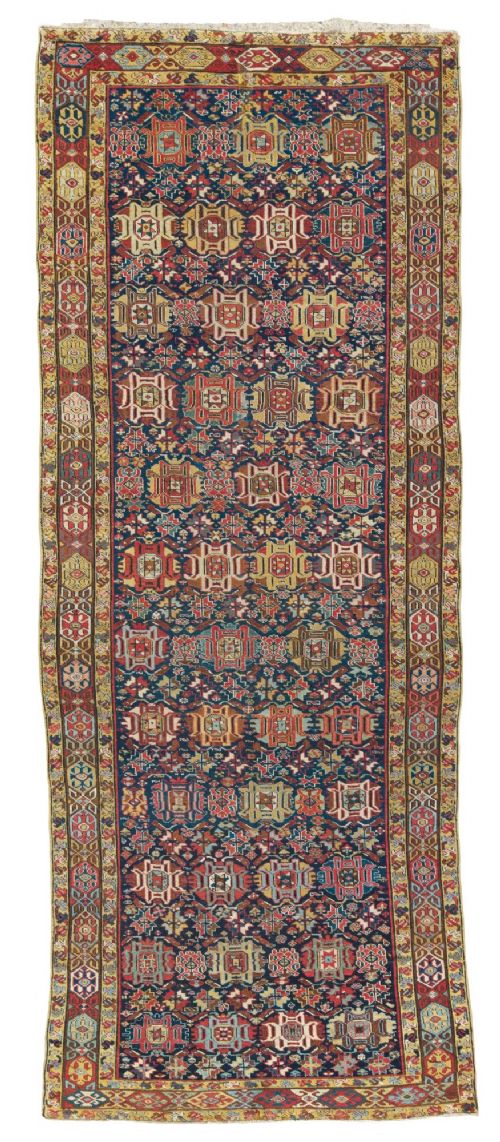


Antique Long Area Rug
An antique long area rug brings warmth and deep pattern to a hallway or corridor, grounding a space with centuries of woven history.
Antique Long Area Rug
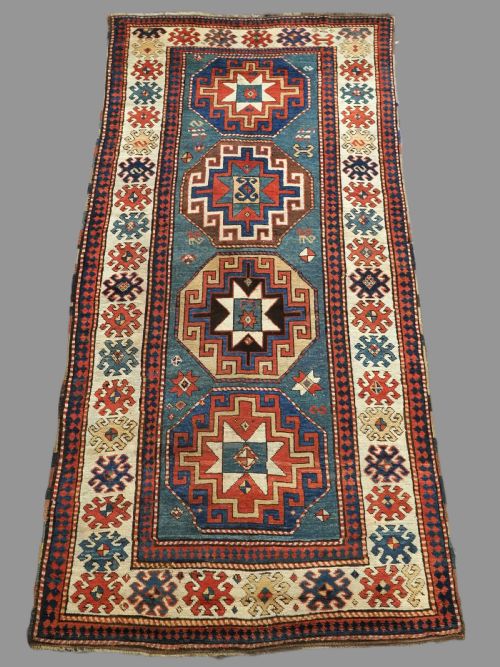
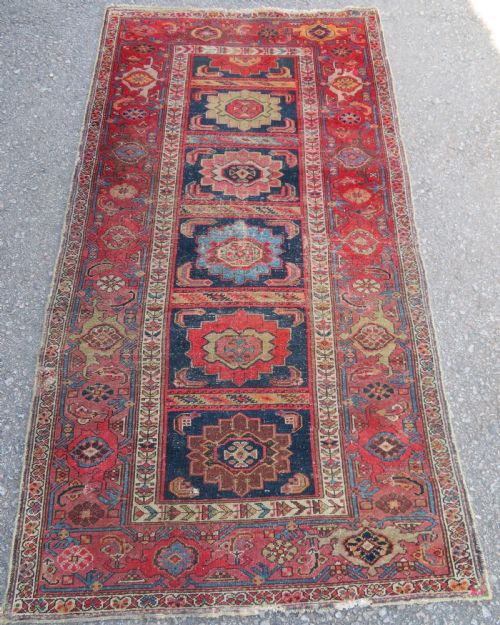
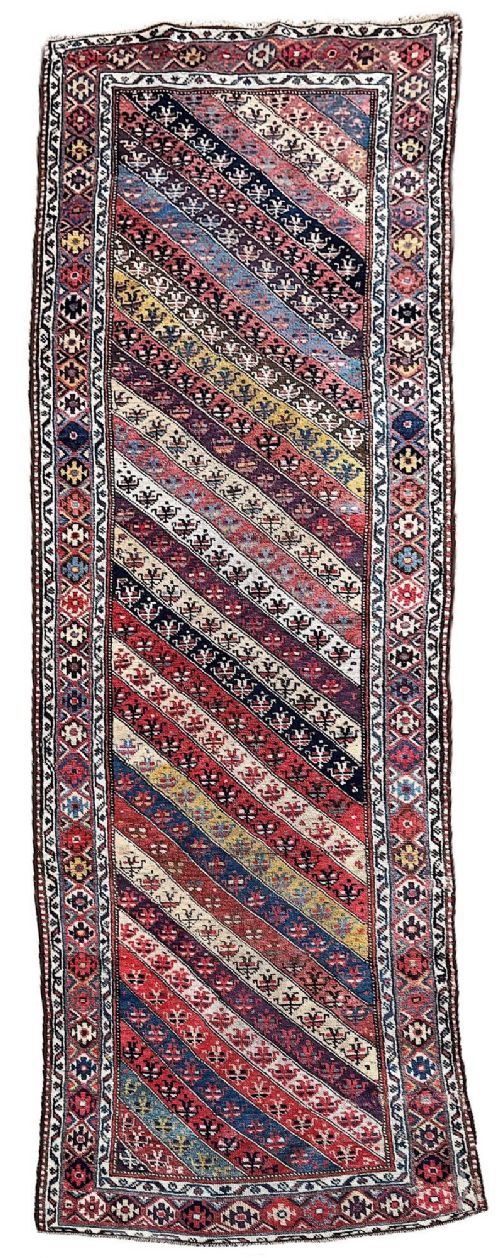
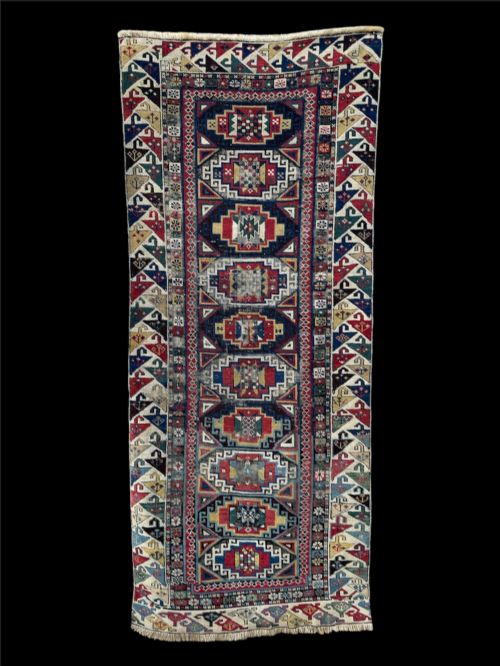
When searching for an antique long area rug, buyers encounter elongated formats designed to span corridors, galleries, and substantial rooms. These textiles derive primarily from Caucasian, Persian, and Turkish weaving traditions dating from the nineteenth and early twentieth centuries.
The selection on this page centres on formats designated as runners, kellehs, and long rugs. Common regional attributions include Kurdish, Shirvan, Kazak, Bidjar, and Afshar styles, each displaying distinct geometric or figurative motifs.
These pieces function practically as floor coverings while serving as primary decorative elements. Their extended proportions require specific architectural settings, making them well suited to hallways, grand staircases, and long reception spaces.
Materials and Construction
Weavers constructed these textiles using wool, cotton, and hand-spun wool for the foundation and pile. Wool provides durability and resilience for high-traffic areas, while cotton frequently forms the warp and weft threads of urban and village workshops.
Natural dyeing techniques produced the varied palette seen across these pieces, utilising local plant and mineral sources. Hand-knotting and flatweaving methods, including kilim and soumak structures, determined the final texture and density of the rug.
Listings span periods from the mid-nineteenth century through the 1920s, utilising wool, cotton, and hand-spun wool across Persian and Caucasian styles.
Assessing Quality and Execution
Quality in these textiles depends heavily on knot density and the precision of the geometric or pictorial drawing. Tightly packed piles and secure foundations ensure longevity, whereas looser construction leads to faster wear in heavy-use environments.
The clarity and saturation of the natural dyes distinguish superior examples from standard ones. Well-executed pieces maintain crisp outlines in motifs like boteh, medallions, and tribal guls, reflecting the skill of the original weaver.
The Antique Long Area Rug Glossary
- Kelleh
- A large format rectangular rug, typically longer than a standard room size rug but broader than a narrow runner. These proportions suit spacious galleries and extended rooms.
- Kilim
- A flatwoven textile produced without a pile by tightly interweaving warp and weft strands. This technique creates a lightweight, reversible rug with sharp geometric patterns.
- Boteh
- A traditional teardrop or almond-shaped motif with a curved upper end, frequently repeated across Persian and Caucasian fields. It represents a stylized floral or cypress form.
- Soumak
- A brocade-like flatweaving technique where supplementary decorative threads are wrapped around the warp threads. This method adds structural thickness and texture to the reverse side.
- Gul
- A medallion or repeating octagonal stamp motif often found in tribal weavings such as Turkmen and Kazak rugs. Each pattern signifies specific regional or ancestral lineages.
Antique Long Area Rug: Frequently Asked Questions
Where should I place a long rug?
These elongated formats work best in corridors, hallways, and narrow reception rooms where standard square or rectangular sizes do not fit. They add warmth and visual interest to transitional spaces.
Ensure the dimensions leave a visible border of floorboards around the perimeter to frame the textile correctly.
How do I clean an antique rug?
Regular gentle vacuuming without a rotating brush roll helps remove embedded dust and grit from the wool pile. Professional conservation cleaning is recommended for deep washing.
Avoid harsh chemical treatments and excessive moisture, which can damage natural dyes and fragile cotton foundations.
What is the difference between a runner and a kelleh?
Runners are narrow and extended, specifically designed for hallways and corridors. Kellehs are wider formats that provide similar length but allow for larger central medallions and expansive fields.
Both serve extended spaces, but kellehs require broader floor areas to display their complete designs.
How do I identify a Caucasian rug?
Caucasian pieces typically feature bold geometric medallions, hooked designs, and vibrant primary colours woven by nomadic or village groups. The wool is often heavily saturated and durable.
Examining the knotting style and characteristic motifs like those from Shirvan, Kazak, or Dagestan helps confirm the regional origin.