




Antique Lion Figure Pair
An antique lion figure pair brings symmetry and power to a room, cast in bronze, carved in wood, or shaped in pottery.
Antique Lion Figure Pair
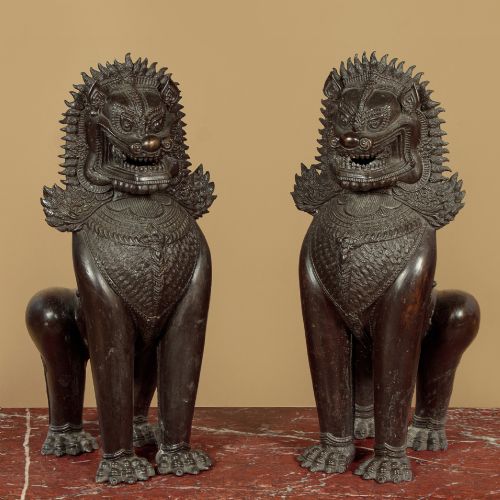
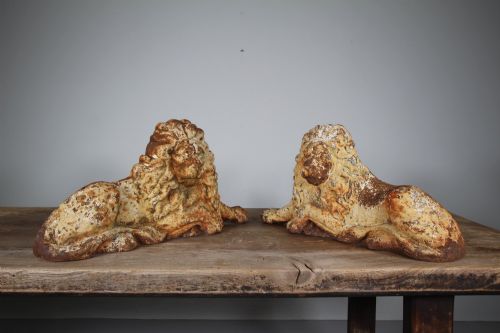
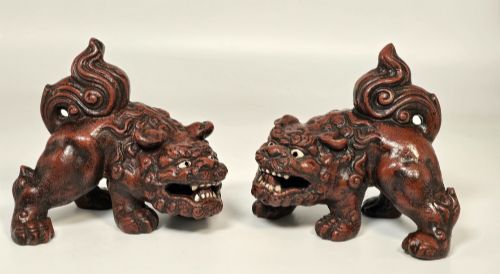
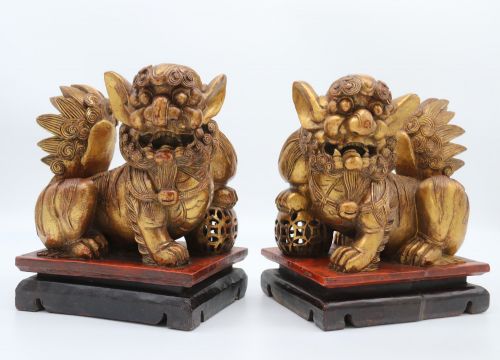
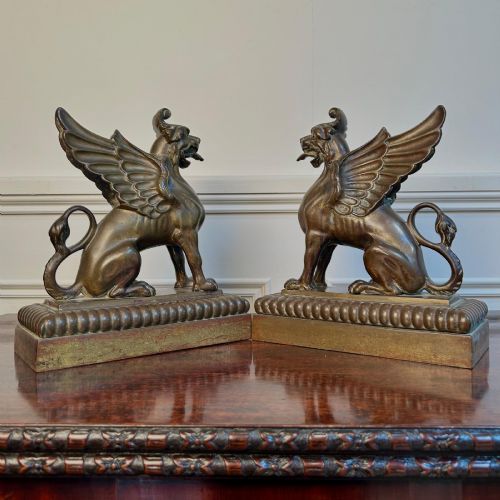
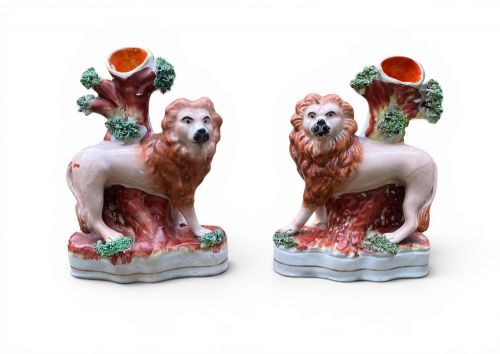
An antique lion figure pair typically consists of matched mantel ornaments, desk accessories, or architectural guardians designed to face one another. When searching for an antique lion figure pair, buyers encounter everything from grand bronze Grand Tour models to humble Staffordshire pottery mantel dogs.
The selections span the nineteenth century through the art deco period, drawing upon neoclassical European traditions and Chinese Buddhist iconography alike. The most frequent examples on this page are nineteenth century metal castings and ceramic figures intended for domestic display.
Materials and methods
Ceramic and stone versions rely on earthenware, terracotta, alabaster, and soapstone, frequently finished with glazes, paint, or gilding. Carvers also utilised marble and serpentine for classical Grand Tour subjects mounted on plinths.
Antique Lion Figure Pair Retail Price Guide 2026
Typical asking prices for lion figure pair among the pieces listed under this phrase on Sellingantiques today, from the lower quarter to the upper quarter. They describe what is for sale here now, not the wider market.
Judging the work
Quality rests primarily in the crispness of the modelling and the fidelity of the casting or carving. Superior pairs display anatomical authority and deliberate surface finish, whereas lesser examples lose definition in repetitive moulding.
The handling of the material further distinguishes the output, from finely chased gilt bronzes to carefully hand painted Staffordshire earthenware. The weight and stability of the pair also reflect the ambition of the original maker.
Lancaster and Sons of Hanley·Louis Riche
The Antique Lion Figure Pair Glossary
- Canova lions
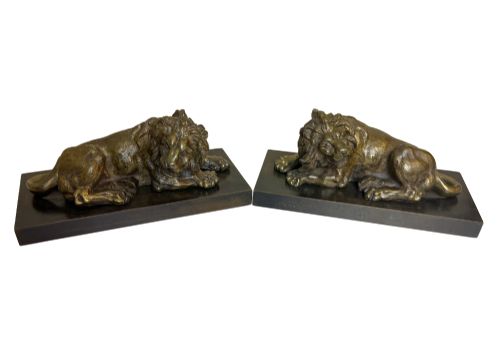
- Sculptural lions based on the monuments designed by Antonio Canova for the tomb of Pope Clement XIII in Rome. These subjects were widely reproduced during the nineteenth century for Grand Tour travellers.
- Foo dogs
- Traditional Chinese guardian lions also known as Buddhistic lion dogs. They typically appear as matched pairs guarding sacred spaces.
- Spill vase
- A hollow ceramic or metal vessel incorporated into a figure group designed to hold wooden spills for lighting fires. They are common in nineteenth century Staffordshire pottery.
- Grand Tour
- A cultural journey undertaken by wealthy young Europeans in the eighteenth and nineteenth centuries. Travellers collected miniature bronzes and stone carvings as mementos.
- Recumbent
- Pertaining to a figure depicted lying down or resting. Recumbent lion pairs often served as bookends or hearth ornaments.
Antique Lion Figure Pair: Frequently Asked Questions
How were lion figures used historically?
Matched pairs frequently guarded mantelpieces, doorways, and desks in nineteenth century homes. They served as symbols of strength and status, often displayed symmetrically.
Heavier examples functioned practically as bookends or doorstops while purely decorative pairs sat upon pedestals or tables.
How do I tell cast iron from bronze?
Bronze is heavier, resists corrosion, and often exhibits a warm patina beneath accumulated polish or dirt. Cast iron is magnetic, tends to feel more brittle, and frequently shows surface pitting.
Iron examples usually carry black paint or japanning to protect the metal from rust.
What is a Staffordshire lion?
Staffordshire figures are earthenware ceramics produced in the English pottery districts during the Victorian era. They were modelled for ordinary homes and painted by hand.
These pottery figures often feature prominent glazing, including treacle brown finishes or simple underglaze colours.
Are bronze lions always solid?
Many larger antique bronze and brass figures are cast hollow to conserve metal and reduce weight. Foundries used core supports during casting which can sometimes be seen inside.
Smaller desk pieces and Grand Tour models were more frequently cast as solid metal.