

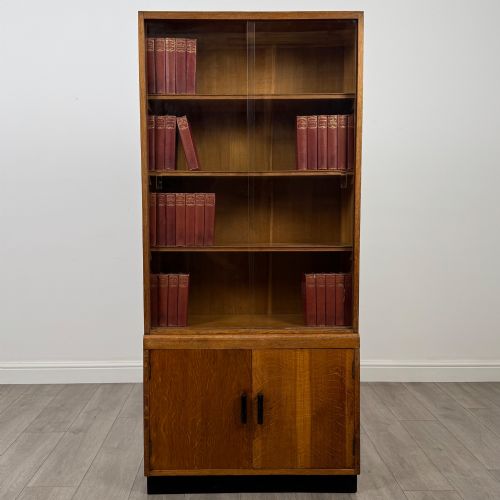
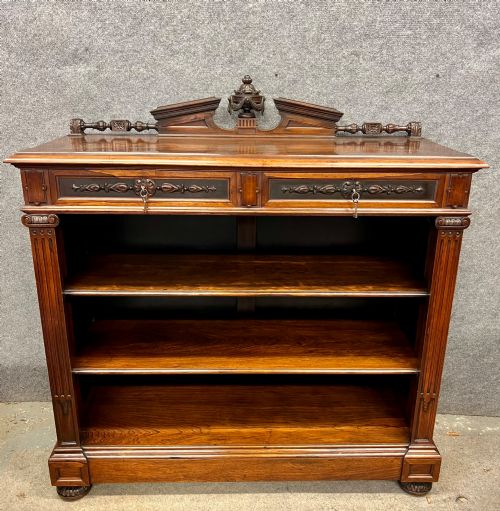
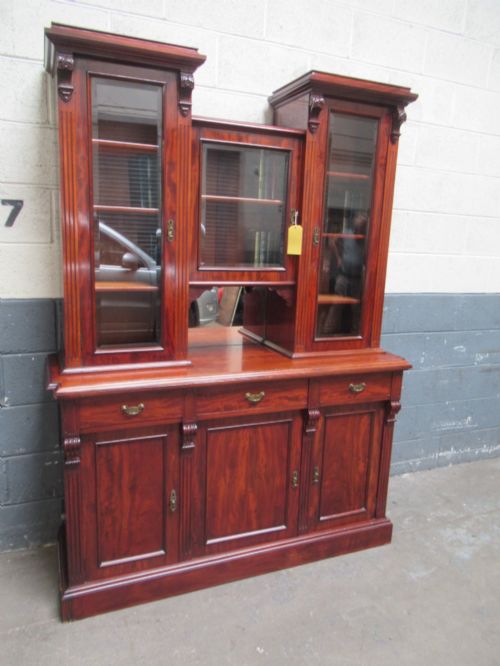
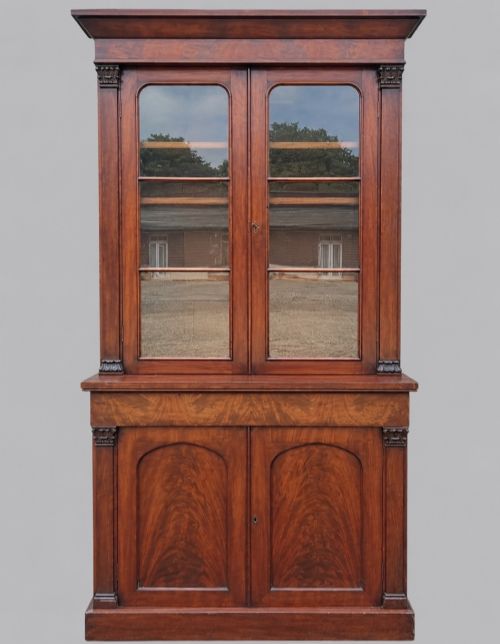
Antique Library Storage Cabinet
An antique library storage cabinet organises volumes and papers with substance, offering lasting utility and architectural presence for a room.
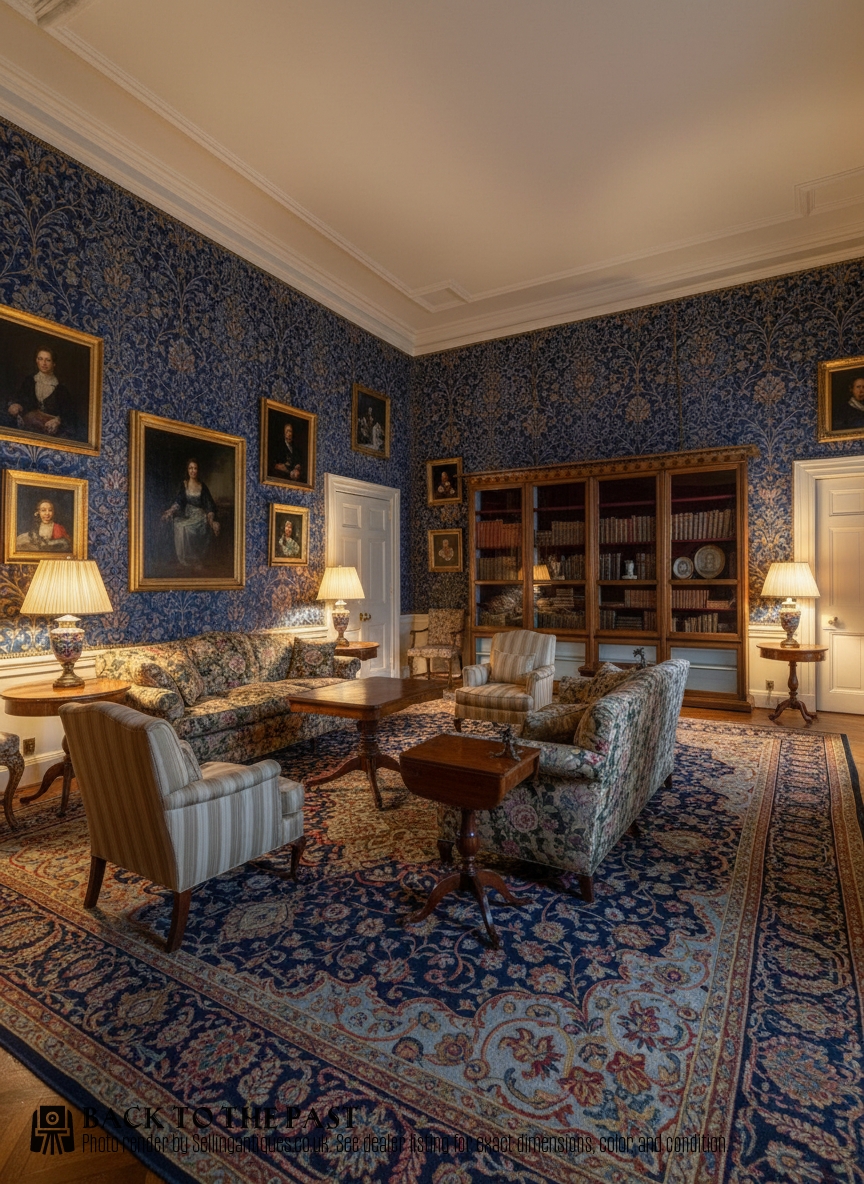
Antique Library Storage Cabinet
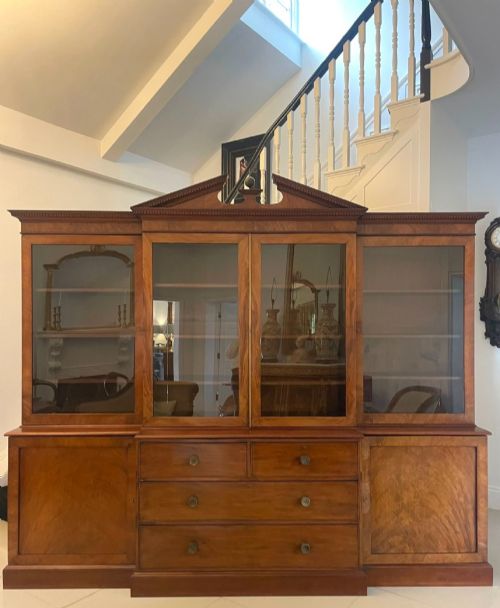
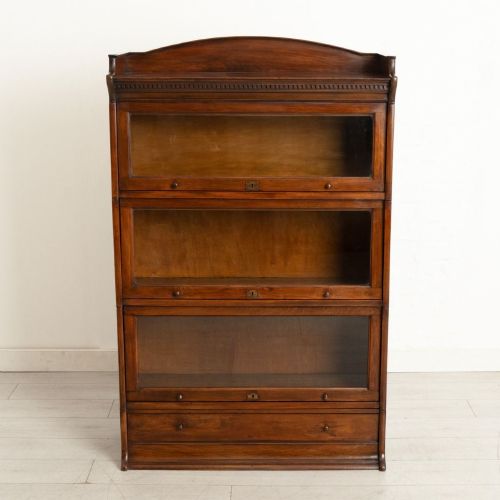
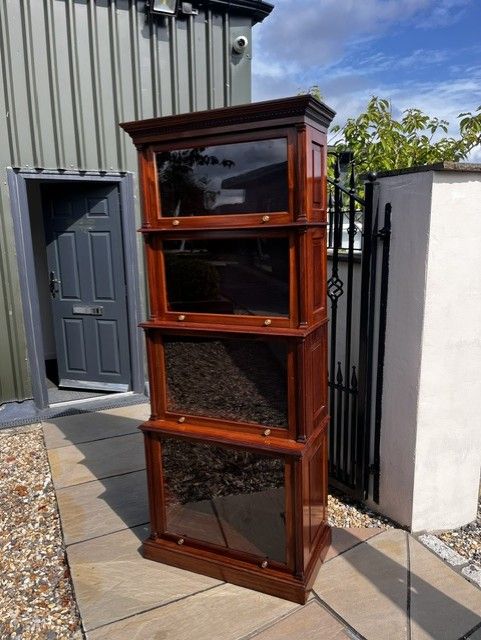
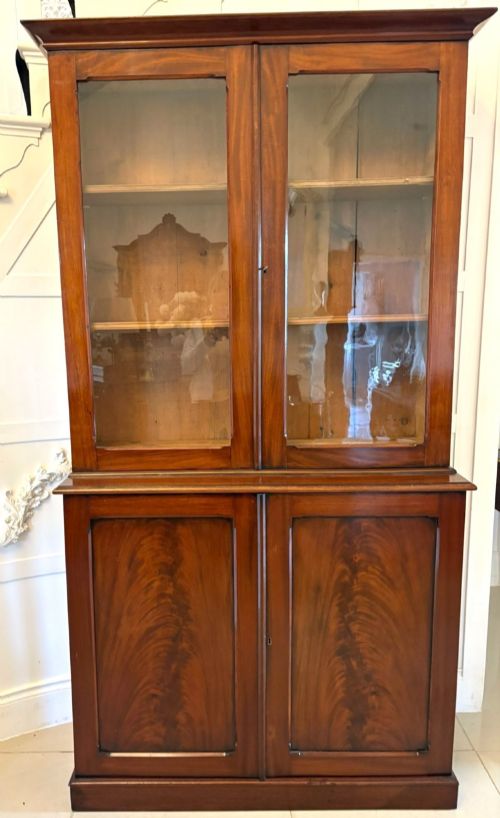
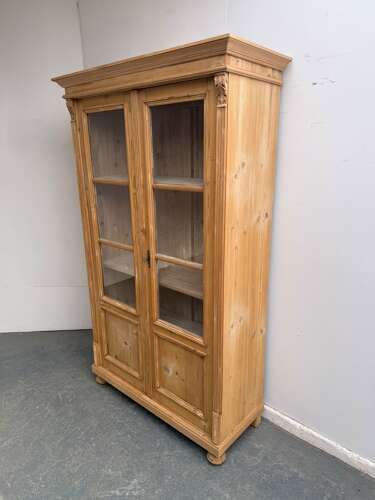
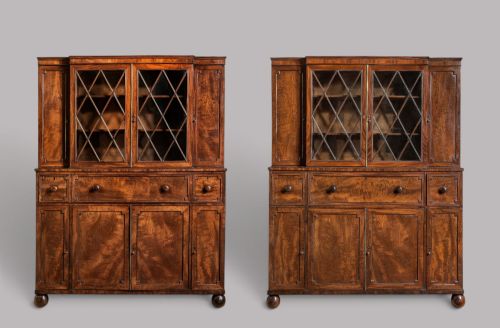
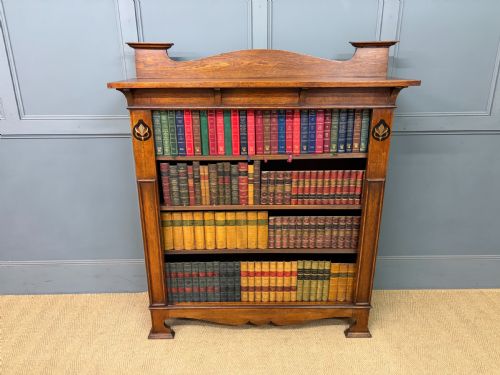
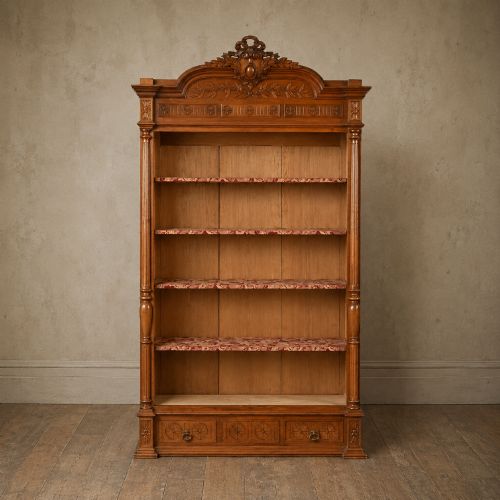
When buyers search for an antique library storage cabinet, they encounter substantial pieces designed to house books, manuscripts and papers securely within domestic or institutional settings. These items include tall breakfront bookcases, glazed display units, modular barristers' systems and multi-drawer storage cabinets originating from the nineteenth and early twentieth centuries.
The selection ranges from expansive Regency and Victorian mahogany breakfronts to compact Edwardian walnut cabinets and utilitarian oak pieces from the early decades of the twentieth century. Forms span open shelf bookcases, enclosed glazed cabinets, and specialised multi-drawer configurations suited to both display and archival storage.
Periods represented across these pieces extend from the Regency and William IV eras through Victorian and Edwardian decades, culminating in 1930s utilitarian and school department designs. Regional and stylistic variations include English country oak, Arts and Crafts movement pieces, and continental European interpretations.
Materials and construction methods
Cabinet makers relied primarily on dense hardwoods such as mahogany, oak, walnut and yew, utilising solid timbers for structural frames and figured veneers to enhance prominent display surfaces. Brass hardware, including locks, hinges and drawer pulls, provides functional contrast against the dark tones of mahogany and walnut.
Glazing techniques employed leaded or plain glass within wooden framework to protect sensitive volumes from dust while maintaining visual access to library contents. Internal construction frequently incorporates adjustable wooden shelving supported by brass pins or traditional rackwork mechanisms, alongside closely fitted drawers for smaller documents.
Antique Library Storage Cabinet Retail Price Guide 2026
Typical asking prices for library storage cabinet among the pieces listed under this phrase on Sellingantiques today, from the lower quarter to the upper quarter. They describe what is for sale here now, not the wider market.
An eighteenth-century cabinet maker would likely be baffled by the term filing cabinet, having spent his days hiding ledgers behind respectable Gothic tracery.
Distinctions in construction and design
Quality separates pieces through the selection of timber, where figured flame mahogany or burr walnut veneers demonstrate superior material choice compared to plain utility woods like pine. The handling of secondary timbers internally and the precision of dovetail joints on drawers signal the standard of workshop execution.
Proportion and architectural detailing distinguish standard commercial production from pieces commissioned from prominent cabinet makers. Refined carving, integrated breakfront geometry, and original functional hardware elevate the standing of a cabinet within its period.
Gillows·Maple & Co.·Hille
The Antique Library Storage Cabinet Glossary
- Breakfront
- A cabinet design where the central section projects forward from the flanking wings. This configuration adds architectural depth and shadow to large library pieces.
- Barrister bookcase
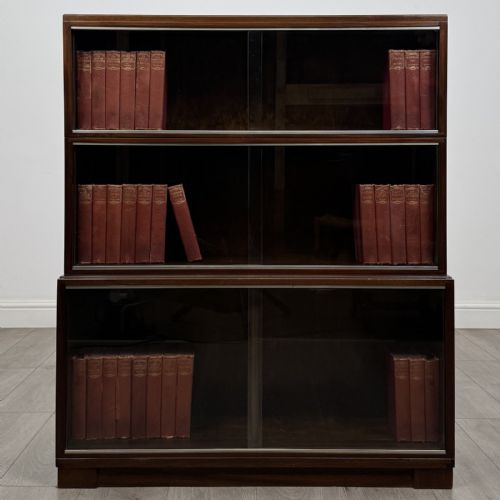
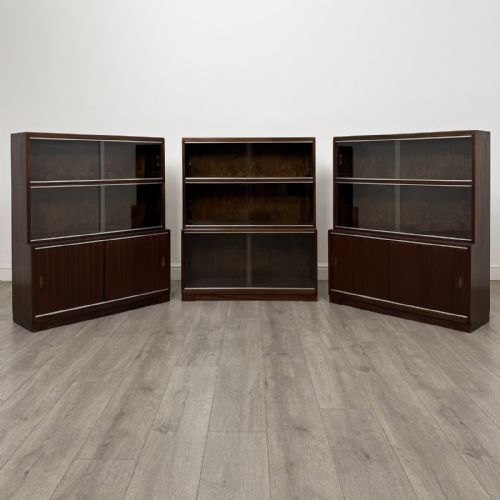
- A modular bookcase featuring stacking sections with upward-lifting glass doors. This design allows individual tiers to be added or rearranged as a library grows.
- Waterfall bookcase
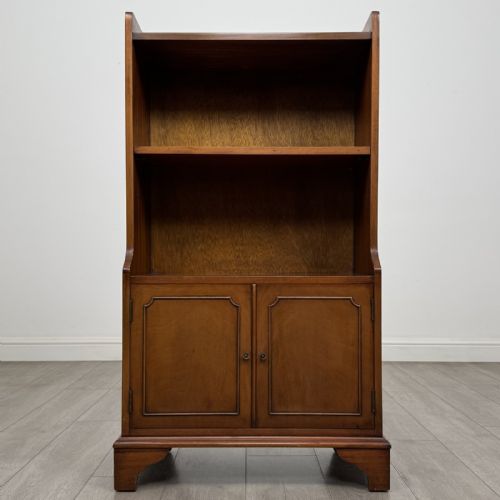
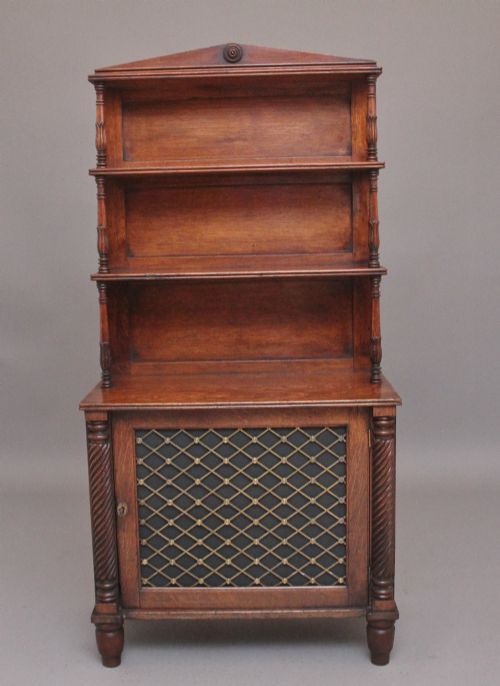
- A shelving unit characterised by tiers that step back progressively from bottom to top. The sides often follow this descending curve, resembling water falling over rocks.
- Canterbury
- A low multi-partitioned cabinet originally designed to hold sheet music or folios. Victorian examples frequently incorporate turned legs and open slat dividers.
- Adjustable shelves
- Shelving supported by movable pins or ratchet strips rather than fixed partitions. This mechanism allows the interior height to be customized for varying book sizes.
Antique Library Storage Cabinet: Frequently Asked Questions
How do I choose the right size cabinet?
Measure your wall space and ceiling height carefully, accounting for the cornice overhang which often extends beyond the main body of the cabinet.
Consider the depth of the shelves in relation to your book collection, noting whether you require enclosed glazed doors or open access.
Are the shelves adjustable for different books?
Many period library cabinets feature adjustable shelving systems utilising wooden ratchets, brass studs or traditional peg supports.
This adaptability allows you to accommodate oversized folios alongside standard octavo volumes without difficulty.
How should I care for mahogany and walnut wood?
Maintain a stable indoor humidity level away from direct heat sources and strong sunlight to prevent the timber and veneers from drying out.
Apply a traditional beeswax polish sparingly to nourish the grain and preserve the natural sheen of the polished surface.