


Large Bookcase Display Unit
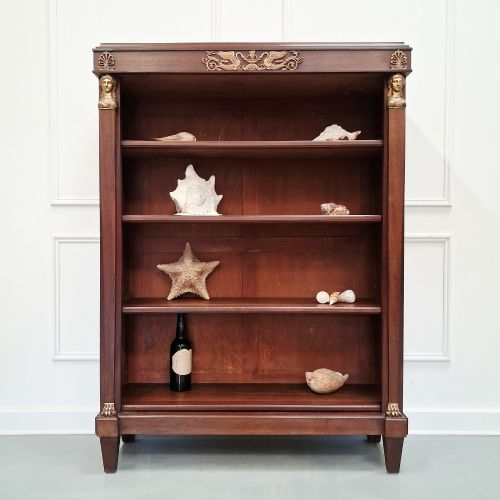
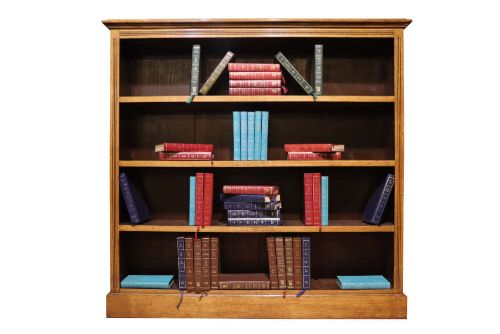
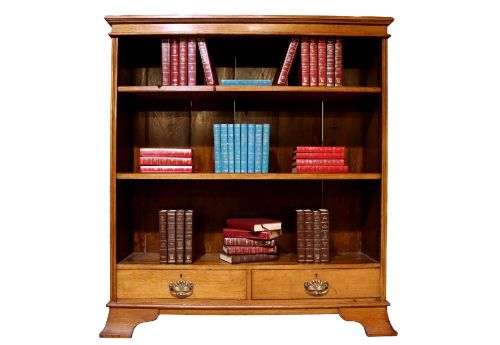
A large bookcase display unit holds a substantial library while framing cherished objects behind glass or upon open shelves.
Large Bookcase Display Unit
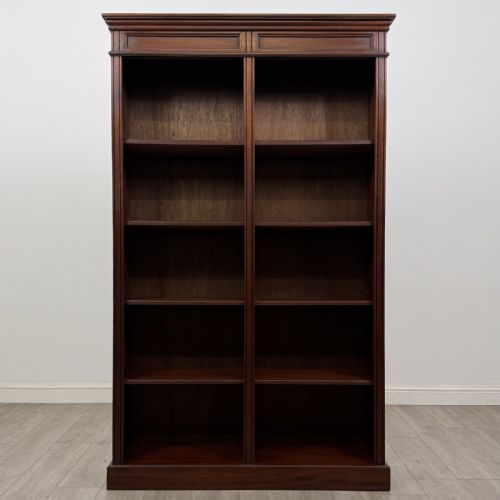
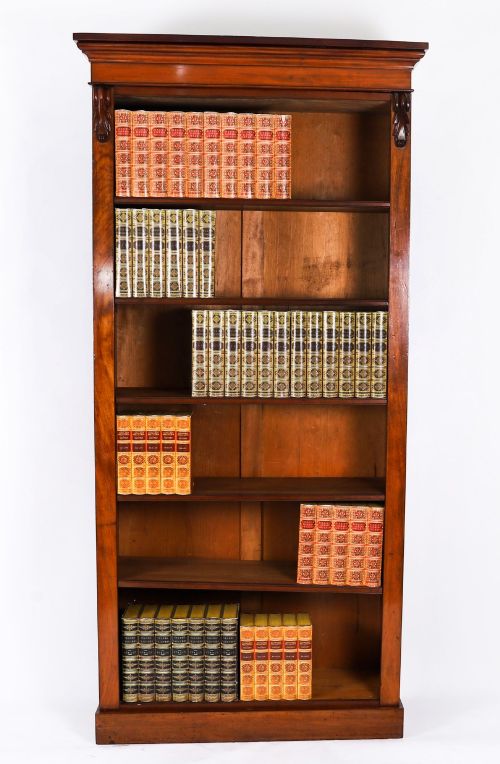
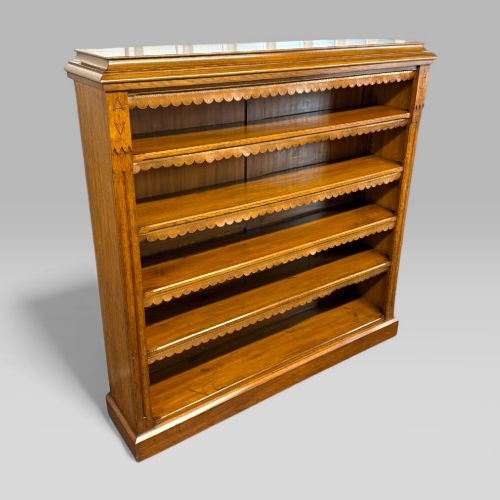
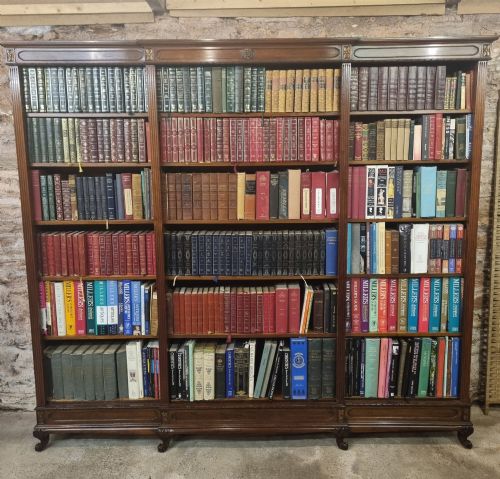
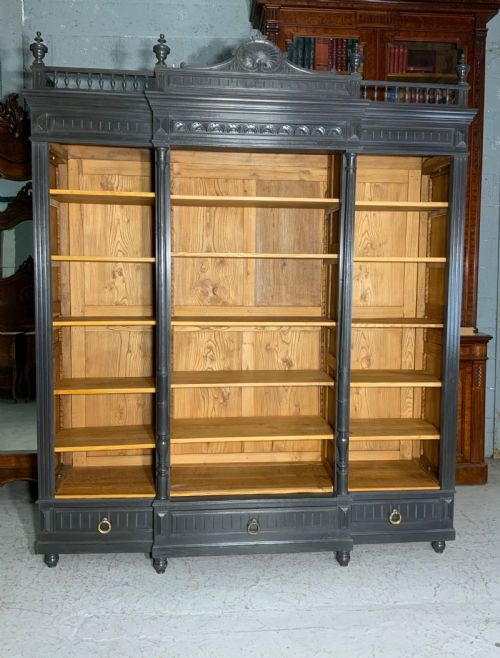
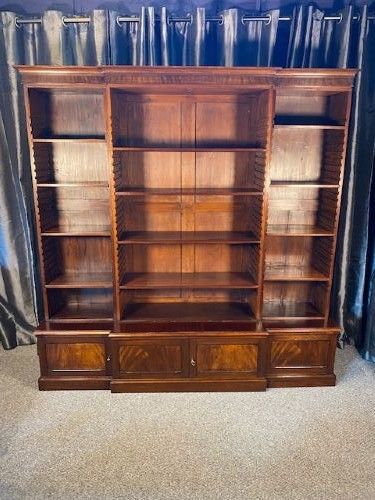
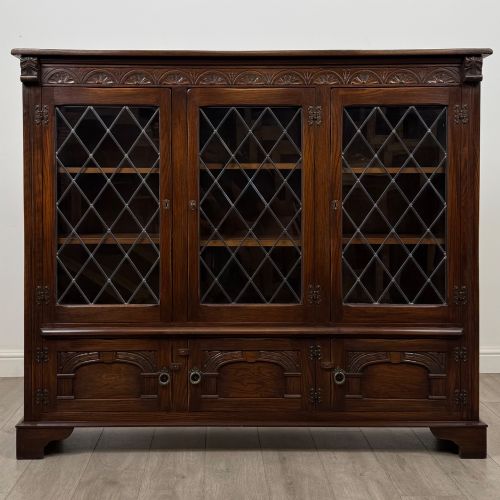
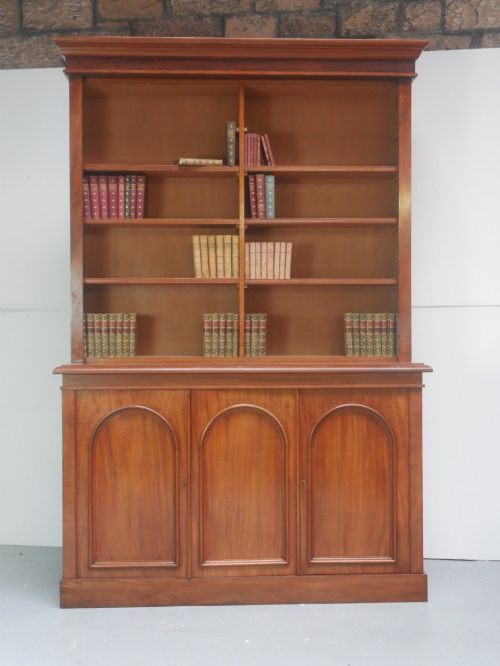
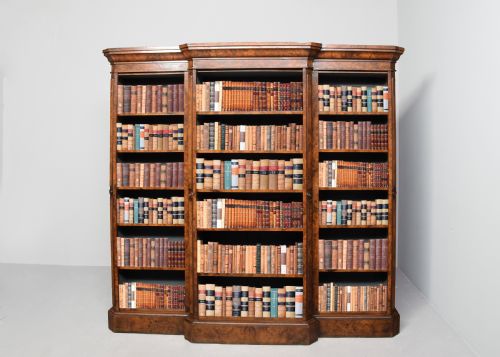
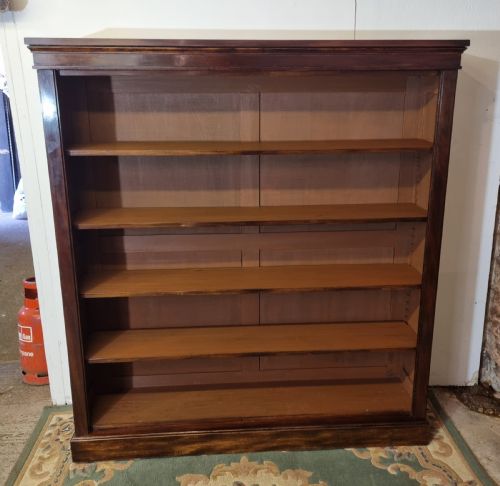
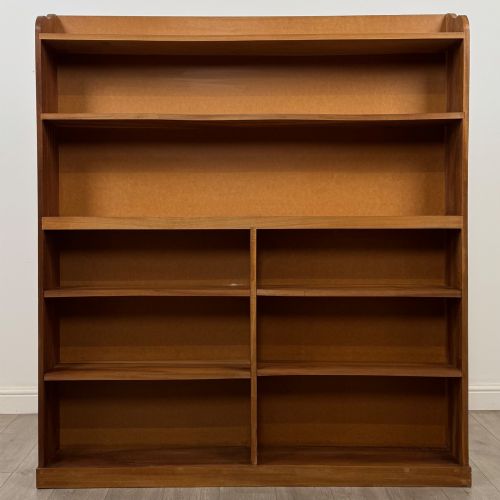
A large bookcase display unit combines substantial book storage with display space, appearing in forms such as open bookcases, breakfront library bookcases, and glass-fronted cabinets. These pieces span periods from the mid-nineteenth century through the Edwardian era, drawing on Victorian proportions and styles like the Aesthetic Movement or French Provincial.
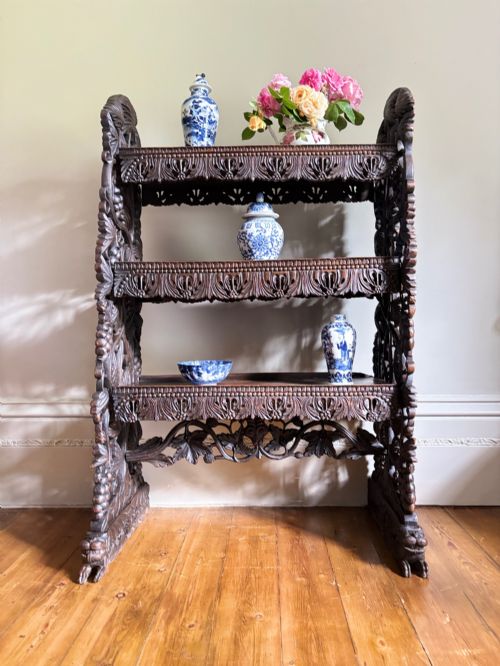
Buyers encounter sturdy oak and mahogany library pieces alongside lighter walnut, pine, and satinwood examples. Many incorporate adjustable shelving or wall-mounted configurations, designed to anchor a room while holding volumes and ornaments in domestic spaces.
How they were made
Cabinet makers utilised dense hardwoods such as mahogany, oak, and walnut, frequently applying flame mahogany veneer or burr walnut to create rich surface movement on large facades. Pine and satinwood served alternative domestic functions, paired with brass hardware and glass for cabinet doors.
Construction methods relied on sturdy joinery to support heavy library loads, incorporating breakfront sections, carved detailing, and ebonised finishes. Surfaces were finished with wax polish to protect the timber while highlighting natural grain patterns.
Large Bookcase Display Unit Retail Price Guide 2026
Typical asking prices for large bookcase display unit among the pieces listed under this phrase on Sellingantiques today, from the lower quarter to the upper quarter. They describe what is for sale here now, not the wider market.
French bakers racks originally served Parisian boulangeries before finding new life holding books and display items in modern homes.
What varies in quality
Quality rests upon the selection of timber figures, such as burr walnut or flame mahogany, and the sophistication of architectural details like breakfront configurations and carved mouldings. Superior examples show thoughtful proportion and integrated adjustable shelving systems.
The integrity of secondary timbers and the precision of the joinery distinguish utilitarian utility pieces from grand library furniture designed by prominent workshops for country houses.
Sir Charles Barry·Goodhall Lamb and Heighway of Manchester·Wedgwood
The Large Bookcase Display Unit Glossary
- Breakfront
- A cabinet design where the central section projects forward from the flanking wings. This configuration adds architectural depth to large library bookcases.
- Open bookcase
- A shelving unit without doors, designed for easy access to books. These pieces often feature adjustable wooden shelves.
- Veneer
- A thin layer of figured wood applied over a stable secondary timber. Flame mahogany and burr walnut veneers create decorative surface patterns.
- Adjustable shelves
- Shelves that can be moved to different heights using vertical racks or pins. This allows the interior to accommodate volumes of varying sizes.
Large Bookcase Display Unit: Frequently Asked Questions
Where should a large bookcase display unit go?
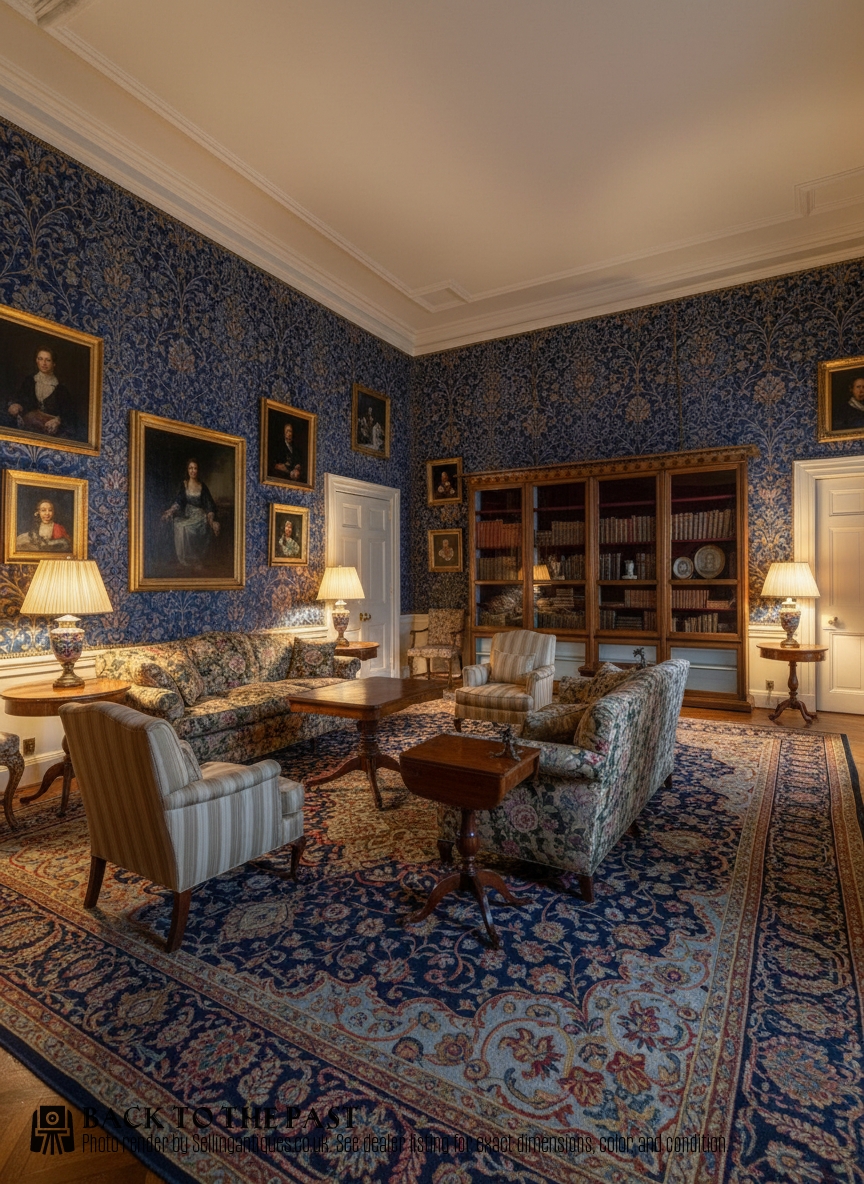
These tall pieces require a sturdy wall with sufficient vertical clearance to anchor safely. They suit principal reception rooms or libraries where their scale balances high ceilings.
Ensure floor surfaces are level to prevent distortion of breakfront sections and doors over time.
How do I adjust the shelves?
Most nineteenth-century and Edwardian library pieces use wooden track systems or brass pins. Lift the shelf slightly to disengage it from the supports.
Move the supports to the desired height slots and verify the shelf sits evenly before reloading books.
How do I tell Victorian from Edwardian pieces?
Victorian examples tend to use heavier timbers like mahogany and oak with deep carved ornamentation. They frequently feature breakfront profiles and dark wax finishes.
Edwardian pieces often display lighter golden oak, satinwood, or simpler rustic pine construction reflecting changing domestic tastes around nineteen hundred.
How should I care for the timber?
Dust regularly with a dry, soft cloth and avoid placing the timber in direct sunlight. Natural wax finishes benefit from occasional gentle polishing to maintain moisture.
Keep the room at a stable humidity level to prevent veneer lifting or wood splitting.