


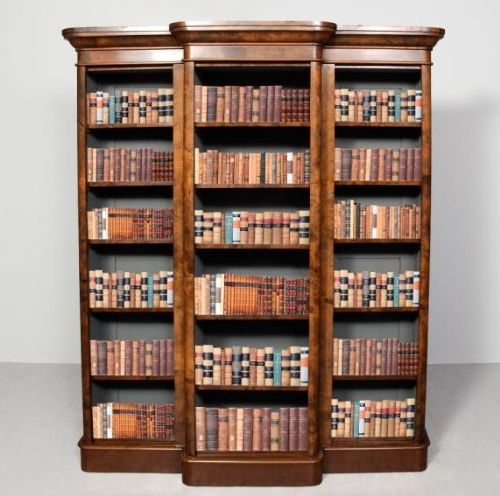

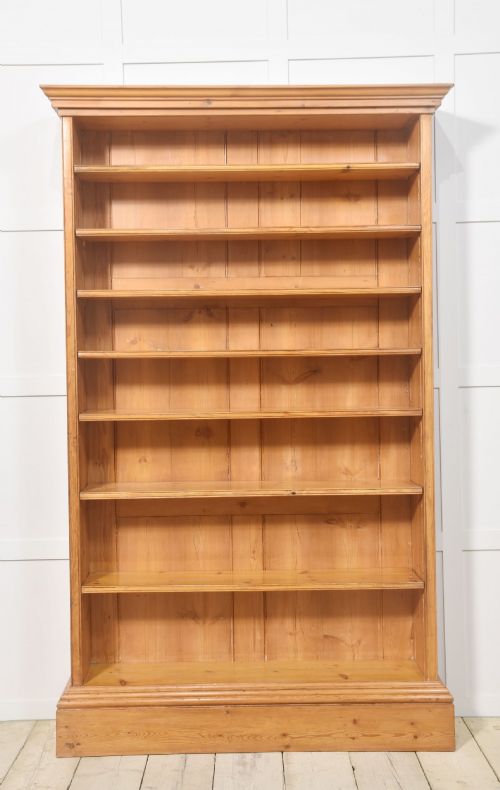


Large Wooden Book Cabinet
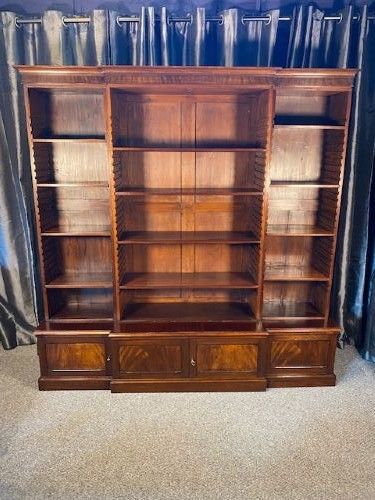
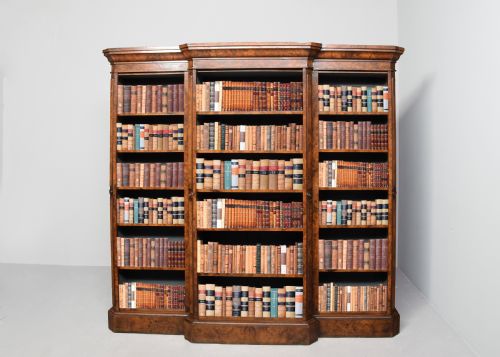
A large wooden book cabinet anchors a room with rows of volumes and rich timber grain.
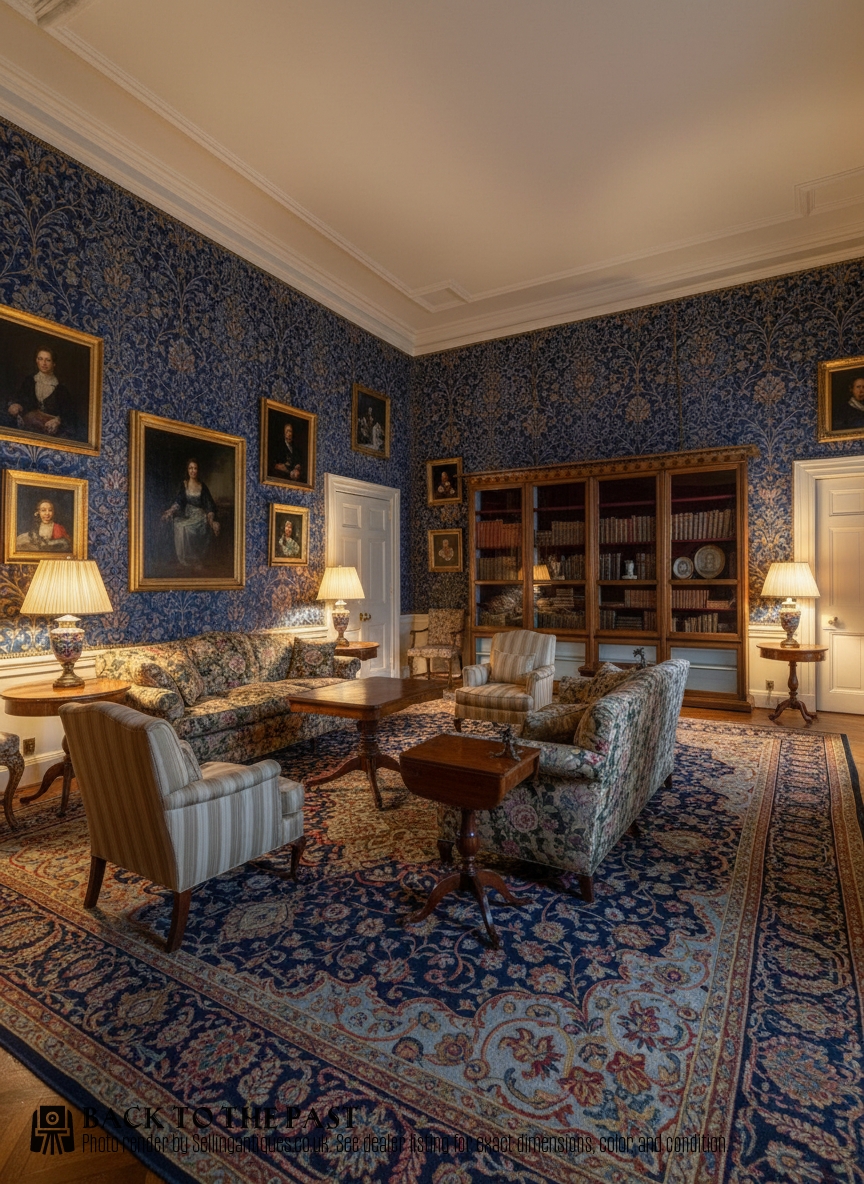
Large Wooden Book Cabinet
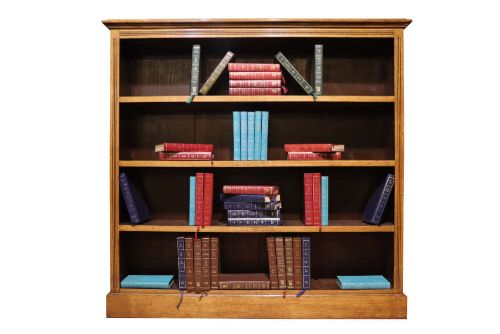
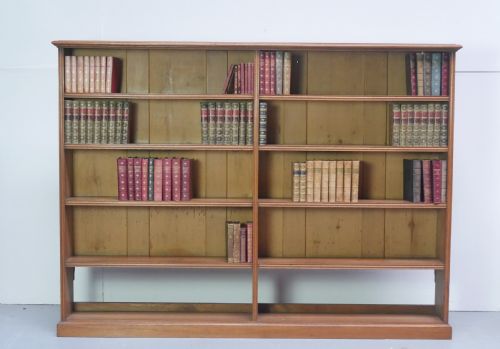
A large wooden book cabinet serves as a substantial repository for private libraries and studies. These pieces are designed to hold heavy collections of volumes while establishing a commanding presence in a room.
The selections available here span the Victorian, Edwardian, and early twentieth-century periods. Buyers will frequently encounter open-front formats alongside breakfront designs and glazed or concertina doors.
Makers utilised traditional timbers such as mahogany, oak, walnut, pine, and elm. These materials reflect vernacular country traditions alongside formal Victorian and Edwardian cabinet-making.
How they were made
Cabinet-makers constructed these large bookcases using solid and veneered timbers including mahogany, oak, walnut, pine, and deal wood. Selected pieces feature burr walnut veneers or inlaid elm details to create striking visual depth on the front facade.
Functional elements such as adjustable shelving, brass hardware, and glass panel doors demonstrate the practical demands of nineteenth and early twentieth-century libraries. Breakfront configurations and multi-section bodies required precise carpentry to align large timber frames.
Large Wooden Book Cabinet Retail Price Guide 2026
Typical asking prices for large wooden book cabinet among the pieces listed under this phrase on Sellingantiques today, from the lower quarter to the upper quarter. They describe what is for sale here now, not the wider market.
Captain's bookcases were built sturdy enough to withstand the rolling tide, though most now settle quite happily on solid drawing room floors.
What varies in quality
The calibre of a large wooden book cabinet rests on the selection of timber and the ambition of its construction. Pieces utilising burr walnut, Spanish mahogany, or complex breakfront forms sit at the higher end of the range.
Subtle details such as adjustable shelving mechanisms, inlaid decoration, and well-fitted doors distinguish standard utility pieces from fine library furniture. The integrity of the timber grain and the harmony of the proportions determine the overall presence of the cabinet.
The Large Wooden Book Cabinet Glossary
- Breakfront
- A piece of furniture where the central section projects forward from the flanking wings. This configuration creates architectural depth in large library cabinets.
- Adjustable shelves
- Internal boards that can be repositioned at different heights to accommodate varying book sizes. This feature is common in nineteenth-century library furniture.
- Burr walnut
- A prized timber veneer showing swirling, knotty grain patterns formed from tree growths. It provides decorative richness on formal Victorian cabinet doors and facades.
- Concertina door
- A folding door mechanism that collapses neatly to the side when opened. It offers wide, unobstructed access to the contents of the cabinet.
- Spanish mahogany
- A dense, highly figured hardwood imported from the West Indies during the nineteenth century. Cabinet-makers favoured it for formal library pieces.
Large Wooden Book Cabinet: Frequently Asked Questions
How do I care for a large wooden bookcase?
Keep the timber away from direct heat sources and sudden humidity shifts to prevent warping. Dust regularly with a dry cloth and occasionally feed the wood with appropriate wax.
Ensure heavy volumes are distributed evenly across adjustable shelves to maintain the integrity of the timber supports over time.
What periods do these bookcases come from?
The pieces span the Victorian and Edwardian eras, alongside items from the late nineteenth and early twentieth centuries. Styles range from rustic country pine to formal breakfront mahogany.
Each period brings distinct timber choices and architectural details, reflecting the changing tastes of domestic libraries.
Are the shelves adjustable?
Many of the bookcases featured here are fitted with adjustable shelves to accommodate books of varying heights. This practical design allows owners to reconfigure the interior space as their library grows.
Check individual listings for confirmation of adjustable shelving systems within specific cabinets.
What woods were commonly used?
Makers constructed these cabinets using mahogany, oak, walnut, burr walnut, pine, deal, and elm. Each timber offers a different visual weight and grain pattern.
Formal library pieces often feature rich mahogany or burr walnut, while country examples utilise sturdy oak, pine, or elm.