



Antique Leather Recliner
An antique leather recliner brings mechanical ingenuity and deep comfort together, offering a stately seat that adjusts from upright to inclined.

Antique Leather Recliner
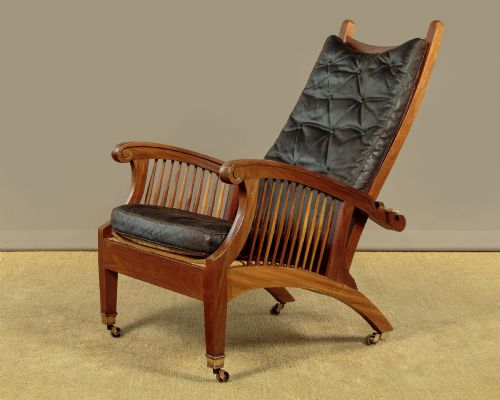
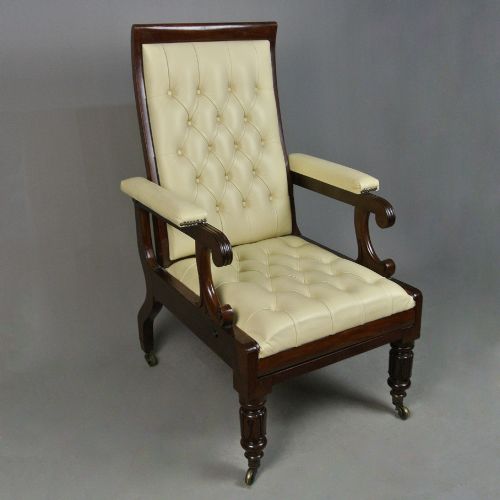
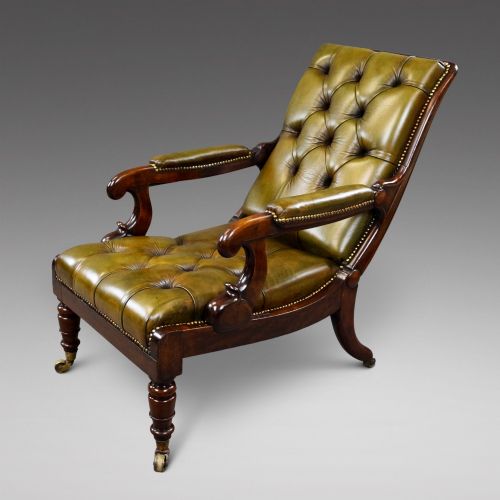
An antique leather recliner provides adjustable seating through mechanical ingenuity developed across the nineteenth century. These seating forms span library chairs, armchairs, and invalid chairs designed for prolonged comfort and reading. Regency and William IV iterations often utilise sophisticated patent actions hidden within robust mahogany or walnut frames.
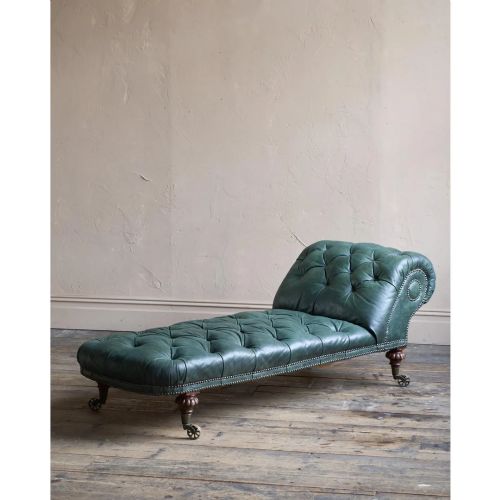
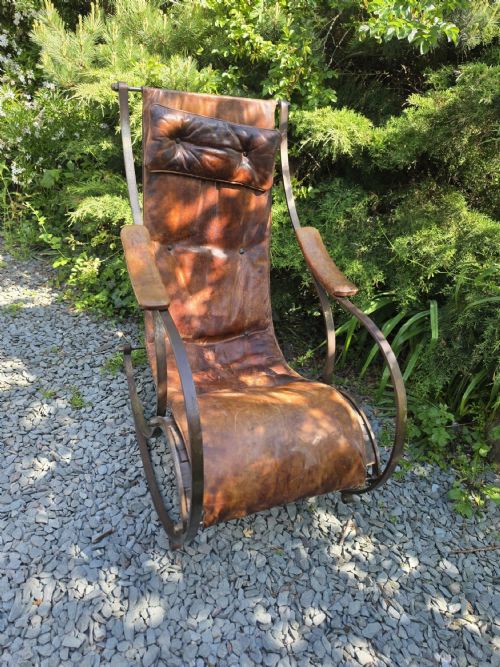
The most common examples encountered on this page date from the nineteenth century, including Victorian and Georgian periods. Makers such as Robert Daws and John Ward patented specific reclining and metamorphic mechanisms that remain operational today. Alongside standard armchairs, buyers will find occasional chaise longues, rocking chairs, and library chairs upholstered in leather.
Materials and construction
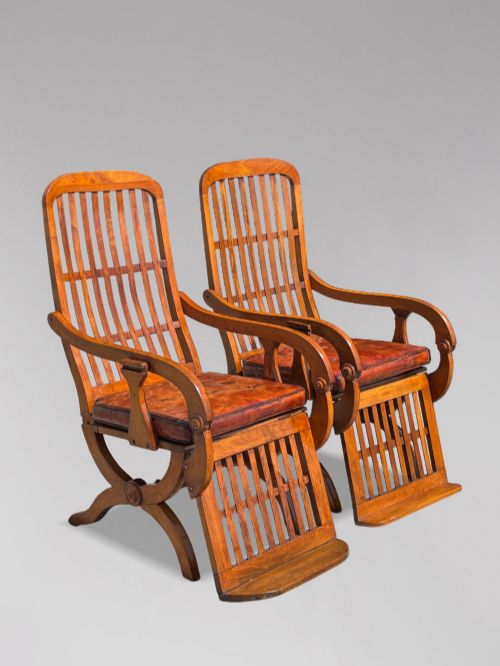
Cabinet makers constructed the primary frames using dense hardwoods like mahogany, walnut, oak, and rosewood. These timbers provided the structural integrity required to support internal pivoting mechanisms, iron ratchets, and brass hardware. Canework panels sometimes complemented the wooden framework on specific library and bergère models.
Upholstery relied upon durable cattle leather, often buttoned, secured with brass tacks over supportive stuffings. Iron and brass components operated the reclining mechanisms, allowing the backrest and footrest to shift smoothly. French polishing finished the exposed wooden surfaces, while specific models incorporated writing slopes or associated footstools.
Antique Leather Recliner Retail Price Guide 2026
Typical asking prices for leather recliner among the pieces listed under this phrase on Sellingantiques today, from the lower quarter to the upper quarter. They describe what is for sale here now, not the wider market.
Some nineteenth-century reading chairs thoughtfully incorporated pull-out writing slopes, ensuring users could nod off and write letters in the exact same spot.
Evaluating quality and execution
Quality rests significantly upon the sophistication of the patent mechanism and the integrity of the timber frame. Pieces bearing attribution to known makers such as Daws, Foot and Son, or John Ward display superior mechanical precision and joinery. The original actuation of ratchets and hinges separates standard production chairs from exceptional workshop examples.
The grade of the leather upholstery and the retention of original brass fittings influence the overall desirability. Frames exhibiting finely figured mahogany or rosewood veneers reflect higher initial commission costs. Complete, unaltered adjusting systems command greater interest than those with replaced hardware.
R W Wingfield·Robert Daws·Heals of London·J Foot & Son·John Ward
The Antique Leather Recliner Glossary
- Metamorphic chair
- A convertible piece of furniture that transforms from a standard armchair into a recliner or chaise lounge. These designs utilise hidden hinges and ratchets.
- Bergère
- An enclosed upholstered armchair with wooden framing, occasionally featuring cane sides. The style originates from eighteenth-century France but persisted through the Regency period.
- Patent chair
- A seating design incorporating a legally registered mechanical invention for adjustment. Robert Daws and J Foot and Son held notable patents for such mechanisms.
- Library chair
- A heavy, sturdy armchair intended for prolonged reading in private studies or institutional libraries. They frequently incorporate leather upholstery and reading accessories.
- Ratchet
- A mechanical device consisting of a gear wheel and pawl that allows movement in only one direction. This component locks the reclining backrest at various angles.
Antique Leather Recliner: Frequently Asked Questions
How do these reclining mechanisms actually work?
Most pieces utilise a system of concealed iron ratchets, brass pivots, or screw adjustments operated by handles or arm movements. Users lean back against the sprung or pivoted backrest to engage the desired angle.
Patent designs by makers like Daws or Foot and Son allow the seat and back to move in tandem. This mechanical coordination supports the body evenly whether sitting upright or reclining fully.
Are these chairs comfortable for daily use?
These chairs were built for sustained reading and relaxation, featuring generous proportions and supportive padding. The substantial timber frames and heavy leather upholstery provide a solid, ergonomic seat.
While historic padding materials differ from modern foam, many examples retain resilient support. Their adjustable angles make them practical for contemporary sitting rooms and studies.
How do I identify a Regency recliner from a Victorian one?
Regency pieces typically display cleaner classical lines, scrolled arms, and rich mahogany or rosewood timbers dating around 1800 to 1830. Their mechanisms often rely on early patent designs with exposed brass or iron adjustments.
Victorian examples from 1830 onwards tend to be heavier, incorporating buttoned oxblood or brown leather, walnut frames, and more complex metamorphic capabilities. Maker stamps and patent plaques frequently help confirm the exact manufacturing era.
What is an invalid or convalescing chair?
Convalescing chairs were specialised seating forms created for patients recovering from illness or injury. They featured adjustable backrests, integrated footstools, and occasionally wheels for movement.
Maker John Ward specialised in these wheeled invalid chairs during the nineteenth century. They combine mechanical recliners with robust wheeled chassis to assist domestic nursing.