
Antique Leather Dining Seats
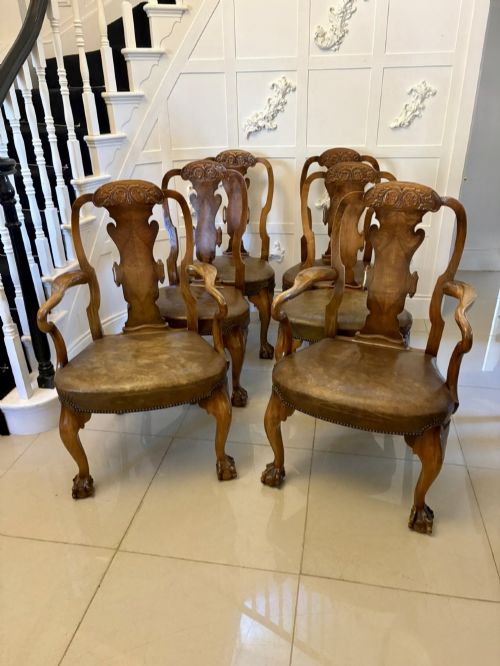
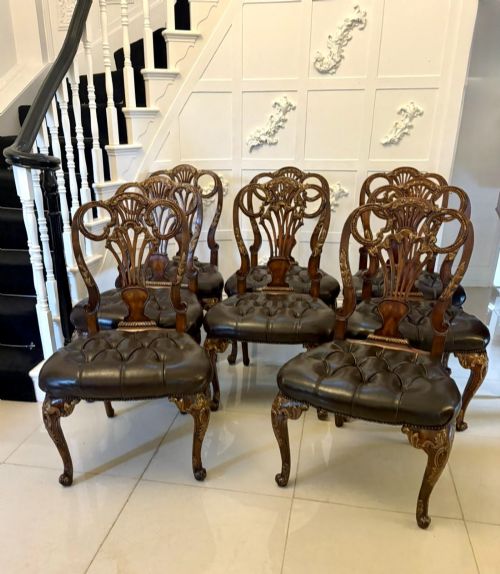
These antique leather dining seats bring enduring character to a room, combining tactile animal hides with sturdy timber frames.
Antique Leather Dining Seats
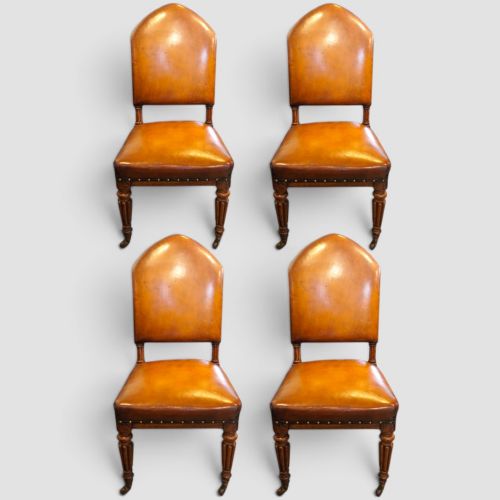
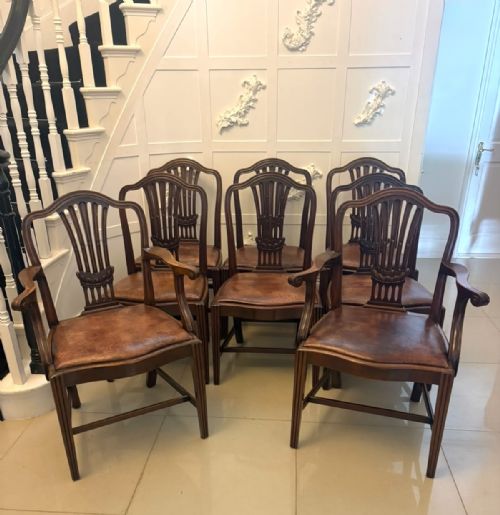
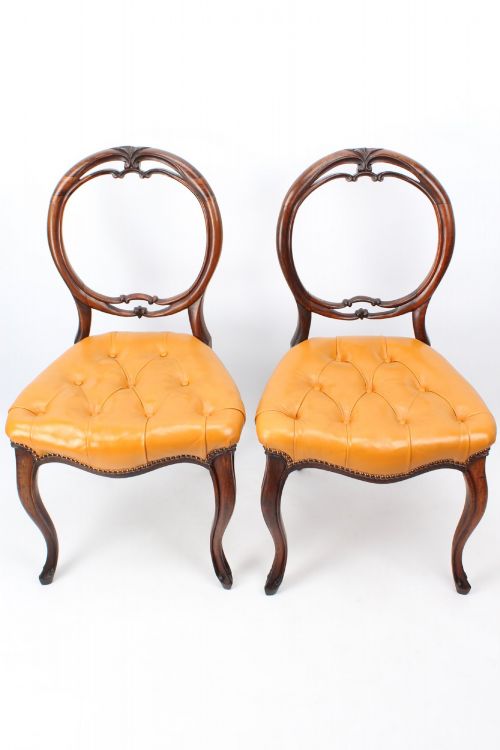
Antique leather dining seats encompass a broad variety of timber chair forms designed for the dining table, most frequently encountered in sets spanning the Victorian and Edwardian eras. Buyers search this phrase to find matching groups of chairs, carvers, and occasional side chairs that provide substantial seating around a formal table.
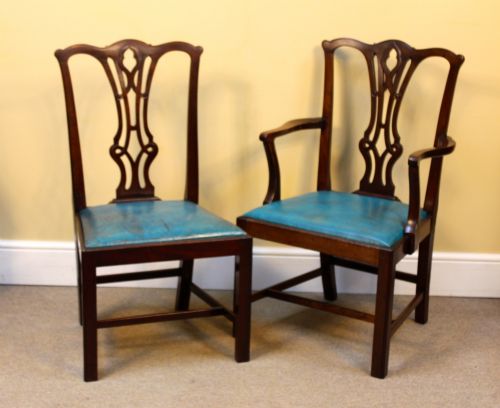
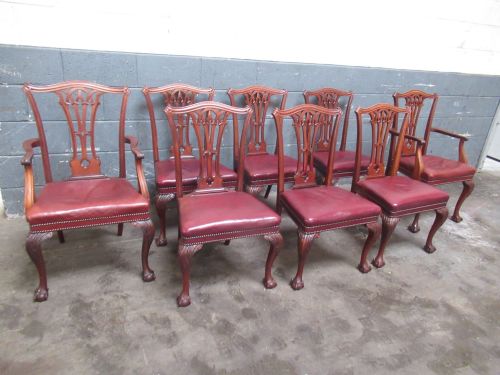
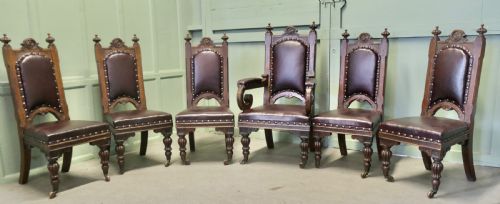
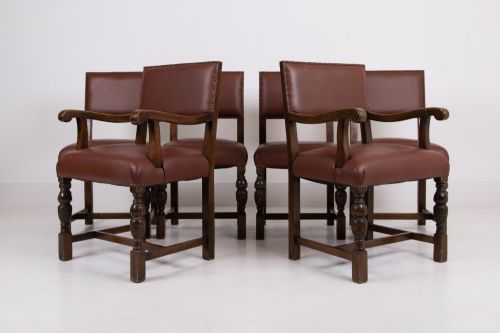
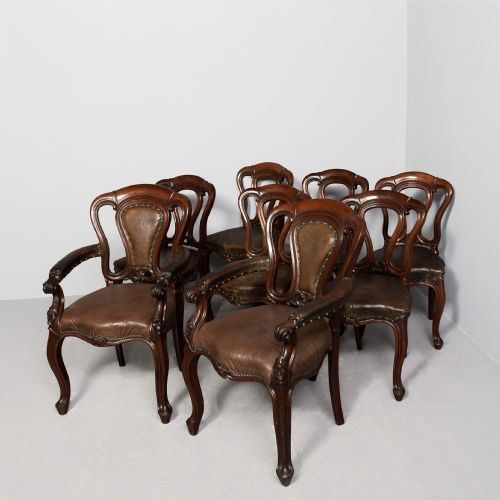
The materials recorded in these listings point heavily toward mahogany and oak frames fitted with durable leather upholstery, often arranged in large sets of six, eight, or twelve pieces. Alongside standard dining chairs, the category includes occasional armchairs, banquette sofas, and hall chairs bearing period stylistic influences ranging from Chippendale revival to Gothic.
How they were made
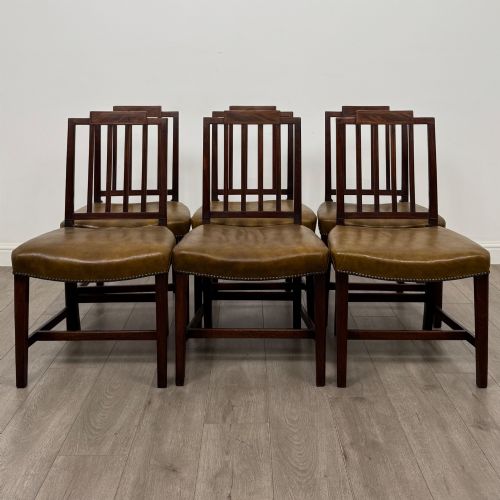
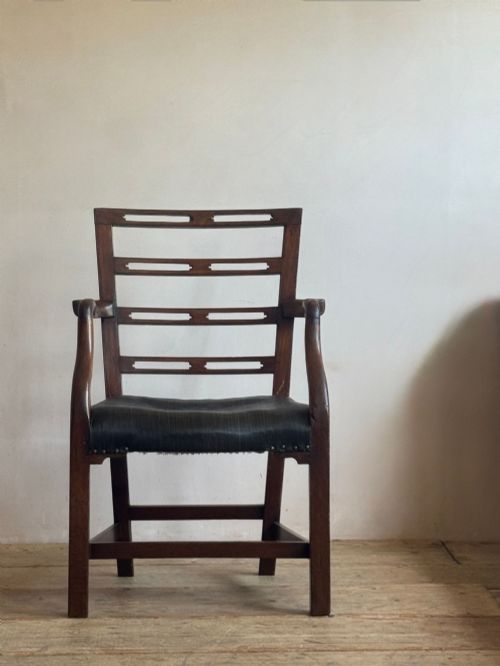
Frames rely upon dense hardwoods like mahogany, walnut, and oak, shaped through traditional joinery and detailed with carved ornamentation or gilded accents. Woodwork ranges from plain turned legs to elaborate shield backs and ladder-back configurations.
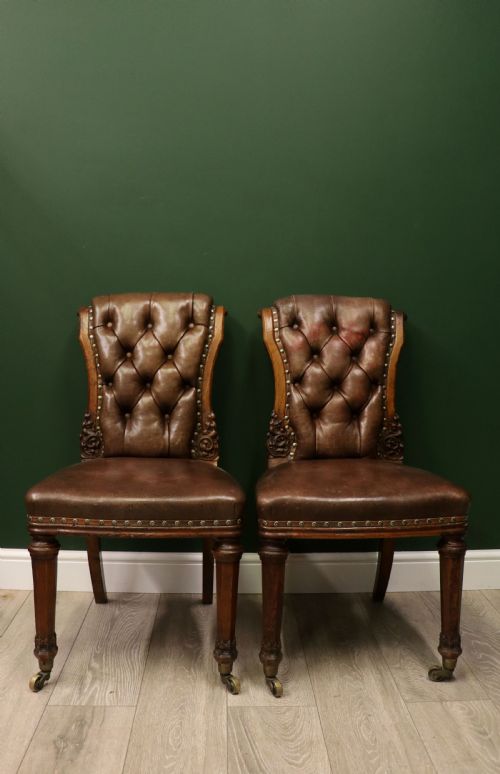
Upholstery combines supple leather with supportive internal padding, frequently secured by hand-driven brass studs along the borders. This method fastened the hide securely to the wooden seat rail while introducing a decorative metallic trim.
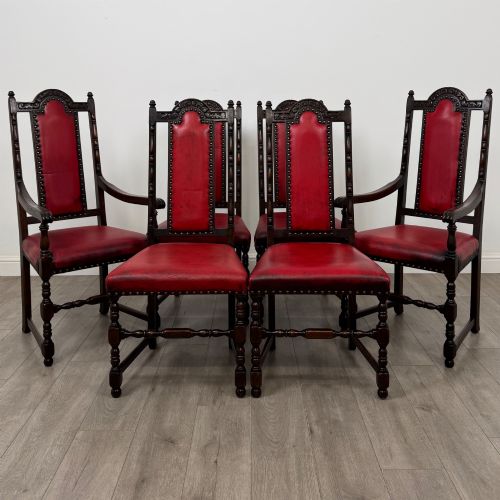
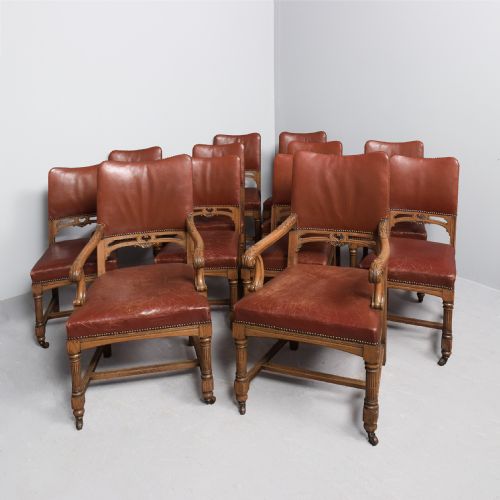
Several Victorian oak chairs wear their original red or black leather seats, surviving a century and a half of lively dinner parties.
What varies in quality
The caliber of an antique leather dining seat rests largely on the fidelity of its timber framework and the depth of its carved detailing. Sets possessing consistent grain patterns, robust structural integrity, and harmonious proportions command greater attention than mismatched or heavily restored assemblies.
The grade of the leather hide and the crispness of any applied brass studwork further separate utilitarian pieces from finer workshop productions. Superior examples maintain a supple texture in the leather alongside precise joinery that withstands daily use.
John Taylor & Son·Epstein·Harry and Lou Epstein
The Antique Leather Dining Seats Glossary
- Carver
- An armchair designed to sit at the head of a dining table. These pieces feature supportive armrests matching the accompanying side chairs.
- Shield back
- A chair back shaped in the contour of a heraldic shield. This design gained prominence during the Georgian and later revival periods.
- Gothic revival
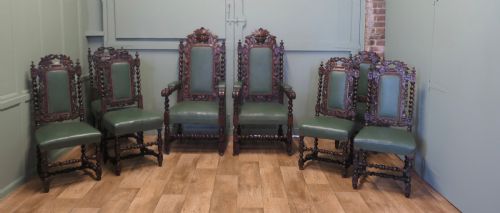
- A nineteenth-century architectural and decorative style drawing inspiration from medieval forms. Pieces display pointed arches, tracery, and heavy oak construction.
- Studded
- Upholstery secured with visible metal tacks or brass nails driven into the frame. This technique holds the leather tight against the wooden seat rail.
Antique Leather Dining Seats: Frequently Asked Questions
How do I care for antique leather seats?
Clean the hide gently using a damp cloth and apply a quality leather conditioner periodically to prevent drying out. Keep the timber frames away from direct heat sources and strong sunlight to protect the polish.
Inspect the brass studs occasionally to ensure they remain secure. Avoid harsh chemical cleaners that might strip the natural finish of the leather.
Can I mix different chair styles together?
Blending different styles works best when the timber types and overall heights share common traits. Matching mahogany carvers with simpler side chairs creates a balanced arrangement.
Consider keeping the leather tone consistent if you combine varied revival periods. This ties the seating group together around the dining table.
Were these chairs made as large sets?
Many dining seats were produced in substantial sets of six, eight, or twelve to accommodate large Victorian and Edwardian households. Smaller sets of four or isolated pairs also appear frequently.
Matching large groups of antique chairs remains desirable for furnishing full-sized dining rooms. Split sets sometimes indicate pieces gathered over time.
How do I identify a revival period?
Revival pieces borrow decorative motifs from earlier centuries, such as Chippendale fretwork or Jacobean turning, executed with nineteenth-century workshop techniques. Examine the wood age, tool marks, and construction methods to distinguish them from originals.
Makers often embraced these historical styles during the Victorian and Edwardian eras. The secondary woods and hardware usually reveal the true manufacturing date.