


Antique Lake Landscape Picture
An antique lake landscape picture brings the quiet water and distant mountains of the nineteenth and early twentieth centuries directly into a room.
Antique Lake Landscape Picture
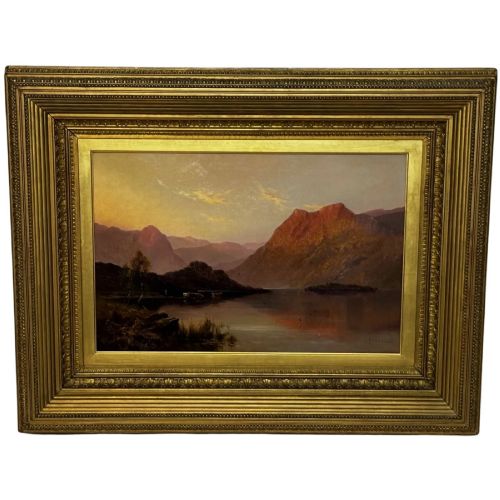
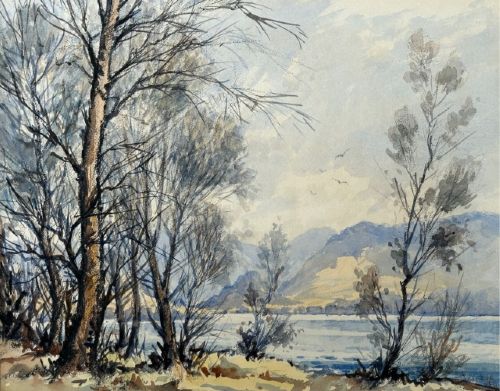
An antique lake landscape picture captures bodies of water, from Cumbrian tarns to Scottish lochs and Alpine shores, rendered during the nineteenth and early twentieth centuries. These works record specific topography or romanticized vistas using oil paint or watercolour upon canvas and paper.
The pieces on this page span Victorian visions, Edwardian watercolours, and French impressionist interpretations. They range from modest framed sheets to large canvases enclosed in giltwood moulding.
Makers and painters document scenes across Britain, Italy, Austria, and New Zealand. Each painting or drawing preserves a particular expanse of water framed by hills, mountains, or woodland.
How they were made
Painters applied oil on canvas or watercolours on paper, often framing the finished work in wood and gesso. Many frames carry heavy gilt decoration, pairing the painted water and sky with reflective metallic borders.
Artists utilised pen-and-ink or brushed pigments to build depth in mountainous scenes and reflections upon lake surfaces. Canvases stretch over wooden frames while paper works sit behind protective glass.
Geese occasionally navigate the rivers in these painted waters, adding a small splash of life to otherwise still mountain reflections.
What varies in quality
The success of an antique lake landscape picture rests upon the painter's brush control and management of light across the water. Skilled artists capture the translucency of ripples and the atmosphere of distant peaks.
Framing forms another distinction, where original giltwood and gesso mouldings complement the age and scale of the artwork. The clarity of provenance, visible signatures, and well-preserved canvas tension elevate certain works above anonymous decorative pieces.
Alfred Fontville de Breanski Jr·Frank Hider·J Laporte·John Douglas Perrett·Edward Horace Thompson·Alexis De Leeuw·Benjamin Williams Leader·Claude Muncaster·Cornelius Pearson·Tom Dudley·Gustave De Breanski·Percy Lancaster
The Antique Lake Landscape Picture Glossary
- Giltwood
- Wood carved and coated with gold leaf or gold paint. This finish appears frequently on frames enclosing nineteenth-century canvases.
- Gesso
- A plaster-like mixture applied to wooden frames before gilding. It provides a smooth surface for intricate moulded ornament.
- Watercolour
- A paint consisting of pigment suspended in a water-based solution. Artists applied these mixtures to paper to achieve translucent landscape effects.
- Impressionism
- A nineteenth-century painting style characterised by relatively small, thin, yet visible brush strokes. It prioritises accurate depiction of light and its shifting qualities.
Antique Lake Landscape Picture: Frequently Asked Questions
How do I hang a heavy oil painting?
Heavy oil paintings require picture hooks secured directly into wall studs or appropriate masonry fixings to support the weight of the canvas and wooden frame.
Ensure the hanging wire or D-rings on the back match the strength of the chosen wall hardware.
Can I place watercolours in direct sunlight?
Direct sunlight causes pigments on paper to fade over time, particularly in nineteenth-century watercolours.
Position these works away from windows or use glass with UV-filtering properties to protect the paper.
How do I clean a giltwood frame?
Dust giltwood frames gently with a soft, dry brush to remove settled particles without disturbing the delicate gold leaf.
Avoid liquid cleaners or damp cloths, as moisture damages aged gesso and gilding.
What is the difference between oil and watercolour?
Oil paint uses a drying oil binder on canvas, producing textured surfaces and rich colour depth that can be cleaned more readily.
Watercolour uses water-soluble binders on paper, creating luminous, transparent washes that require protection behind glass.