
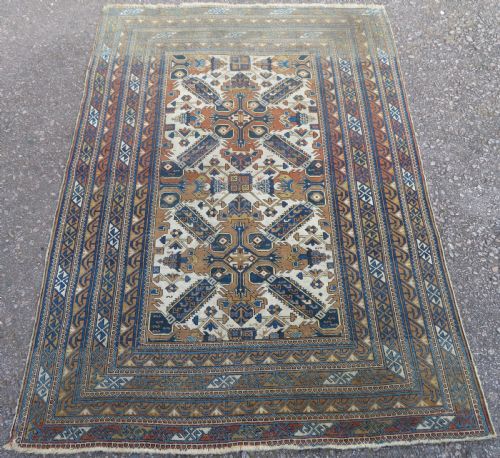
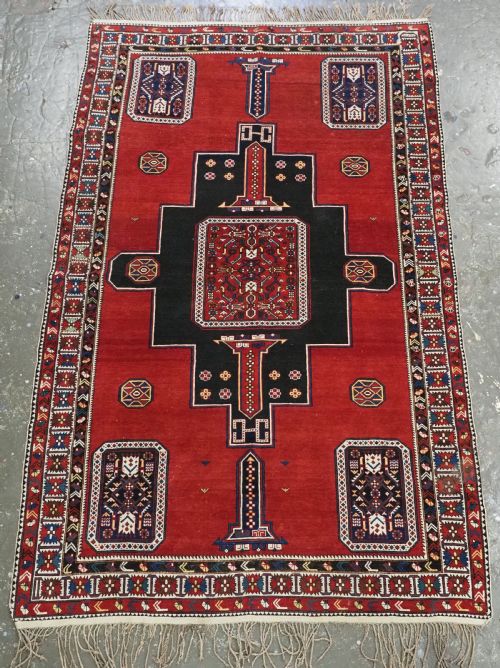
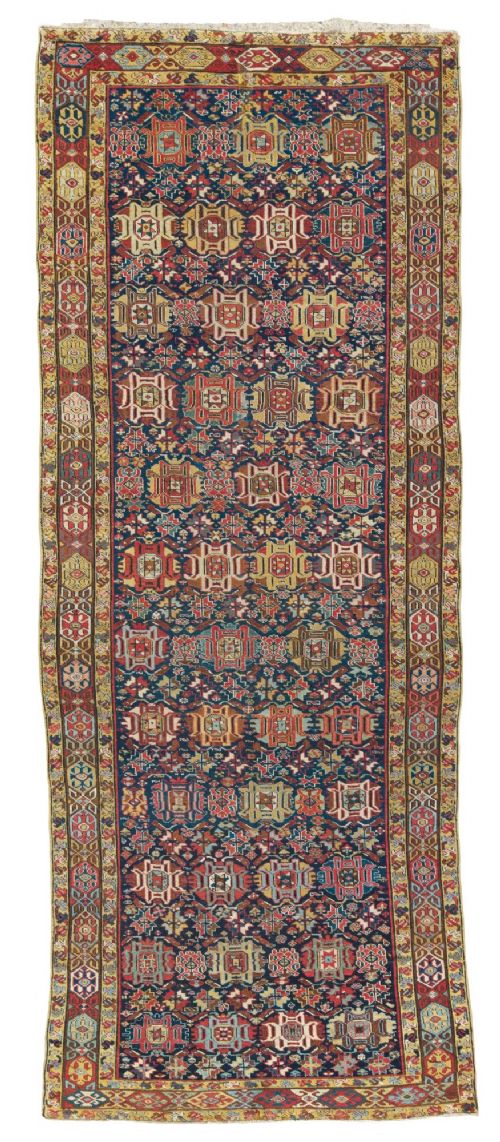


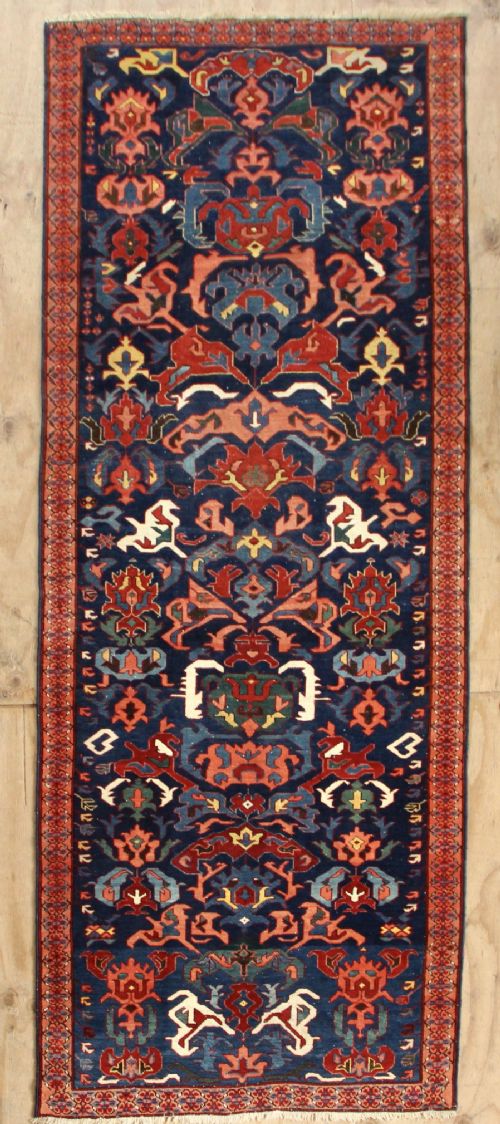


Antique Kuba Carpet
An antique kuba carpet brings bold geometric motifs and rich regional woolwork directly from the Eastern Caucasus into your interior.
Antique Kuba Carpet
An antique kuba carpet is a tribal woven floor covering originating from the Kuba region in the Eastern Caucasus, shaped by centuries of local weaving traditions. When searching for an antique kuba carpet, you encounter various formats ranging from square carpets and prayer rugs to long narrow runners and kilims.
The pieces appearing here span from the mid-nineteenth century up to the early twentieth century, reflecting distinct regional designs such as Konagkend, Alpan, Perepedil, and Karagashli patterns. They display disciplined geometric layouts, cruciform medallions, and shield designs rather than naturalistic floral compositions.
Most examples recorded in this tradition utilise a wool construction, encompassing both traditional knotted pile carpets and flat-woven Soumak or Soumac techniques. These textiles function equally well as striking focal points in modern rooms or as historic floor coverings in traditional settings.
How they were made
These carpets are constructed entirely from wool, employing hand-spun yarn for both the structural foundation and the visible surface. Weavers utilised traditional hand-knotting techniques for deep pile rugs alongside flat-weave Soumak methods that interlace coloured threads without creating a cut pile.
Natural dyestuffs provide the characteristic palette seen across these rugs, interacting with the wool fibres to produce soft faded tones or bright operational palettes over decades of light exposure. The density of the weave varies depending on whether the piece is a fine city workshop variation or a heavier tribal runner.
Early Caucasian weavers occasionally embedded tiny accidental geometric asymmetries into their borders to ward off the evil eye.
What varies in quality
Quality in these carpets rests upon the precision of the geometric drawing and the crispness of motifs like cruciforms or shielding. Sharply defined patterns indicate a high level of weaver control over the grid.
The handle and density of the wool foundation also determine the caliber of the piece, with tightly packed knots or precise flat-weave structures commanding attention. Preservation of the original outer borders and pile depth further separates standard examples from exceptional survivals.
The Antique Kuba Carpet Glossary
- Kuba
- A historic carpet-weaving region situated in the Eastern Caucasus, known for distinct geometric rug designs. Pieces originating here often display recognizable village or tribal motifs.
- Soumak
- A flat-weave textile technique where supplementary weft threads wrap around the warp yarns to create a sturdy, textured surface without a cut pile. This method provides durability while allowing intricate geometric patterns.
- Konagkend
- A specific design attribution within the Kuba region, frequently featuring characteristic cruciform medallions. These patterns reflect the particular village aesthetic of the Eastern Caucasus.
- Kelleh
- A large format rectangular carpet proportioned longer than it is wide, traditionally suited for grand spaces. Such formats offer expansive fields for repeating tribal medallions.
- Perepedil
- A traditional Kuba rug pattern identifiable by specific hooked motifs and stylized horn designs arranged along the central axis. It remains one of the most distinctive regional Caucasian layouts.
Antique Kuba Carpet: Frequently Asked Questions
Where were antique kuba carpets made?
These textiles were produced by village and nomadic weavers in the Kuba region of the Eastern Caucasus. The workshops and tribal groups operated across mountainous terrain influenced by Persian and regional traditions.
Production spanned multiple generations, resulting in diverse village patterns unique to specific settlements within the Caucasian landscape.
How do I clean an antique kuba carpet?
Professional specialist cleaning is essential for antique wool carpets to protect natural dyes and fragile foundations. Regular gentle vacuuming without a rotating brush prevents dust accumulation.
Avoid home chemical treatments or excessive moisture, which can damage the historic wool fibres and alter the original colour balance.
What is a Soumak weave?
Soumak is a flat-weave technique where coloured weft threads wrap around the warp yarns in a continuous wrapping motion. This creates a textured, ribbed surface on the front and loose threads on the back.
It differs from standard knotted pile rugs by offering a sturdy, flat structure while maintaining rich graphic detail.
How can I date an antique kuba carpet?
Dating relies on assessing material wear, the composition of natural dyes, and stylistic structural traits. Pieces from the eighteenth and nineteenth centuries often show softer colour palettes and hand-spun wool irregularities.
Comparing medallion geometry and border guard stripes against documented regional examples helps narrow the period of origin.