

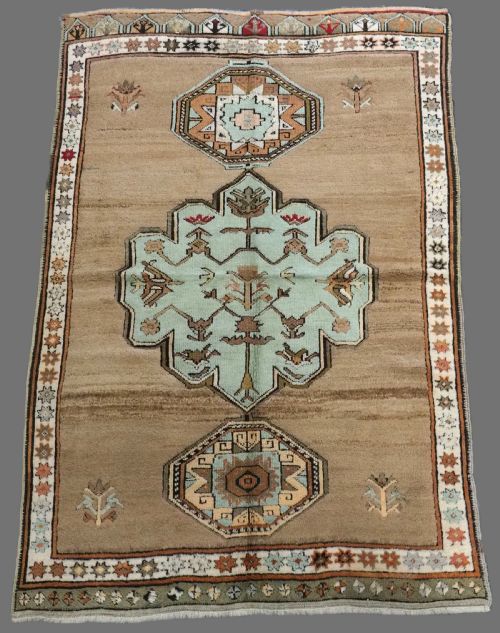


Antique Konya Area Rug
An antique konya area rug brings centuries of Central Anatolian weaving tradition straight to your floor.
Antique Konya Area Rug
When you search for an antique konya area rug, you enter the distinctive weaving traditions of Central Anatolia. These pieces encompass village prayer rugs, runners, and flatwoven kilims originating from the Konya region and surrounding districts such as Karapinar and Sivrihisar.
You are most likely to meet 19th-century and early 20th-century examples on this page. These floor coverings span classic tribal designs, geometric motifs, and regional variations that reflect centuries of local craftsmanship.
How they were made
Weavers constructed these rugs using natural materials, predominantly wool, camel wool, and cotton foundations. Artisans utilised vegetable dyes to colour the yarns, producing the soft palettes and striking designs seen across the region.
The production methods range from knotted pile carpets to half kilim flatweaves and full kilims. This technical diversity allows for both plush floor coverings and lighter, flatwoven runner formats.
Antique Konya Area Rug Retail Price Guide 2026
Typical asking prices for konya area rug among the pieces listed under this phrase on Sellingantiques today, from the lower quarter to the upper quarter. They describe what is for sale here now, not the wider market.
Step carefully across these floors and you walk upon decades of nomadic history hand-knotted by village weavers under Central Anatolian skies.
What varies in quality
The distinction in quality rests upon the fineness of the weave and the clarity of the regional design. Better examples display careful execution of classic Anatolian motifs and well-balanced compositions.
Condition and the retention of original vegetable dye colours also influence the standing of a piece. Finer handling of camel wool and wool materials elevates the depth and texture of the finished textile.
The Antique Konya Area Rug Glossary
- Konya
- A historic city and major rug-producing region in Central Anatolia known for distinctive village and tribal weaving traditions.
- Prayer rug
- A rug featuring a mihrab or niche design historically utilised for Islamic daily prayers.
- Kilim
- A flatwoven textile made by tightly interweaving warp and weft strands without creating a pile.
- Camel wool
- Natural, un-dyed hair fibre gathered from camels, often utilised in the field or foundation of regional rugs for a soft texture.
- Vegetable dye
- Colouring matter derived from plants, roots, and minerals, producing the characteristic soft tones found in older textiles.
Antique Konya Area Rug: Frequently Asked Questions
Where were antique konya rugs made?
These textiles originate from Central Anatolia, specifically the city of Konya and surrounding districts like Karapinar and Sivrihisar. Local village weavers produced them using traditional regional designs.
The methods and materials reflect the specific cultural heritage of these inland Anatolian communities.
How do I identify a prayer rug?
Prayer rugs feature a distinct architectural motif known as a mihrab, which represents a prayer niche pointing toward Mecca. Weavers often orient the field design around this single directional point.
Historically, owners placed these textiles on the floor during daily prayer rituals.
What is the difference between a rug and a kilim?
A standard rug possesses a knotted pile that creates a plush, textured surface. A kilim is entirely flatwoven by interlocking the coloured threads without any pile.
Both forms appear frequently within the weaving repertoire of the Konya region.
How do I care for an antique wool rug?
Protect the textile by placing it in a low-traffic area out of direct sunlight to prevent fading. Vacuum gently with a suction-only attachment without using a rotating brush roll.
Professional cleaning tailored for antique textiles ensures the wool and vegetable dyes remain preserved.