



Turkish Medallion Rug
A turkish medallion rug anchors a room with centuries of Anatolian weaving tradition, bringing geometric balance and rich texture to modern interiors.
Turkish Medallion Rug
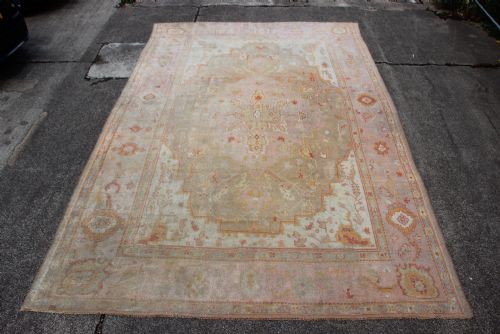
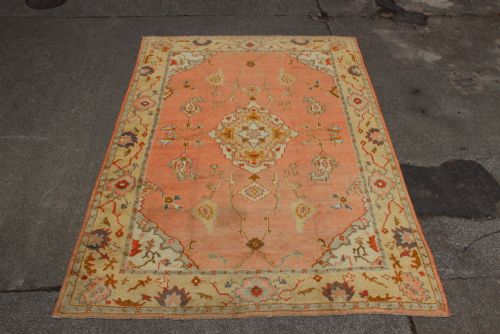
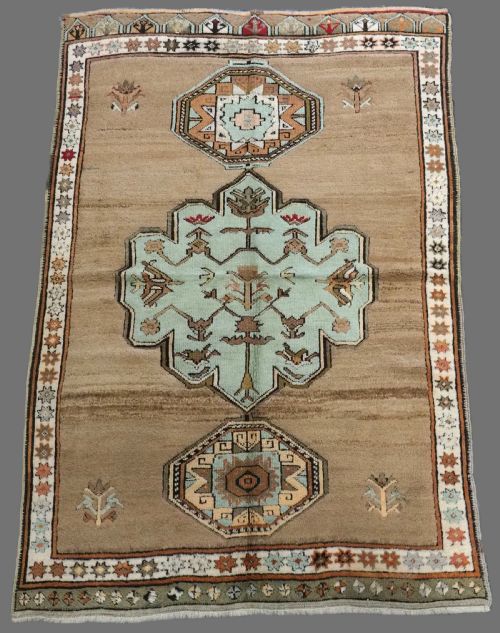
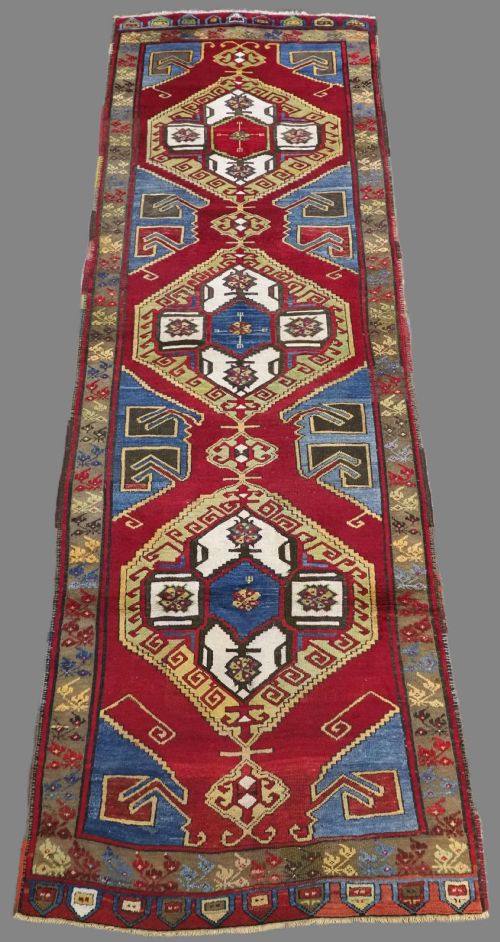
When searching for a turkish medallion rug, buyers encounter woven floor coverings originating from Anatolia, spanning large room-size carpets down to compact mats and elongated runners. These pieces display central geometric, floral, or star motifs developed across regional weaving centres.
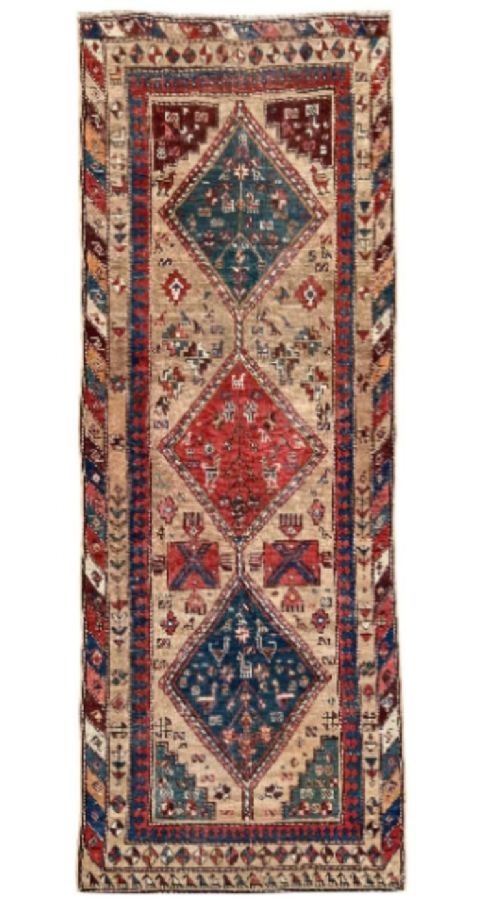
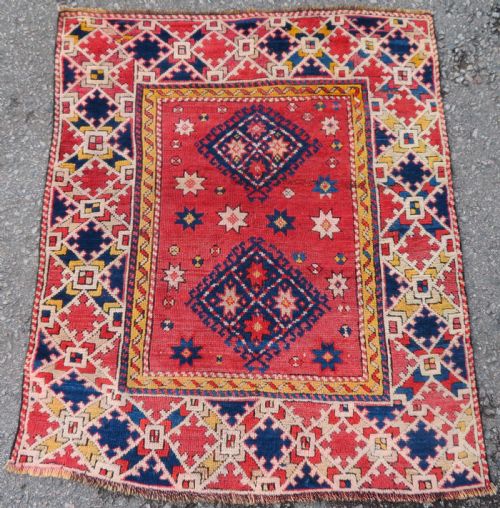
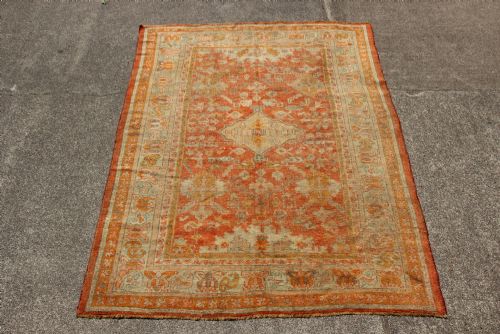
The selections available here range from grand nineteenth-century Oushak carpets to smaller village rugs woven in regions such as Konya, Milas, and Kirsehir during the early decades of the twentieth century. Village and tribal examples often present bolder, idiosyncratic interpretations of traditional layouts compared to workshop productions.
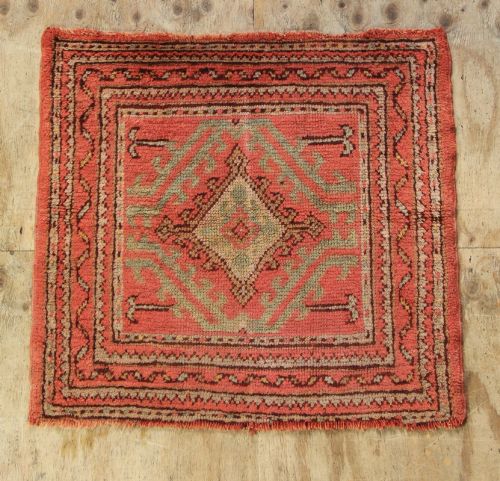
Forms vary from square proportions and expansive room formats to narrow runner dimensions suited for hallways and landings. Buyers find both low-pile antique village rugs and finer city-woven formats reflecting distinct regional aesthetics.
How they were made
Weavers constructed these textiles primarily using wool for both the foundation warps and the cut pile, frequently employing hand-spun wool that accepts natural dyes with depth and variation. Certain finer city rugs incorporate silk, art silk, or mercerised cotton to achieve a reflective surface sheen.
Nomadic and village weavers utilised sturdy cotton or wool foundations, knotting the pile by hand to create durable structures designed for generational use. The application of camel wool and angora wool in specific regional pieces adds distinct natural tones and tactile softness to the pile.
Listings feature traditional Anatolian styles including Oushak, Konya Karapınar, Kirsehir, and Milas, spanning the nineteenth and early twentieth centuries.
What varies in quality
Quality in these textiles depends heavily on the purity and preparation of the materials, where hand-spun wool and natural dye palettes yield richer ageing characteristics than synthetic alternatives. The integrity of the foundational weave and the precision of knotting dictate the structural longevity of the piece.
Aesthetic distinction rests on the balance of the central medallion design, the crispness of secondary borders, and the harmonious fading of colours over time. Pieces retaining scarce field colours or uncommon regional motifs command greater attention from collectors.
The Turkish Medallion Rug Glossary
- Medallion
- The central ornamental motif dominating the field of the rug, often geometric or floral in structure. It serves as the visual focal point of the composition.
- Oushak
- A prominent weaving centre in western Anatolia known for producing large-format carpets with softly faded vegetable dyes and expansive designs. These pieces often feature muted terracotta or blue tones.
- Warp
- The vertical threads stretched tightly on the loom that form the structural skeleton of the rug. The exposed ends frequently terminate in visible fringes.
- Kilim
- A flat-woven textile produced without a pile, relying on interlocking warp and weft threads to form sharp geometric patterns. These function as lightweight coverings or wall hangings.
- Pile
- The dense, cut-yarn surface of the rug formed by individual knots tied around the warp threads. The height and density of this layer influence the underfoot feel and durability.
Turkish Medallion Rug: Frequently Asked Questions
How do I style a medallion rug?
Position the central motif in the middle of a seating group or beneath a dining table so the design remains fully visible. Keep surrounding furniture neutral to let the geometric patterns and field colours define the room.
Allow sufficient floor margin around the edges of the rug to frame the piece properly within the space.
Where were these rugs made?
Production centres span across Anatolia, encompassing major historical towns like Oushak, Kula, and Kayseri, alongside smaller rural villages. Each region utilised distinct wool preparations and colour palettes.
Tribal groups in eastern and central Anatolia also contributed unique regional motifs that differ significantly from urban workshop pieces.
How do I care for an antique rug?
Vacuum the surface gently using suction attachment only, avoiding the rotating brush roll to protect fragile antique pile and edge bindings. Rotate the rug periodically to ensure even wear patterns from foot traffic and sunlight exposure.
Professional specialist cleaning is recommended for deep maintenance to preserve natural wool fibres and historic dye integrity.
What is the difference between village and city rugs?
Village and tribal rugs typically display bolder, more abstract geometric layouts driven by local weaving traditions and readily available materials. City-woven carpets from workshops feature finer knot densities, symmetrical floral curves, and controlled palettes.
Urban pieces often scale larger for formal reception rooms, whereas village pieces tend towards intimate formats.