




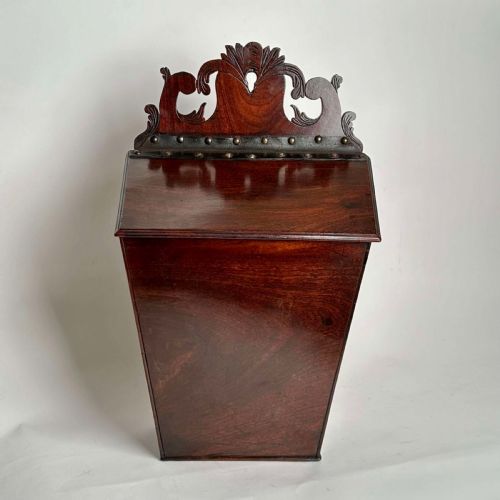
Antique Knife Box
An antique knife box stands ready on a sideboard, holding the table silver with a quiet, architectural dignity that commands attention.
Understanding the antique knife box
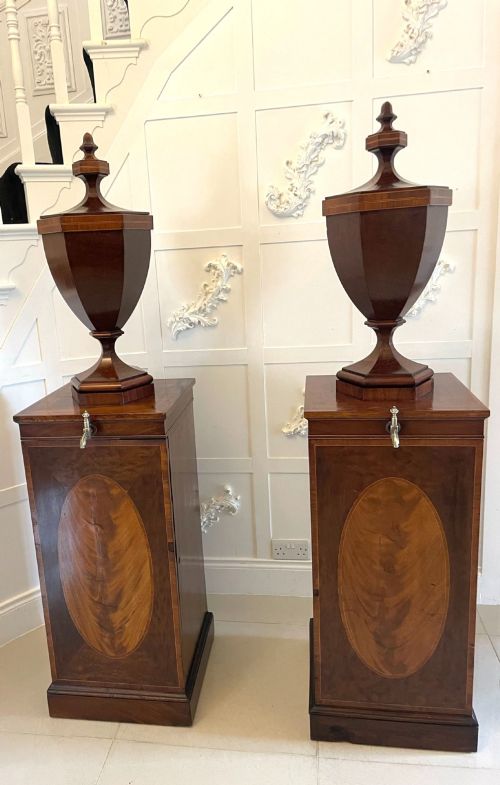
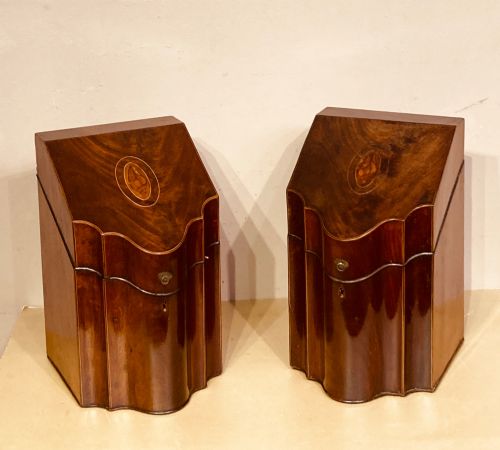
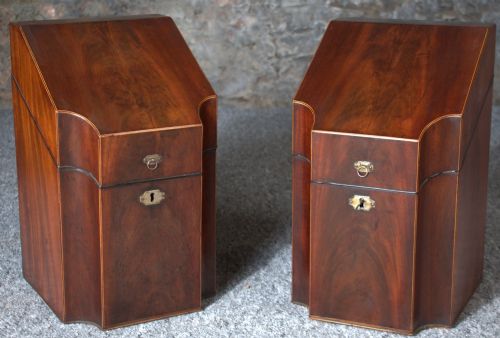
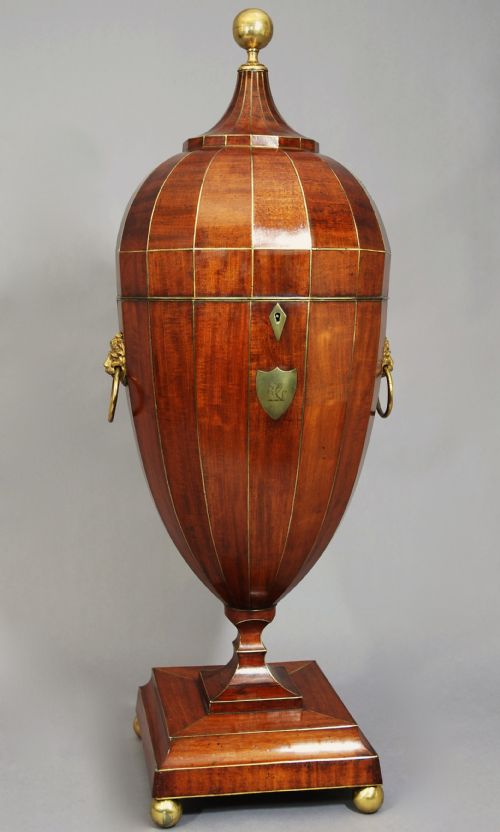
An antique knife box is a specialised container designed originally to store and present dining cutlery on or near the dining table. The pieces appearing here span the Georgian and Victorian eras, taking the form of upright sloping wooden boxes, hanging wall units, and grand decorative urns.
The most common survival from these periods is the sloping mahogany knife box with a serpentine or straight front, often featuring inlaid details. Alongside these standard desk-like shapes, you will encounter oak country pieces meant for the kitchen and occasional pairs of towering cutlery urns.
Materials and construction methods
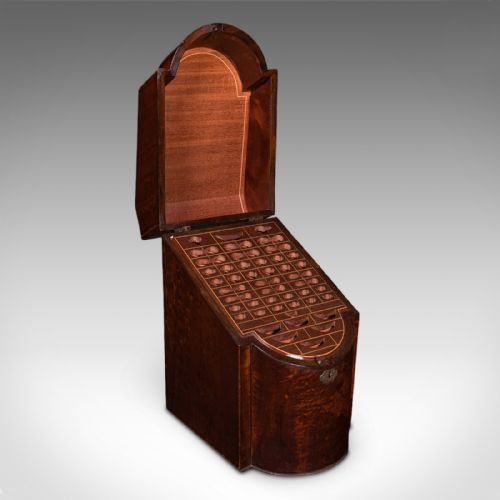
Cabinetmakers relied heavily on rich timbers such as mahogany and oak, frequently enriching surfaces with delicate wood inlay, satinwood banding, and brass fittings. Interiors often retained their original oak linings or velvet fittings designed to hold individual knife handles and blades.
Joinery techniques demanded high precision, particularly when curving solid mahogany into serpentine fronts or shaping multifaceted urns from segmented staves. Surface finishes were achieved through traditional hand-applied polishes that enhanced the natural grain and deep colour of the hardwoods.
Retail Price Guide 2026
Typical UK retail prices for knife box, calculated from the Sellingantiques database of over a million retail prices indexed since 2003. This retail price guide relies exclusively on Sellingantiques data; no external sources or auction records are used, so the figures do not describe the wider market.
The documented periods span from Georgian neoclassical designs through nineteenth-century country workshops to Victorian production.
Distinctions in craftsmanship
Quality rests on the selection of timber figures, where symmetrical flame mahogany and crisp satinwood stringing elevate a piece far above plain boards. The dexterity of the cabinetmaker shows in the tight execution of serpentine curves and the integration of substantial brass escutcheons and handles.
Proportion and architectural balance dictate the upper tier of the range, especially in pairs of cutlery urns where symmetry is paramount. Interiors that retain their fitted wooden slats or conversion potential for stationery indicate a higher grade of original commission.
The Antique Knife Box Glossary
- Serpentine
- A front contour characterised by a double-concave central curve flanked by convex ends. This shaping requires expert timber selection and joinery.
- Cutlery urn
- A tall, vase-shaped wooden vessel designed in matched pairs to hold knives on sideboards. They reflect neoclassical design influences.
- Satinwood
- A pale, lustrous exotic timber native to India and Ceylon, frequently used for contrasting stringing and inlay on darker woods.
- Coromandel wood
- A dense, heavily figured dark timber with contrasting black stripes, originating from Southeast Asia and utilised for luxury boxes.
- Escutcheon
- A protective metal plate surrounding a keyhole, usually cast in brass on these pieces to match carrying handles and hinges.
Frequently Asked Questions
What were antique knife boxes used for?
These boxes stored steel-bladed dining knives upright and organised when not in use on the dining table. Wealthy households kept cutlery locked away to protect the polished steel from damp dining rooms.
Over subsequent generations, many of these containers lost their internal dividers, adapting easily to hold stationery, letters, or small household papers on a desk.
How do I tell Georgian from Victorian examples?
Georgian knife boxes, particularly those from the eighteenth century, tend to feature rich mahogany, precise string inlay, and architectural sloping lids. Their proportions lean towards refined elegance and classic neoclassical restraint.
Victorian pieces often introduce broader timber selections, including coromandel and oak, alongside heavier hardware and slightly different internal configurations suited to later tastes.
Can I use a knife box for modern cutlery?
Most antique knife boxes possess internal wooden inserts pierced with narrow slots designed specifically for eighteenth or nineteenth-century cutlery handles. Modern knives with thick handles rarely fit these historical compartments without modification.
Many owners choose to remove or adapt the internal partitions carefully, allowing the box to serve as a general storage container or display object.
Where should I place a knife box at home?
A sloping knife box sits naturally on top of a sideboard, chest of drawers, or console table where its vertical form creates height. Keeping the piece away from direct heat sources and strong sunlight protects the antique wood finish and glue joints.
Wall-mounted hanging boxes suit kitchens or hallways, echoing their original practical placement in domestic service areas.