

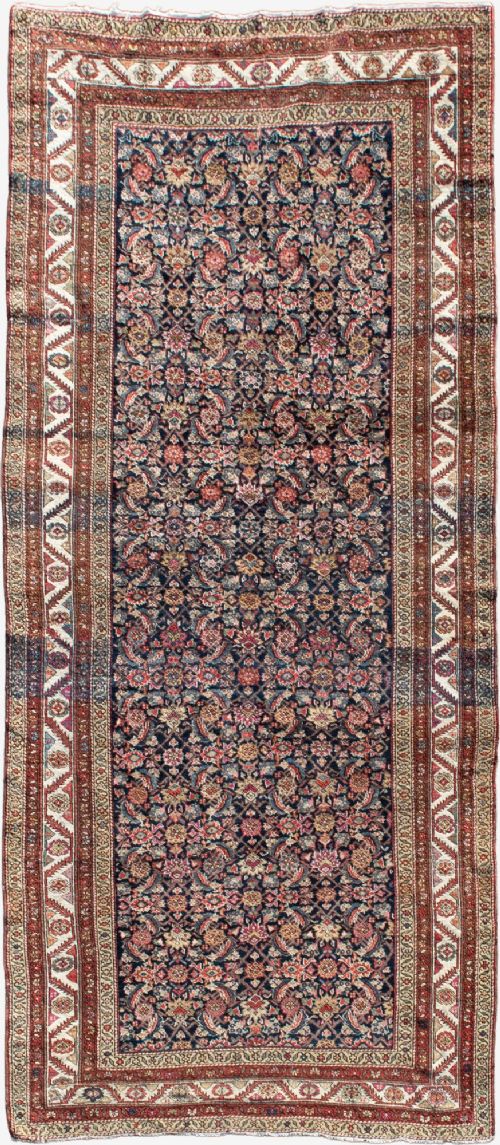
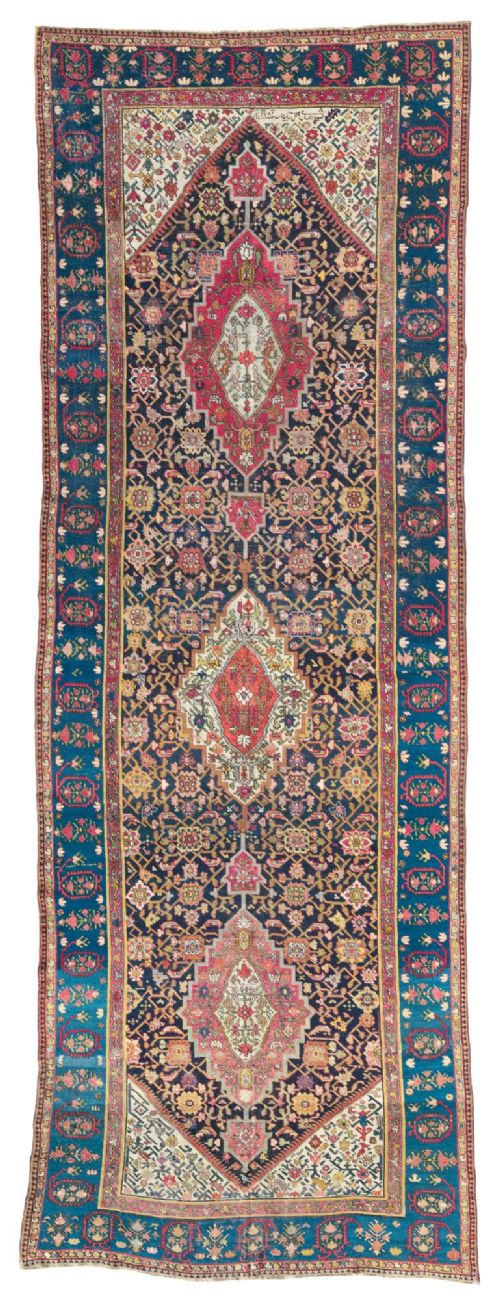
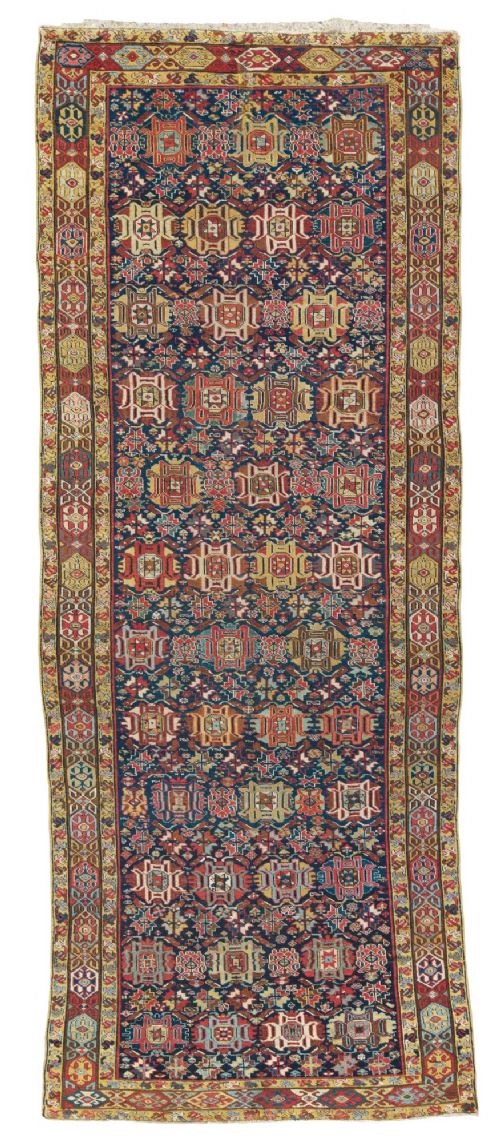


Antique Kelleh Rug
An antique kelleh rug is a large, rectangular floor covering created in tribal and village workshops, valued for its scale and rich geometric expression.
Antique Kelleh Rug
When buyers search for an antique kelleh rug, they are looking at large rectangular floor coverings that bridge the format between standard carpets and long runners. The pieces on this page span the mid-nineteenth century through the early twentieth century, originating primarily from Persian, Kurdish, Caucasian, and Turkmen weaving traditions.
These textiles appear in various regional styles, including Bidjar, Kurdish, Karabagh, Malayer, Khamseh, and Ersari. The formats run from substantial carpets down to long rugs and extended runners suitable for grand hallways and large reception rooms.
How they were made
The weavers utilised durable wool for the pile, often hand-spun to capture natural irregularities that absorb dye with depth and variation. Foundations combine wool and cotton to provide the structural stability required for large format floor coverings.
Dyes were derived from traditional natural sources, producing robust palettes that anchor medallion layouts, repetitive boteh motifs, and complex geometric border systems. Weaving structures vary from dense, heavy Kurdish pack to finer village constructions.
Antique Kelleh Rug Retail Price Guide 2026
Typical asking prices for kelleh rug among the pieces listed under this phrase on Sellingantiques today, from the lower quarter to the upper quarter. They describe what is for sale here now, not the wider market.
Materials recorded across these listings consist entirely of wool, cotton, and hand-spun wool.
What varies in quality
The distinction between ordinary and exceptional examples rests in the handling of the wool and the saturation of the palette. Hand-spun piles that retain lanolin and display subtle abrash provide a tactile richness absent in rigid, flatly dyed surfaces.
Design execution also dictates standard, where crisply articulated motifs, balanced borders, and confident proportions elevate a piece. The integrity of the weave and the preservation of original selvedges and end finishes complete the assessment of a fine example.
The Antique Kelleh Rug Glossary
- Kelleh
- A large rectangular carpet format, longer than a standard room rug but wider than a runner. It typically occupies a central position in traditional Persian interior layouts.
- Boteh
- A stylised floral motif resembling a pear, almond, or bent palm leaf. This pattern appears frequently across Kurdish and Persian village weavings.
- Abrash
- Variations in colour shade caused by changes in dye batches or hand-spun yarn lots. It creates a natural, shifting visual texture across the field.
- Cloud Band
- A curved, ribbon-like motif derived from Chinese art and adopted into Caucasian and Persian rug design. It often frames central fields or decorates primary borders.
- Selvedge
- The reinforced edge of a rug formed by wrapping the lateral warp threads. Original finishing here protects the structural integrity of the carpet.
Antique Kelleh Rug: Frequently Asked Questions
What is an antique kelleh rug?
An antique kelleh rug is a traditional elongated carpet format produced in Persian, Kurdish, and Caucasian weaving regions during the nineteenth and early twentieth centuries.
These large textiles were traditionally used in Middle Eastern homes to cover the main floor areas of reception rooms, positioned around the perimeter of larger room carpets.
How do I style a large kelleh?
A kelleh works exceptionally well in long hallways, narrow living spaces, or beneath large dining tables where its extended rectangular proportions can be fully appreciated.
Allowing sufficient bare floor around the edges helps frame the piece and highlights the tribal patterns and border designs.
How do I care for antique wool?
Regular gentle vacuuming without a beater bar prevents dust accumulation in the wool pile, while professional cleaning should be undertaken periodically by a specialist.
Keeping the rug out of direct, harsh sunlight prevents the natural dyes from fading prematurely over time.
How do I tell regional styles apart?
Regional styles reveal themselves through knotting density, handle weight, and specific design vocabulary, such as the crab pattern in Zanjan or dragon motifs in Kurdish pieces.
Examining the colour palette and the treatment of the foundational wool and cotton provides further clues to the specific origin.