


Antique Kashmiri Lighting
Antique kashmiri lighting brings rich hand-painted colour and intricate carved wood to interiors through table and floor lamps.
Antique Kashmiri Lighting
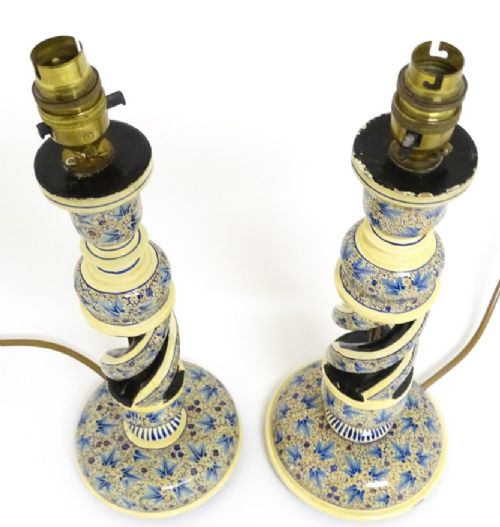
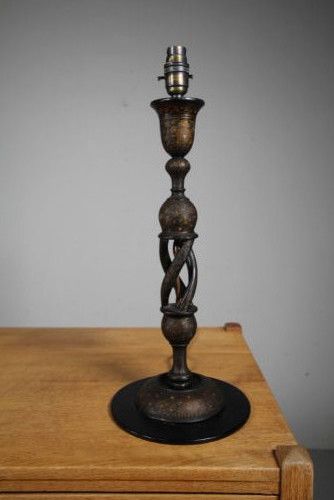
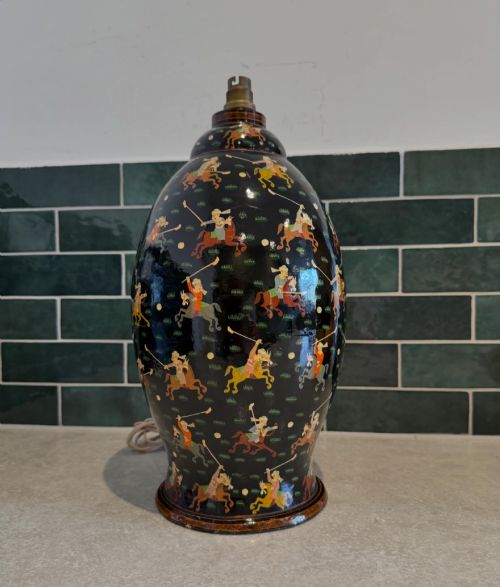
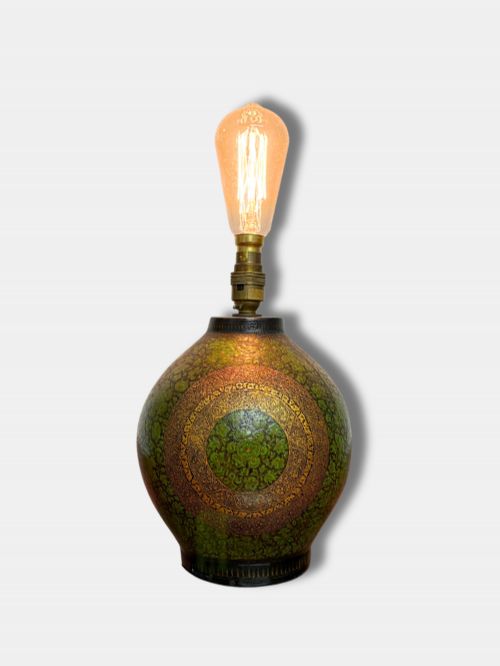
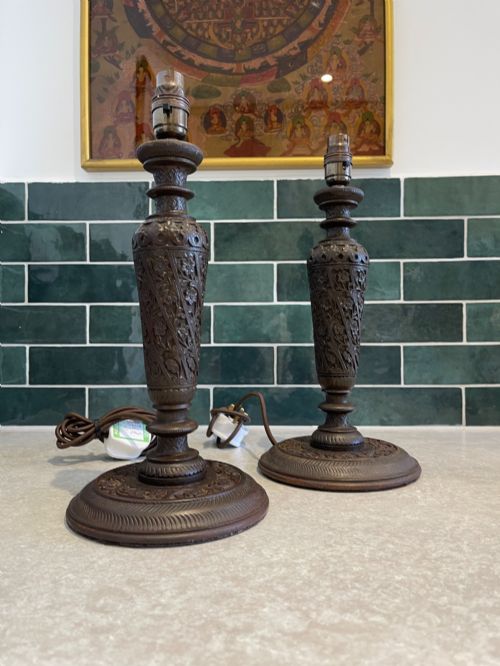
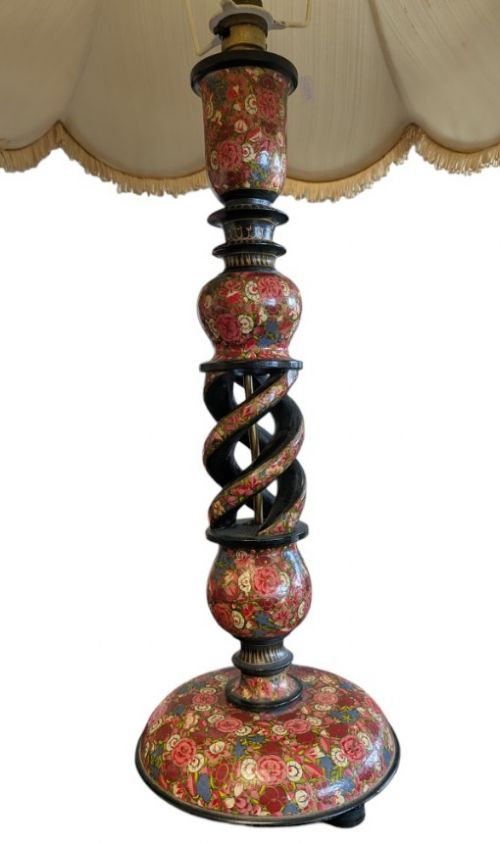
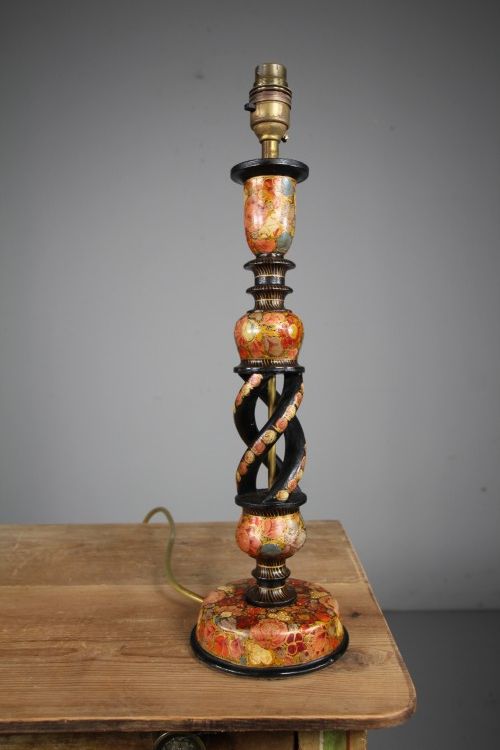
Antique Kashmiri lighting encompasses table lamps and standard floor lamps originating from the Kashmir region during the nineteenth and early twentieth centuries. These pieces reflect distinct Anglo-Indian and Kashmiri styles that combine traditional surface decoration with British electrical adaptations. Buyers encounter table lamps most frequently, often featuring turned wooden stems or painted papier-mache bodies.
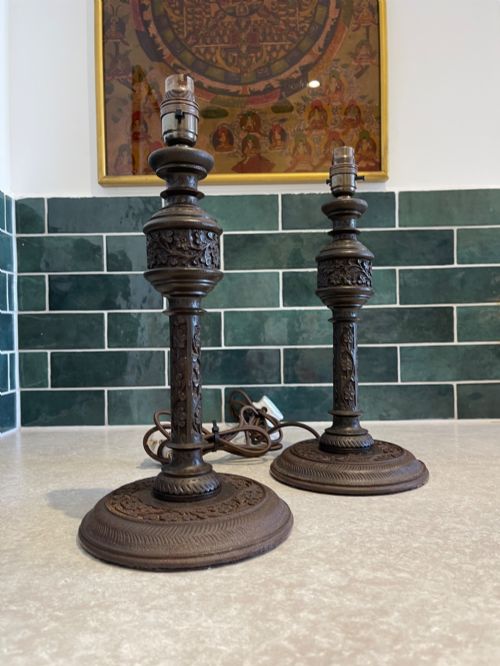
The objects span several decades from the late nineteenth century through to the 1930s, capturing a period of fine craftsmanship in wood and lacquer. Surviving examples include matched pairs as well as monumental single table lamps designed to anchor a room. The forms rely on regional woodworking traditions adapted for domestic illumination.
How they were made
Makers utilised local timbers such as walnut and carved wood to form the structural bodies of these lamps. Artisans shaped tall twists and turned columns, often applying detailed surface decoration directly onto the timber. Brass components were incorporated for structural stability and lamp holders.
Colour played a central role, with lacquer and gilt gold applied over cream or green bases. Many pieces feature intricate hand-painted motifs that demonstrate the detailed brushwork typical of Kashmiri workshops.
Materials documented across the pieces include brass, lacquer, wood, papier-mache, carved wood, walnut, and fabric.
What varies in quality
The distinction between standard and superior pieces lies in the crispness of the carving and the preservation of the painted surface. Finely carved standard lamps show deep, sharp relief work rather than shallow moulding. Lacquer work that retains its original gilt gold and rich colour without excessive rubbing indicates careful historical preservation.
Proportion and scale also separate ordinary examples from exceptional ones. Enormous table lamps and balanced pairs demand greater skill in timber selection and turning to ensure stability. The integration of period brass fittings alongside clean hand-painted detailing marks the upper tier of the range.
The Antique Kashmiri Lighting Glossary
- Papier-mache
- A composite material made from paper pulp or layers of paper reinforced with glue, moulded and painted to create decorative lamp bodies. This technique allowed for smooth, highly detailed surface decoration in traditional Kashmiri motifs.
- Anglo-Indian
- A design style reflecting the cultural exchange during British rule in India, where local craftsmanship met European domestic requirements. In lighting, this resulted in traditional Indian carving applied to standard Western lamp forms.
- Standard Lamp
- A traditional British term for a floor lamp, standing upright on a weighted base to illuminate a room from standing height. Kashmiri examples often feature tall turned wooden columns.
- Gilt Gold
- A thin layer of gold applied to the surface of wood or lacquer to highlight decorative details and create a luminous finish. It catches ambient light even when the lamp is unlit.
Antique Kashmiri Lighting: Frequently Asked Questions
What periods do these lamps date from?
These lamps primarily date from the late nineteenth century through the 1920s and 1930s. The selection spans distinct decades of the early twentieth century alongside nineteenth-century examples.
Craftsmanship during these eras focuses on carved walnut and hand-painted lacquer finishes reflecting Anglo-Indian design influences.
Are these lamps supplied with modern wiring?
Many examples are described as rewired to meet contemporary electrical standards while retaining their historic components. This ensures safe domestic use without altering the antique body.
Buyers should inspect the specific listing details regarding lamp holders and wiring status before purchase.
What wood types are used in Kashmiri lamps?
Makers predominantly used walnut and carved wood to construct the stems and bases of these lamps. These timbers provided a stable foundation for intricate hand-carving and turning.
Other materials such as brass and papier-mache also appear frequently in the construction of the lamp bodies.
Do these lamps come in pairs?
Matched pairs appear alongside individual table lamps and large floor-standing standard lamps. Pairs offer a symmetrical lighting option for sideboards or mantelpieces.
Single pieces range from standard table heights to enormous examples suited for prominent placement.