




Gilt Painted Lamp Base
These gilt painted lamp base options bring historic illumination to interiors through painted finishes and metallic leaf.
Gilt Painted Lamp Base
A gilt painted lamp base adapts historic forms, from standard lamps to table lamps, utilising decorative painted surfaces combined with gilding. Buyers seeking a gilt painted lamp base encounter pieces spanning the nineteenth century, Edwardian era, and the nineteen-twenties.
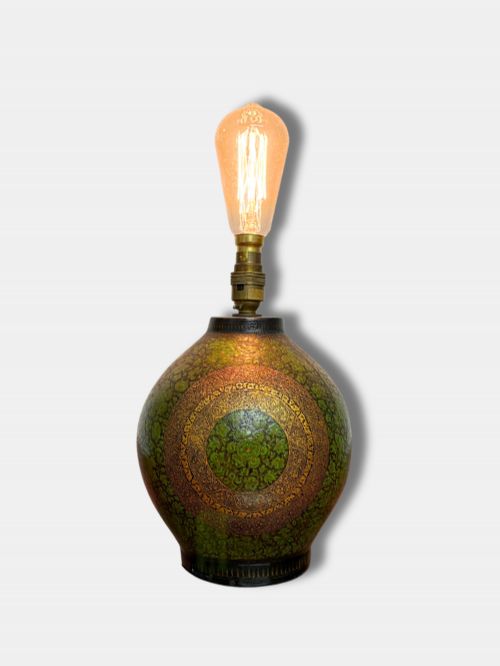
The selection includes diverse stylistic traditions such as Chinoiserie, Kashmiri craftsmanship, French Empire, Neoclassical, and Japanese Edo influences. Forms range from converted vases and porcelain bodies to carved giltwood and standard lamps.
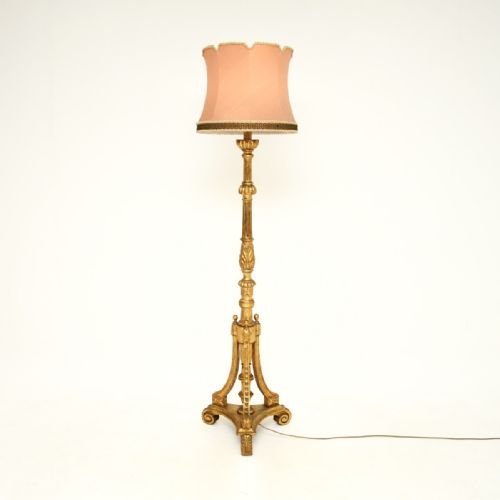
Table lamps dominate the selection, appearing alongside taller standard lamps suitable for floor placement. Origins span English, French, and Asian aesthetics adapted for lighting.
How they were made
Construction relies on traditional substrates including porcelain, brass, lacquer, papier-mâché, and giltwood. Artisans applied gold leaf, ormolu mounts, and hand-painted pigments to achieve decorative surfaces.
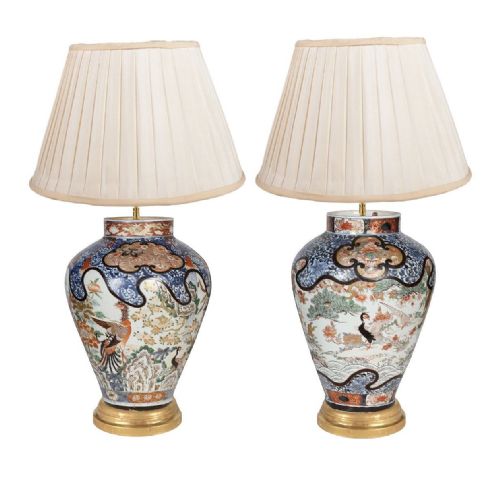
Styles such as Chinoiserie and Kashmiri work incorporate detailed hand-painting on lacquered or wooden foundations. Porcelain bases often feature hand-painted details alongside gilt highlights and ormolu mounts.
Several eighteenth-century Japanese Imari vases found a second life as nineteenth-century lamps, proving that historic porcelain is remarkably adaptable.
What varies in quality
Quality rests in the execution of the hand-painting and the preservation of the original gilding or gold leaf. Finer examples display precise brushwork and well-preserved surface textures across wood, porcelain, or lacquer.
The integration of metal mounts, such as ormolu or brass, differentiates standard production from more ambitious decorative objects. Superior pieces retain crisp detail in carved giltwood and hand-painted motifs.
The Gilt Painted Lamp Base Glossary
- Ormolu
- Gilded bronze mounts applied to decorative objects and lighting bases. This technique was widely utilised in French nineteenth-century pieces.
- Chinoiserie
- European decorative style reflecting Chinese artistic influences. It appears frequently on painted lamp bases from the Victorian and Edwardian periods.
- Giltwood
- Wood that has been treated with gold leaf or gilt paint. This material provides structural substance for floor and table lamps.
- Kashmiri
- Decorative tradition originating from Kashmir, featuring intricate painted patterns on wooden surfaces. These objects often display green and gold colour schemes.
- Tole Peinte
- Painted sheet metal used in decorative objects and lighting. It offers a smooth surface for detailed pigment application.
Gilt Painted Lamp Base: Frequently Asked Questions
What periods do these lamps come from?
The selection spans the nineteenth century, the Victorian and Edwardian eras, and the early twentieth century around nineteen-twenty. Earlier influences also appear through adapted Japanese and Chinese porcelain.
Construction materials and decorative styles reflect the aesthetic preferences of these specific periods, ranging from Neoclassical to Chinoiserie.
How are standard lamps different from table lamps?
Standard lamps are taller floor-standing fixtures designed to illuminate a wider area of a room. Table lamps are smaller units intended for placement on furniture.
Both forms utilise gilt painted finishes, though standard lamps frequently incorporate carved wood or marbleised elements.
What materials make up these lamp bases?
Materials include brass, porcelain, lacquer, ormolu, giltwood, gold leaf, fabric, and papier-mâché. Many pieces combine multiple materials, such as porcelain bodies with ormolu mounts.
Surfaces are typically finished with hand-painted details and metallic leaf to create the characteristic gilt appearance.
How do I identify a Chinoiserie lamp?
Chinoiserie lamps feature decorative motifs inspired by traditional Chinese art applied by European or Asian artisans. These designs often incorporate painted landscapes, figures, and floral patterns on lacquered or wooden grounds.
They appear across Victorian and Edwardian examples in this category.