

Antique Joined Coffer
An antique joined coffer is a robust timber storage box built with mortise and tenon joints, prized for centuries of domestic service.
Antique Joined Coffer
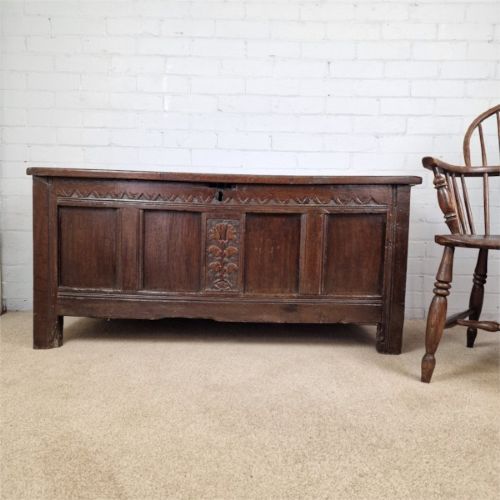
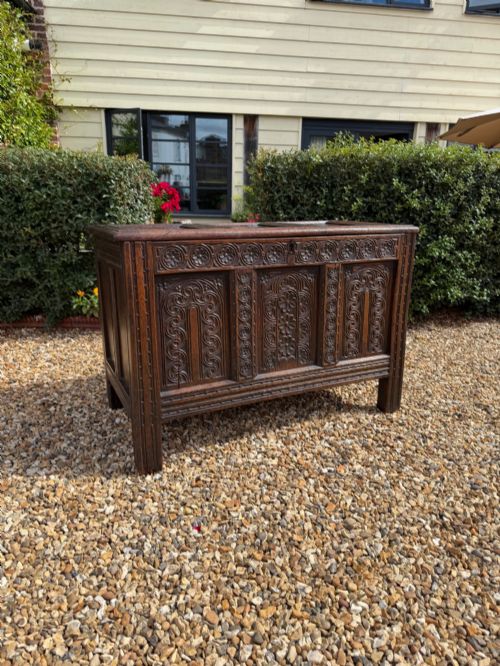
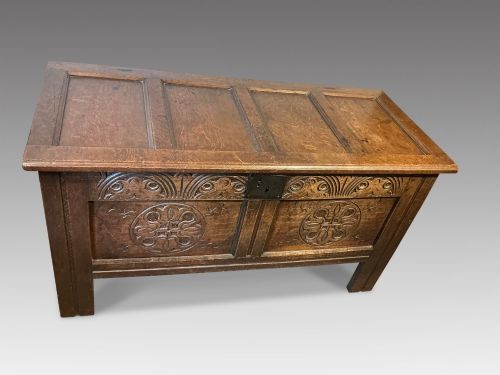
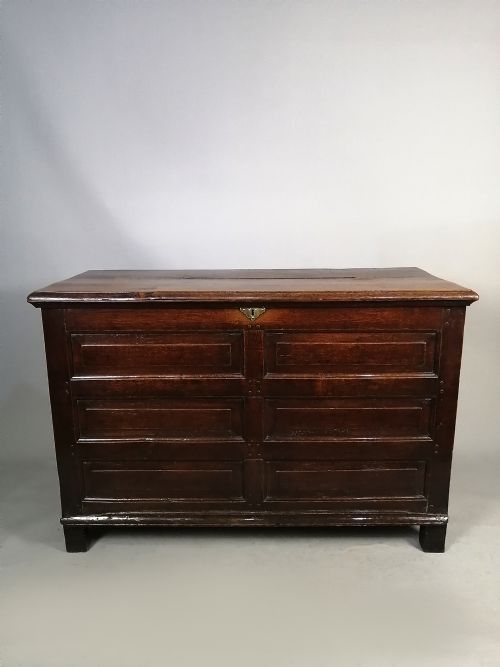
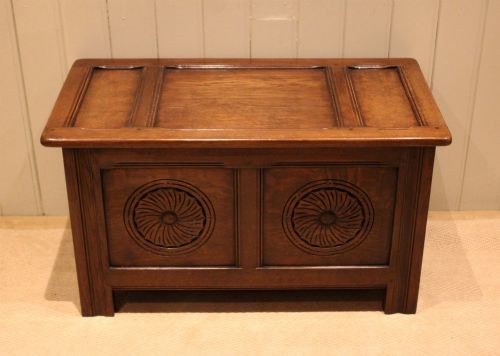
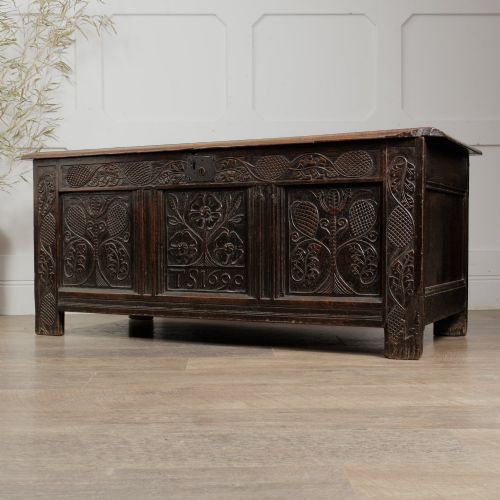
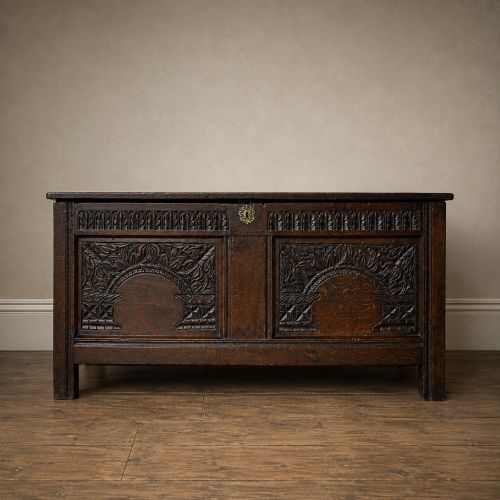
An antique joined coffer is a heavy storage chest constructed using frame and panel techniques rather than simple boards nailed together. The examples found here originate primarily from the sixteenth, seventeenth, and eighteenth centuries, reflecting the evolution of English and Welsh joinery.
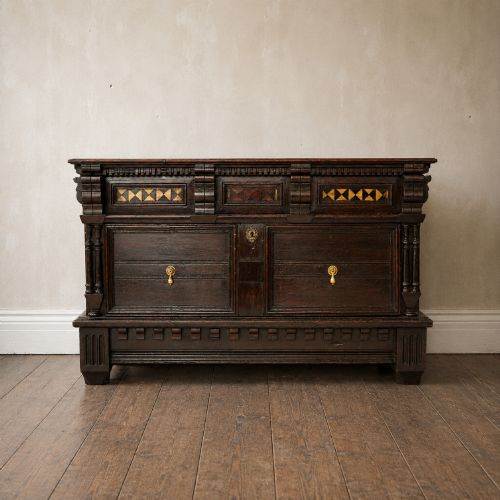
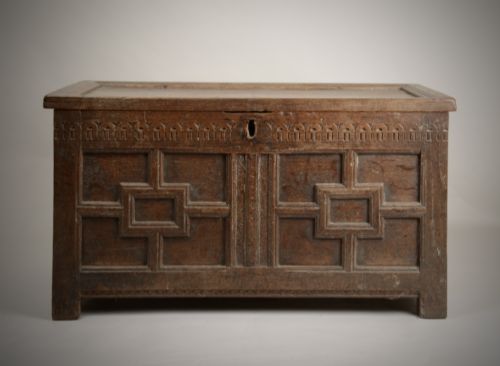
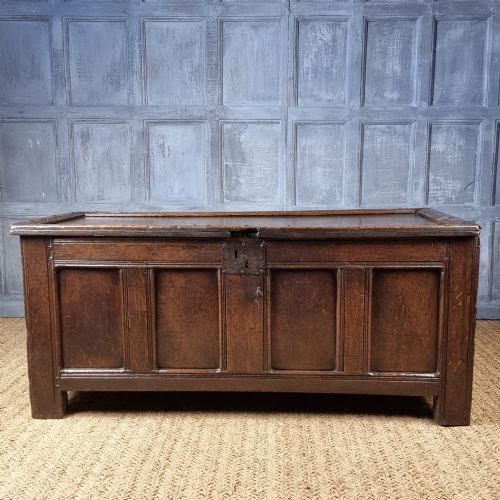
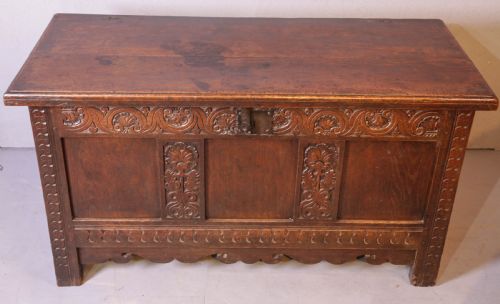
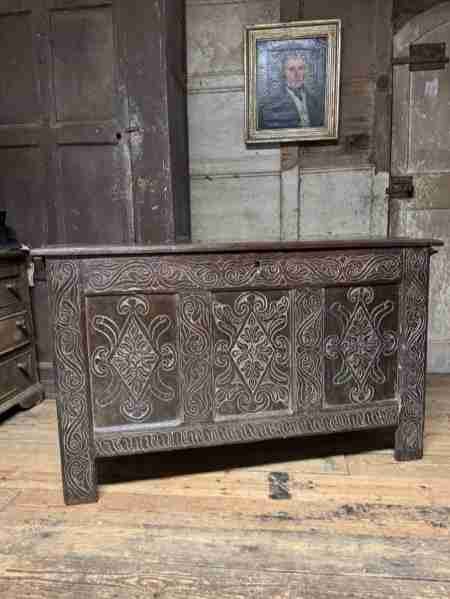
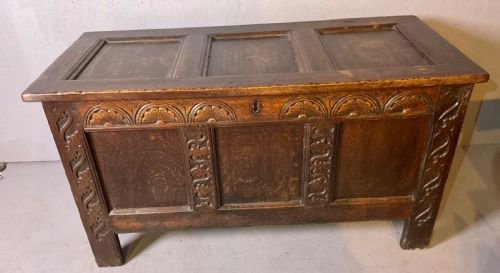
Most pieces encountered on this page date to the seventeenth century, displaying characteristic oak construction and panelled fronts. Regional variants such as Welsh, Lancashire, and Lakeland examples appear alongside pieces bearing carved ornament or geometric moulding.
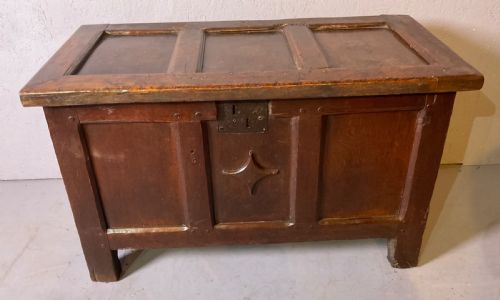
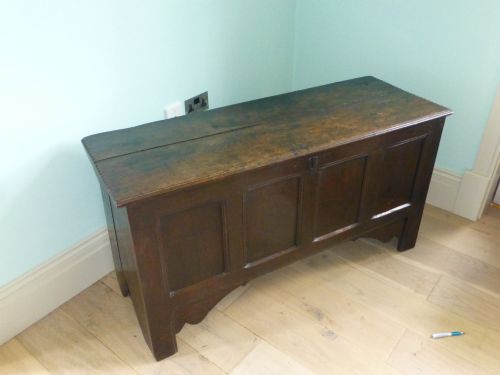
Forms range from single panel boxes to larger blanket chests and mule chests equipped with lower drawers. These items served multiple household functions, acting as seating, tables, and secure repositories for valuables before fitted closets became common.
Judging quality and proportion
Quality in these chests rests upon the integrity of the original joinery and the depth of the timber's surface character. Pieces retaining their original lids, floorboards, and hardware command greater interest from collectors.
The refinement of the carved ornament and the crispness of the geometric mouldings distinguish superior examples from simpler utilitarian boxes. Proportion and scale also influence standing, with smaller early coffers holding particular appeal.
One seventeenth-century workshop link connects an Exeter apprentice directly to surviving West Country oak chests.
Thomas Dennis
The Antique Joined Coffer Glossary
- Joined coffer
- A storage chest constructed with a frame and panel method using mortise and tenon joints. This technique allows the timber to expand and contract naturally without splitting.
- Linenfold
- A style of relief carving popular on sixteenth-century panels that resembles folded linen fabric. It creates texture and depth across the front of the chest.
- Mule chest
- A joined chest featuring one or more drawers built beneath the main storage compartment. This form emerged as domestic storage needs evolved.
- Geometric moulding
- Raised wooden strips applied to the panels in rectilinear patterns, characteristic of seventeenth-century decoration. These profiles catch the light and add architectural depth.
- Trunk
- A portable container traditionally covered in leather, fabric, or metal, distinct from the rigid timber construction of a joined coffer.
Antique Joined Coffer: Frequently Asked Questions
What is a joined coffer?
A joined coffer is a sturdy wooden chest built with a rigid frame and floating panels joined by pegged mortises.
This method allows the timber to adjust to changes in humidity without cracking the structure.
How were coffers used?
These chests served primarily for storing household textiles, blankets, silver, and important documents.
Families also utilised them as benches for seating or as tables within the main hall.
How do I date a coffer?
Dating relies upon observing construction methods, timber species, and the style of any carved ornament or mouldings.
Sixteenth-century examples often display linenfold carving, whereas seventeenth-century pieces feature geometric mouldings and pegged frames.
Where were these chests made?
Local carpenters and joiners manufactured these pieces across English and Welsh counties using regional hardwoods.
Specific workshops developed distinct regional characteristics in their carving and framing patterns.