


Antique Japanese Metal Art
Antique japanese metal art brings together centuries of bronze casting, cloisonne enamel work, and intricate metal inlay originating from the Edo and Meiji periods.
Antique Japanese Metal Art
Antique japanese metal art encompasses items such as vases, decorative chargers, bowls, plaques, and censers spanning the Edo, Meiji, Taisho, and Showa periods. The most common survivals on this page are vessels and wall plates produced during the Meiji period, reflecting a peak in metalworking skill.
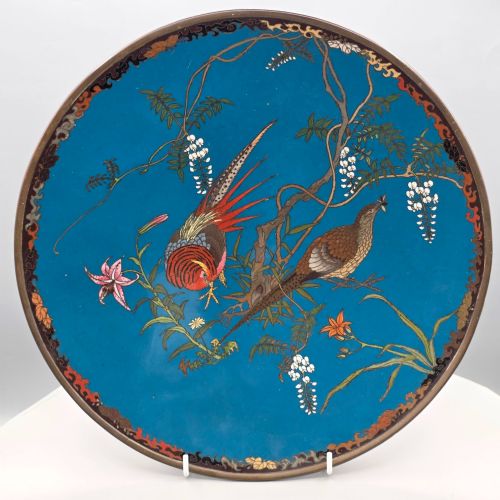
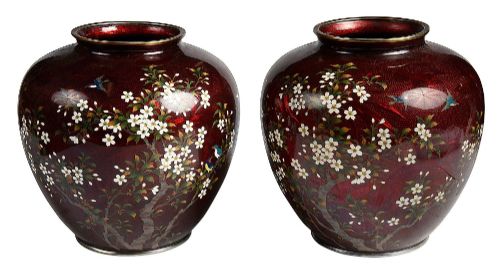
Buyers encounter works featuring bronze, copper, brass, and silver wire alongside enamel and mixed metal elements. These objects range from heavy bronze jardiniere planters to delicate cloisonne vessels decorated with birds, flowers, dragons, and auspicious symbols.
Materials and Technique
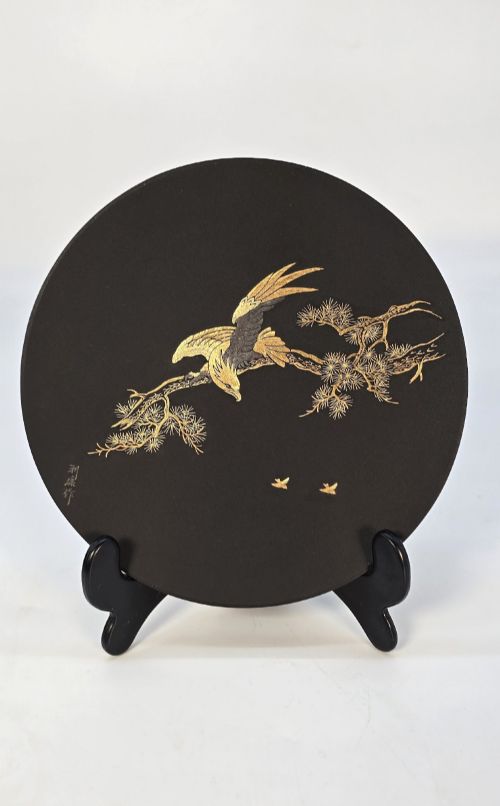
Makers utilised bronze, copper, and iron as the foundation for cast and patinated vessels, frequently applying gold and silver inlay to create detailed surface patterns. Mixed metal compositions combine various alloys to achieve contrasting tonal effects on plaques and vases.
Cloisonne enamel involves soldering thin metal wire onto a metal or porcelain base to form cells, which are then filled with coloured enamel pastes and fired. Techniques such as ginbari and basse-taille introduce textured foils and translucent enamels to create depth beneath the surface glaze.
A bronze wolf okimono stands ready to guard the collection.
Craftsmanship and Execution
The distinction between standard production and top tier works lies in the precision of the wirework and the control of the enamel firing. Finer pieces demonstrate exceptionally fine silver wire placement, perfectly smooth enamel surfaces without pitting, and deeply expressive patination on bronze elements.
Signed works and pieces bearing factory marks from prominent makers carry greater artistic distinction through their ambitious scale and complex iconography. The harmony between the metal body and the applied decoration dictates the overall strength of the piece.
Ando Jubei·Tamura Yukio
The Antique Japanese Metal Art Glossary
- Cloisonne
- A decorative metalwork technique where fine wire is soldered to a body to create compartments filled with enamel. These cells hold the coloured pastes before firing.
- Ginbari
- A method of applying a textured metallic foil beneath translucent enamel. This technique creates a patterned background visible through the coloured glaze.
- Patination
- The chemical treatment or natural weathering applied to metal surfaces to produce a specific colour and finish. Bronze pieces often show dark brown or greenish tones.
- Okimono
- A standalone Japanese display carving or sculpture placed in an interior setting. These metal or bronze figures typically represent animals or folklore.
- Mixed metal
- An alloy combination or the assembly of different metals such as copper, brass, and silver within a single object. This creates contrasting colours across the design.
Antique Japanese Metal Art: Frequently Asked Questions
What is cloisonne enamel?
Cloisonne enamel is a technique where thin wires are attached to a metal base to form patterned cells. These compartments are filled with vitreous enamel paste and fired in a kiln.
After firing, the surface is ground and polished flat to reveal the delicate metal outlines separating the colours.
How do I identify a Meiji period piece?
Meiji period metalwork dates between eighteen sixty-eight and nineteen twelve, a time when Japanese craftsmen refined traditional casting and enamelling techniques for international export.
Pieces from this era frequently display complex motifs such as dragons, birds, and floral arrangements executed with high technical precision.
What is mixed metal inlay?
Mixed metal inlay involves hammering contrasting metals like gold, silver, and copper into chiselled grooves on an iron or bronze background. This process creates pictorial scenes with varied metallic tones.
It requires considerable skill to ensure the inlaid metals remain secure within the darker base metal.
How should I clean antique bronze?
Antique bronze should be dusted gently with a soft, dry cloth to preserve its original patinated surface. Avoid chemical cleaners, polishes, or water, as these can strip away historic patination.
Leaving the surface untouched helps maintain the integrity and visual character of the metal.