





Antique Japanese Drawers
These antique japanese drawers offer remarkable storage, bringing traditional craftsmanship and rich materials into modern rooms with distinct character.

Antique Japanese Drawers
When you search for antique japanese drawers, you encounter a specialised variety of storage furniture designed for traditional domestic use. The pieces on this page are predominantly tansu chests, apothecary cabinets, and table cabinets originating from the nineteenth and early twentieth centuries.
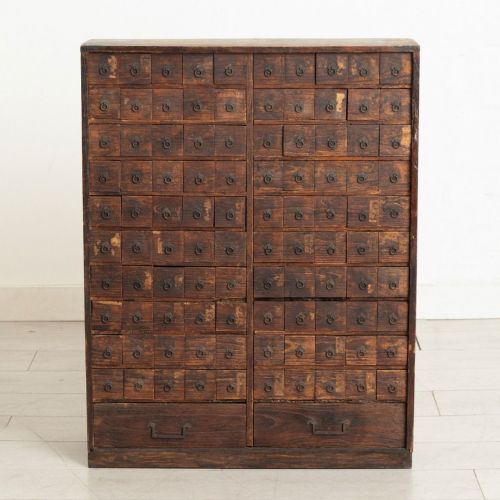
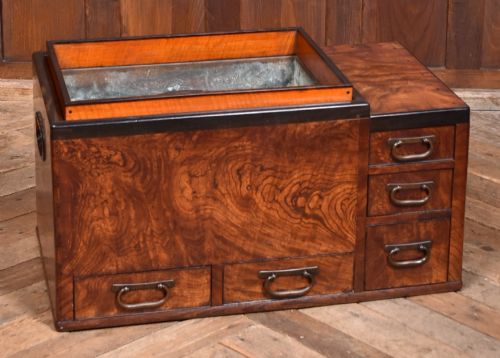
You are most likely to meet wooden tansu chests built from cedar, elm, or zelkova wood, often fitted with robust iron or brass hardware. These range from simple kitchen mizuya and ship's chests to elaborate step chests designed for interior organisation.
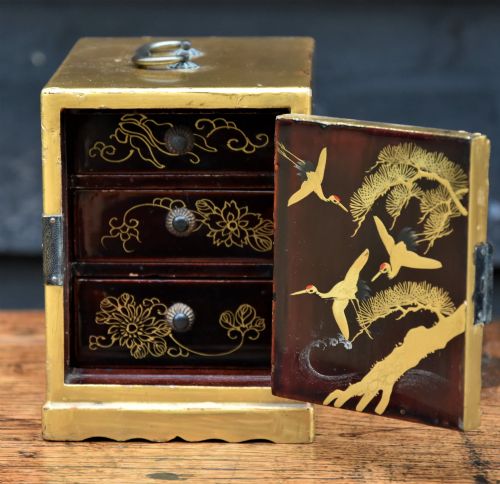
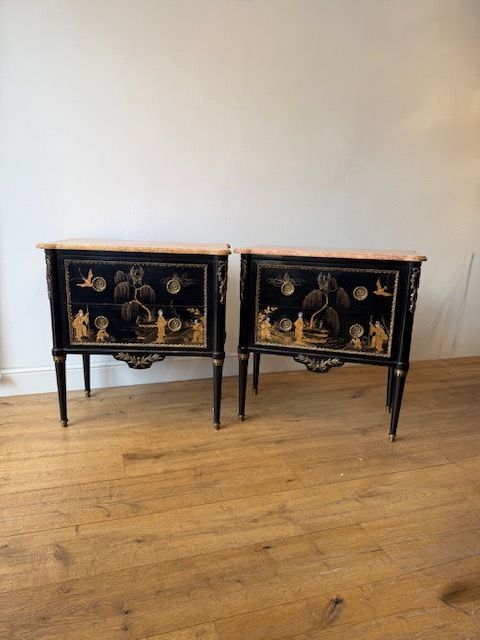
Alongside traditional forms, the selection includes Anglo-Japanese aesthetic movement desks and lacquer table cabinets from the Meiji and Taisho periods. Each object reflects specific historical domestic needs, from travel storage to specialised apothecary work.
How they were made
Cabinet makers utilised native timbers such as cedar, elm, and zelkova wood, selecting each board for its grain and structural resilience. Joinery was executed with precision to allow the timber to expand and contract naturally without losing its integrity.
Iron and brass mounts, hinges, and lock plates were forged by hand to reinforce corners and secure drawers. Surface finishes incorporated black or red lacquer, highlighting the natural texture of the wood beneath.
Antique Japanese Drawers Retail Price Guide 2026
Typical asking prices for japanese drawers among the pieces listed under this phrase on Sellingantiques today, from the lower quarter to the upper quarter. They describe what is for sale here now, not the wider market.
Listings feature items built from cedar, elm, zelkova wood, and iron across the nineteenth century, Meiji period, and Taisho period.
What varies in quality
The distinction between tiers rests upon the quality of the timber selection and the complexity of the internal configuration. Finer examples display carefully matched grain patterns in cedar, elm, or zelkova wood alongside substantial, hand-forged iron or brass hardware.
Construction methods also separate standard utility items from finer workshop pieces. Superior items maintain smooth drawer operation and precise joinery that withstands centuries of use without shifting.
Blyth and Son
The Antique Japanese Drawers Glossary
- Tansu
- A traditional Japanese mobile storage chest or cabinet built for domestic utility or travel. These pieces evolved into distinct regional forms for clothing, kitchen items, and documents.
- Zelkova Wood
- A hardwood native to Japan prized for its striking grain pattern and durability in cabinet making. Artisans utilised this timber for the primary facades of superior chests.
- Mizuya
- A traditional Japanese kitchen storage tansu used for organising utensils, dry goods, and tableware. These cabinets form an important category of domestic antique storage.
- Meiji Period
- The era in Japanese history spanning from eighteen sixty-eight to nineteen twelve, noted for opening trade and distinctive decorative arts. Pieces from this time often feature refined metalwork and lacquer finishes.
- Kodansu
- A small portable table cabinet with multiple drawers designed for storing valuables, writing materials, or personal items. These miniature pieces frequently display intricate lacquer or bronze decoration.
Antique Japanese Drawers: Frequently Asked Questions
What is a tansu chest?
A tansu is a traditional Japanese mobile storage cabinet built for domestic use, featuring heavy iron or brass hardware for security and transport. These chests were designed for specific household tasks, including clothing storage and kitchen organisation.
They range from simple stacking boxes to elaborate step chests used in multi-level traditional homes. The construction prioritises durability and practical utility over purely decorative display.
How do I use a table cabinet?
Table cabinets provide compact storage for small personal items, letters, or collections on a desk, sideboard, or tabletop. Their multiple small drawers and compartments help organise modern desk spaces while adding historical texture to a room.
These pieces work well as focal points on larger pieces of furniture where their detailed hardware and lacquer finishes can be appreciated.
What wood was used?
Cabinet makers utilised native timbers including cedar, elm, and zelkova wood. Cedar provided a lightweight and stable carcase, while elm and zelkova offered robust durability and striking grain patterns for visible exterior surfaces.
Iron and brass were standard for the heavy reinforcing plates, handles, and corner mounts that protected the timber during daily use.
How do I date a piece?
Dating relies on stylistic markers from the nineteenth century through the Taisho period, alongside the specific construction techniques and materials employed. Meiji period items often incorporate distinct decorative bronze animal mounts and refined lacquer work.
Comparing the type of wood, such as zelkova or cedar, alongside the hand-forged character of the iron hardware helps establish the likely era of manufacture.