


Japanese Wooden Merchant Chest
A Japanese wooden merchant chest is a sturdy portable storage piece built for travel and trade, prized for heavy forged iron hardware and rich timber grain.
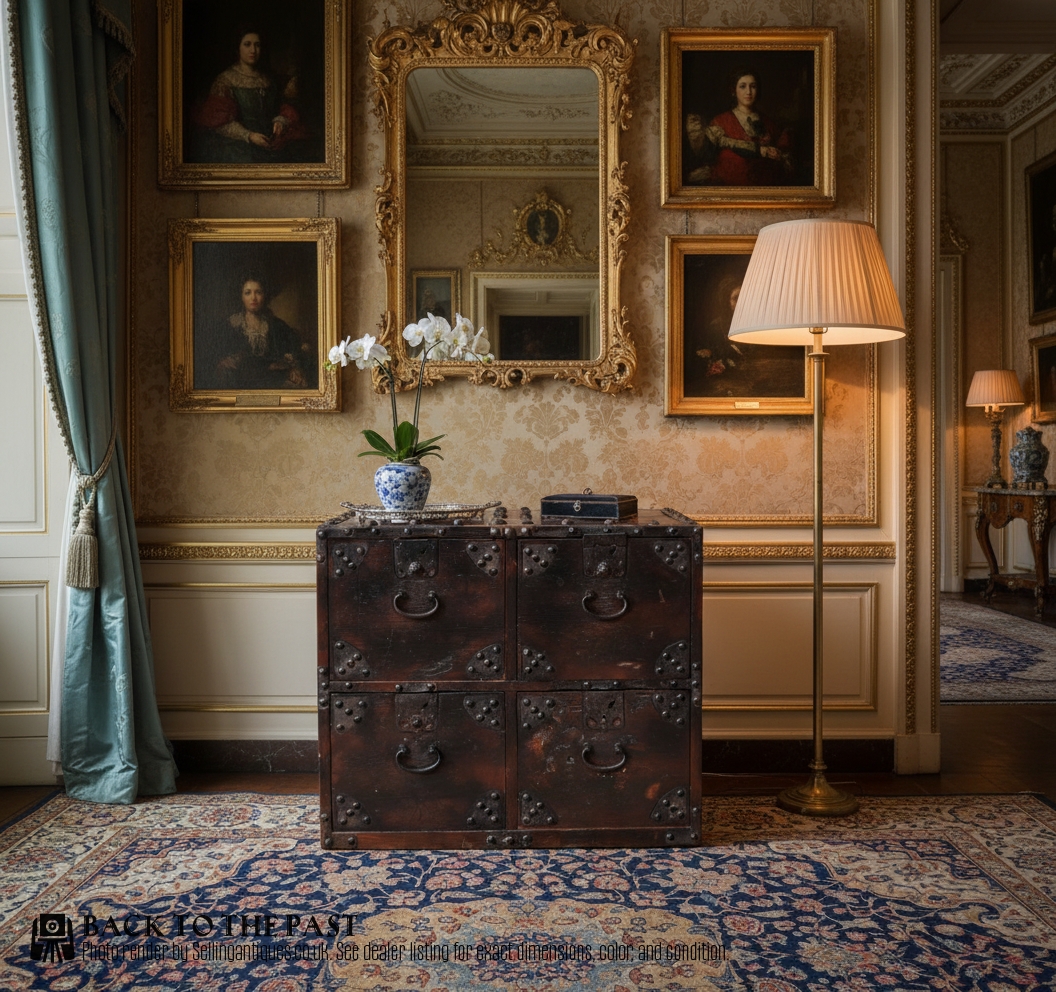
Japanese Wooden Merchant Chest
A Japanese wooden merchant chest is a functional storage container built to hold valuables, documents, and trade goods during the nineteenth century and the Taisho period. These forms include wheeled kuruma-dansu, kitchen mizuya, and specialised money boxes known as zenibako.
The pieces listed on this page span the Edo period, the Meiji period, and the Taisho period, reflecting traditional Japanese craftsmanship. Buyers will frequently encounter terms such as tansu cabinet, storage chest, and regional variations constructed from native timbers.
Every Japanese wooden merchant chest serves as a practical artefact of trade and daily life, utilising sliding panels, multiple drawers, and secure compartments. Their robust proportions and honest construction make them striking statement pieces in modern interiors.
Materials and Construction
Makers built each Japanese wooden merchant chest using regional timbers including elm, cedar, chestnut, keyaki, and paulownia wood, often paired with red lacquer finishes. These woods were selected for their grain pattern and resilience against warping in humid climates.
Forged iron hardware forms an essential structural element, reinforcing corners, drawers, and heavy locking plates across every piece. Blacksmiths hammered these iron mounts by hand to secure the joints while providing defence against theft during transit.
Japanese Wooden Merchant Chest Retail Price Guide 2026
Typical asking prices for japanese wooden merchant chest among the pieces listed under this phrase on Sellingantiques today, from the lower quarter to the upper quarter. They describe what is for sale here now, not the wider market.
Materials recorded across the inventory include elm, cedar, chestnut, keyaki, paulownia wood, iron, and red lacquer.
Judging Quality
The calibre of a Japanese wooden merchant chest rests on the complexity of its internal joinery and the integrity of its timber selection. Finer examples display meticulous dovetailing and unblemished wood grains that have aged gracefully over generations.
The weight, thickness, and hand-forged detail of the iron hardware distinguish exceptional pieces from simpler utility boxes. Original locking mechanisms, intact handles, and well-preserved surface finishes elevate the standing of any cabinet.
The Japanese Wooden Merchant Chest Glossary
- Tansu
- Traditional Japanese mobile storage cabinetry and chests built for domestic or commercial utility. These pieces incorporate drawers and sliding doors designed without exterior nails.
- Keyaki
- Japanese zelkova wood prized for its dense grain and durability in traditional furniture making. Cabinet makers utilised this timber for surfaces requiring high strength.
- Zenibako
- A traditional Japanese wooden money box featuring secure compartments for coin storage. Merchants used these compact boxes in shops and during trade transactions.
- Kuruma-Dansu
- A wheeled Japanese merchant chest designed for rapid evacuation of valuables during fires. The heavy wooden wheels are fitted directly into the base structure.
Japanese Wooden Merchant Chest: Frequently Asked Questions
What is a tansu chest?
A tansu chest is a traditional Japanese mobile storage cabinet designed for domestic use, merchant trade, or clothing storage. These pieces utilise sturdy wood construction and multiple internal drawers.
Craftsmen built them to be portable, often adding heavy iron handles or wheels for transport between locations.
How were merchant chests used?
Japanese merchants utilised these chests to store currency, ledgers, and valuable trade goods securely in shops and homes. Specialised compartments kept commercial documents organised.
Many designs incorporated heavy iron locking plates to safeguard contents from theft and fire during the Edo and Meiji periods.
How do I date these chests?
Dating relies on stylistic markers from the Edo period, Meiji period, and Taisho period, alongside construction techniques and timber types. Nineteenth-century examples often display hand-forged ironwork and traditional joinery.
Later pieces from around nineteen-ten exhibit transitional Meiji and Taisho aesthetic qualities in their wood finish and hardware.
Where should I place one?
These chests function well as low credenzas, hallway storage units, or focal points in living spaces. Their compact proportions allow them to sit comfortably against walls or beneath windows.
Ensure placement avoids direct heat sources and excessive moisture to protect the aged wood and traditional lacquer finishes.