




Antique Japanese Basket
These antique japanese basket pieces bring natural textures and sculptural form into a room.
Antique Japanese Basket
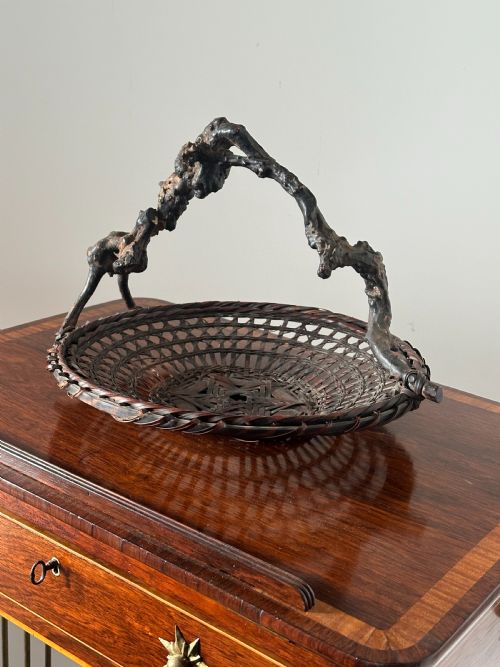
When searching for an antique japanese basket, a buyer encounters woven vessels designed for flower arranging or domestic use. The examples seen here include bamboo flower baskets from the early twentieth century.
These pieces encompass both utilitarian fruit baskets with copper inserts and sculptural Ikebana vessels intended for floral displays. The forms reflect traditional Japanese craftsmanship from the Meiji and Taisho periods.
Most pieces date from the late nineteenth century to the early twentieth century. They demonstrate the practical application of natural materials in traditional Japanese interiors.
How they were made
The construction relies on natural plant fibres such as bamboo and rattan, carefully split and woven into intricate patterns. These materials provide both flexibility and structural integrity to the vessel.
Certain forms incorporate metal elements like copper inserts to hold water for flower arranging. The combination of plant stems and metal demonstrates practical adaptation for functional use.
Antique Japanese Basket Retail Price Guide 2026
Typical asking prices for japanese basket among the pieces listed under this phrase on Sellingantiques today, from the lower quarter to the upper quarter. They describe what is for sale here now, not the wider market.
Some fruit baskets come equipped with their original copper inserts, surviving a century of holding apples.
What varies in quality
Quality rests in the tightness of the weave and the symmetry of the structural form. Finer pieces display consistent tension throughout the construction and balanced proportions.
The sophistication of the handles and the integration of internal metal components separate standard utility vessels from accomplished artistic works.
Hozan·Roberts and Belk
The Antique Japanese Basket Glossary
- Ikebana
- The traditional Japanese art of flower arranging. Baskets designed for this purpose accommodate floral stems and water.
- Morikago
- A type of Japanese woven basket traditionally used for holding fruit. These often feature metal liners.
- Meiji Period
- The era in Japanese history spanning from 1868 to 1912. Pieces from this time show distinct traditional craftsmanship.
- Taisho Period
- The period in Japanese history lasting from 1912 to 1926. Work from this era bridges traditional and modern design.
Antique Japanese Basket: Frequently Asked Questions
What is an antique japanese basket used for?
These woven vessels were originally created for practical tasks such as holding fruit or for supporting traditional flower arrangements. Today, they serve primarily as decorative objects that introduce texture and organic form to interior spaces.
Collectors often place them on tables or shelves where the woven details can be clearly observed. They work well in both minimalist and eclectic room settings.
How do I care for bamboo and rattan?
Keep these woven pieces away from direct sunlight and damp conditions to prevent the natural fibres from becoming brittle or warping. Dust them gently with a soft brush.
Avoid using liquid cleaners or soaking the material in water. Regular gentle dusting preserves the natural finish of the plant fibres.
How do I date an antique japanese basket?
Dating relies on observing the style of the weave, the materials used, and any documented maker signatures or associated period characteristics. Pieces from the Meiji and Taisho eras display distinct structural traits.
Comparing the construction methods with documented examples helps narrow down the decade of production. Documentation from previous sales also provides a useful reference point.
What is the difference between bamboo and rattan pieces?
Bamboo is typically split into rigid strips that maintain firm structural lines in the body of the basket. Rattan is more flexible and is often utilised for intricate wrapping and binding.
Many pieces combine both materials to achieve a balance of rigidity and decorative detail. The interaction of these two textures defines the appearance of the object.