



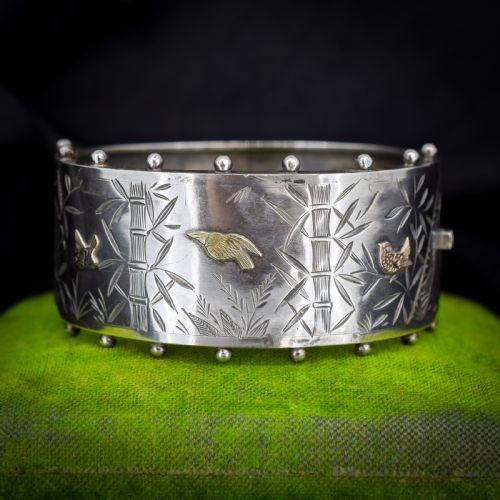

Antique Japanese Bamboo
Antique japanese bamboo brings disciplined natural forms and ingenious nineteenth-century construction together to anchor a room.
Antique Japanese Bamboo
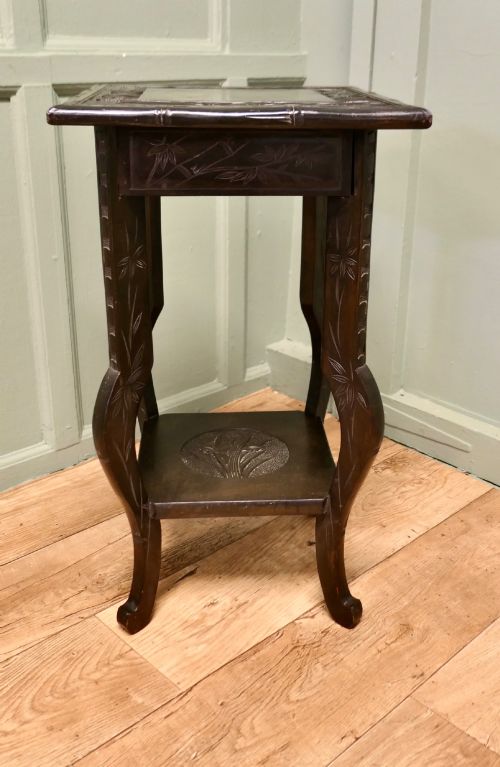
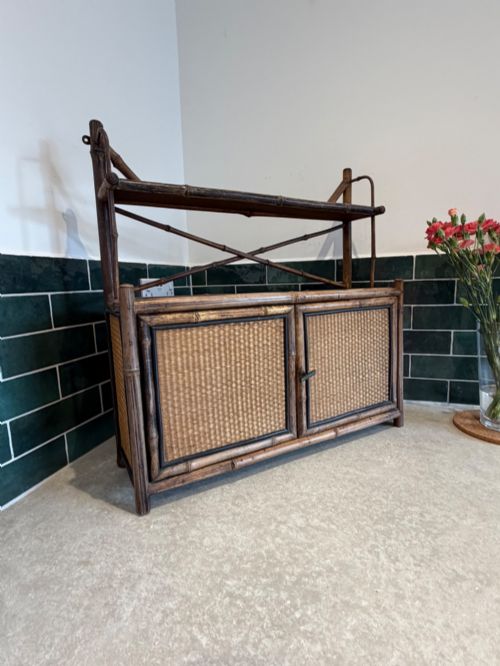
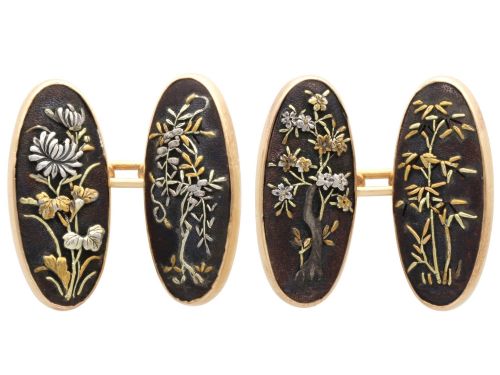
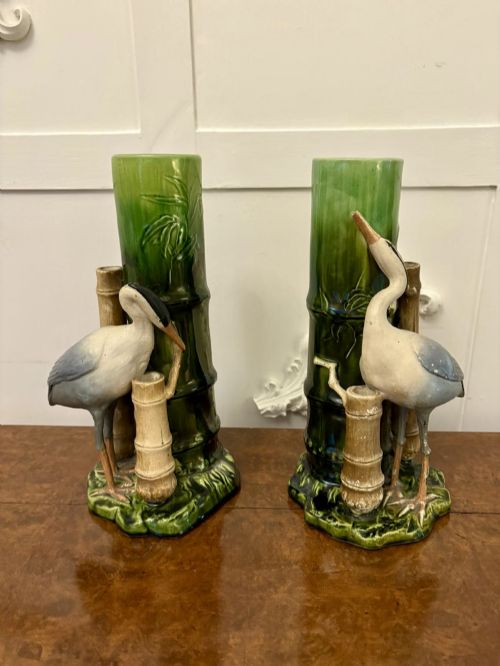
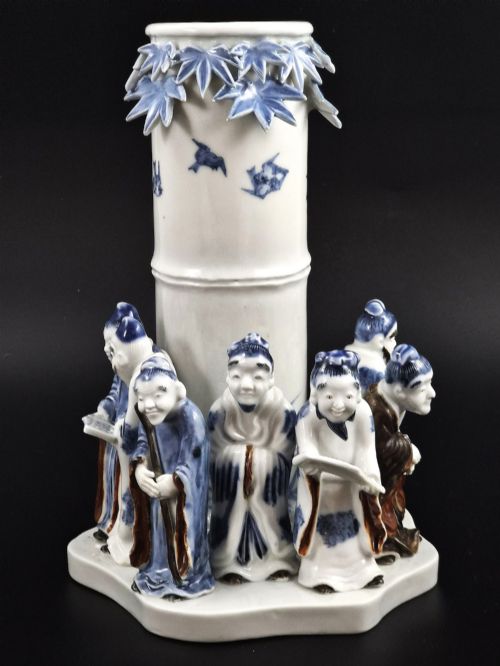
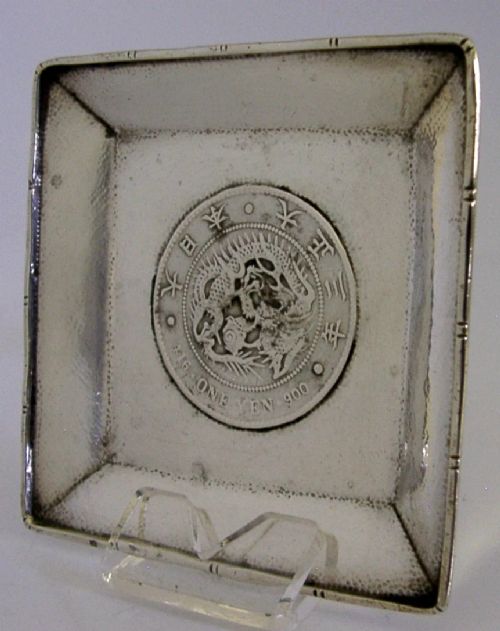
When you search for antique japanese bamboo, you encounter a distinct intersection of eastern naturalism and western domestic utility. The selection spans structural furniture such as display cabinets, hall stands, and side tables alongside decorative baskets and occasional items. Victorian maker interpretations sit alongside imported objects from the Meiji period.
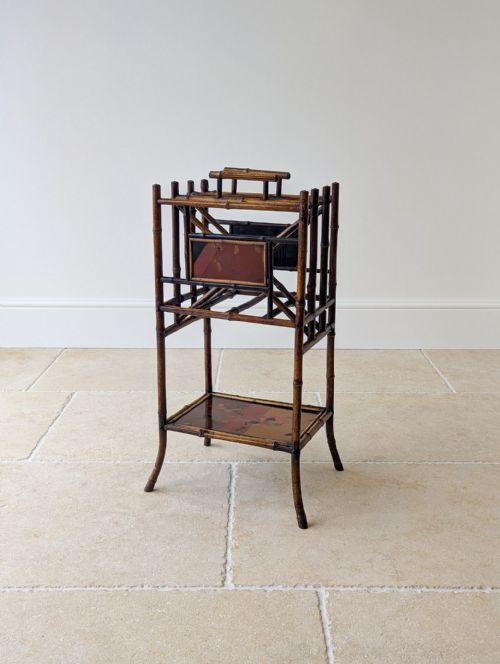
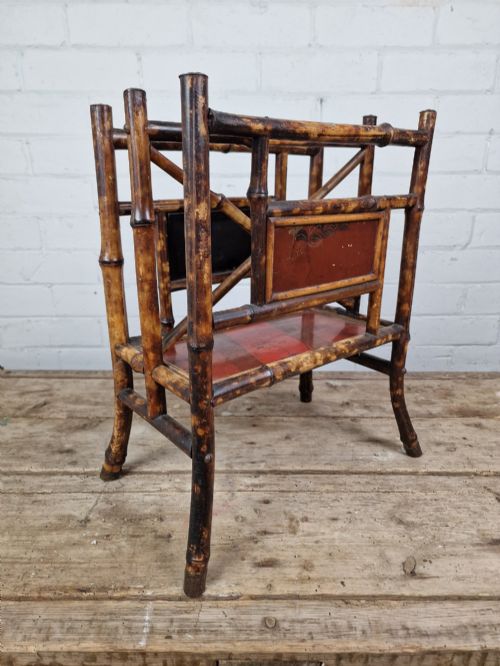
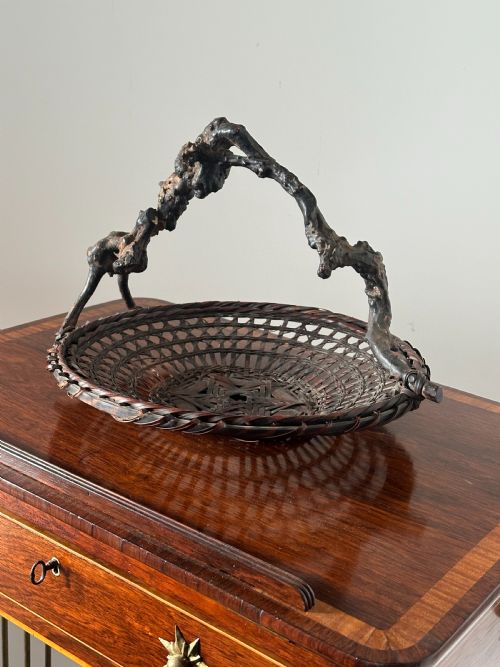
Canterburys, magazine racks, and folding stands dominate the furniture category, often displaying the characteristic speckled tiger pattern. Baskets designed for ikebana and fruit display showcase intricate plaiting and organic node manipulation. These forms reflect both direct imports and the domestic Anglo-Japanese aesthetic movement of the late nineteenth century.
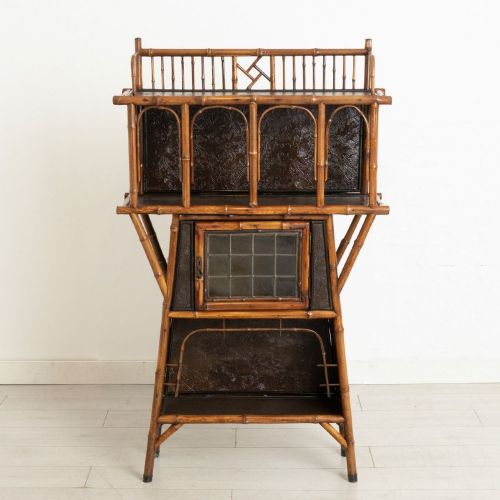
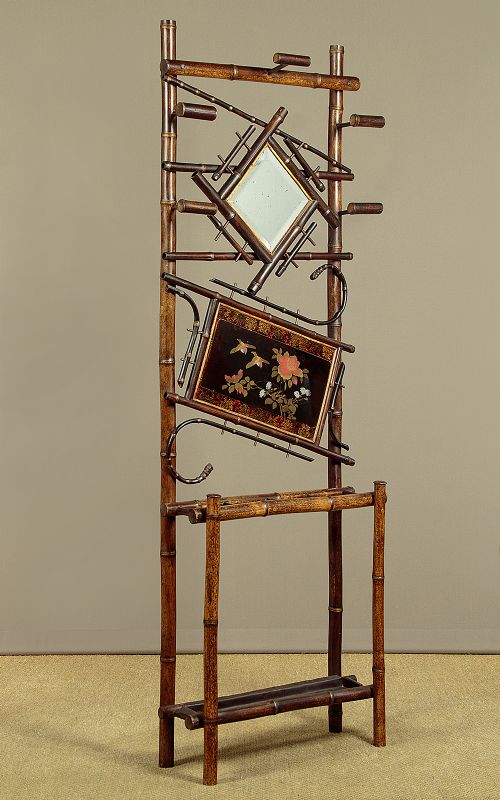
The material vocabulary extends beyond pure plant stems to incorporate lacquered panels, ceramic inserts, and brass hardware. Occasional tables and cabinets frequently pair bamboo frames with contrasting surfaces. This duality defines the genre, uniting rigid structural stems with flexible woven details.
What varies in quality
The distinction between ordinary utility items and superior pieces rests on the precision of joinery and the integrity of the natural material. High-quality examples maintain tight joints without excessive shrinkage cracks across the nodes. Master basketry reveals consistent tension throughout complex plaiting and secure attachment of copper or ceramic inserts.
Provenance and attribution elevate certain pieces, particularly those associated with known retailers or specific Meiji period workshops. The harmony between structural bamboo and integrated decorative elements such as Satsuma plaques or lacquered panels dictates overall refinement. Superior specimens display thoughtful proportion where the organic irregularity of the plant enhances rather than compromises stability.
Antique Japanese Bamboo Retail Price Guide 2026
Typical asking prices for japanese bamboo among the pieces listed under this phrase on Sellingantiques today, from the lower quarter to the upper quarter. They describe what is for sale here now, not the wider market.
The listings combine nineteenth-century British aesthetic movement furniture with genuine Meiji period Japanese baskets, ceramics, and structural bamboo stands.
Leonard Wyburd·Liberty and Co·Hozan·Kinkozan·Fukagawa
The Antique Japanese Bamboo Glossary
- Ikebana
- A traditional Japanese art of flower arrangement that dictated the specific asymmetrical forms of many decorative baskets. These vessels often include metal liners to hold water.
- Canterbury
- A low wooden or bamboo rack originally designed to hold sheet music or folios, commonly adapted as a magazine stand in Victorian interiors.
- Meiji Period
- The era of Japanese history lasting from 1868 to 1912, characterised by the modernization of craft and increased export of decorative arts to western markets.
- Satsuma
- A type of Japanese earthenware featuring a crackle-glaze ivory body decorated with polychrome enamels and gilt, frequently incorporated into stands and cabinets.
- Totai Shippo
- A cloisonne technique where enamel is applied directly onto a non-metallic core such as porcelain or plant material, visible in specialised chargers and vases.
Antique Japanese Bamboo: Frequently Asked Questions
How do I clean bamboo furniture?
Dust regularly with a dry cloth to prevent particles from settling in the natural crevices and nodes.
Avoid harsh chemical polishes and excessive water, using a slightly damp cloth only when necessary followed immediately by drying.
Are these pieces purely decorative?
Many items served practical domestic functions in Victorian and Edwardian homes, including hall stands, magazine racks, and small occasional tables.
Baskets and stands were designed for specific tasks like flower arranging or holding calling cards, though today they frequently function as sculptural accents.
What is tiger bamboo?
Tiger bamboo refers to stems featuring naturally occurring mottled brown spots and streaks resembling animal markings.
Victorian makers prized this specific variation for its decorative impact, utilising it on prominent exterior surfaces of furniture.
How can I distinguish English aesthetic bamboo from Japanese imports?
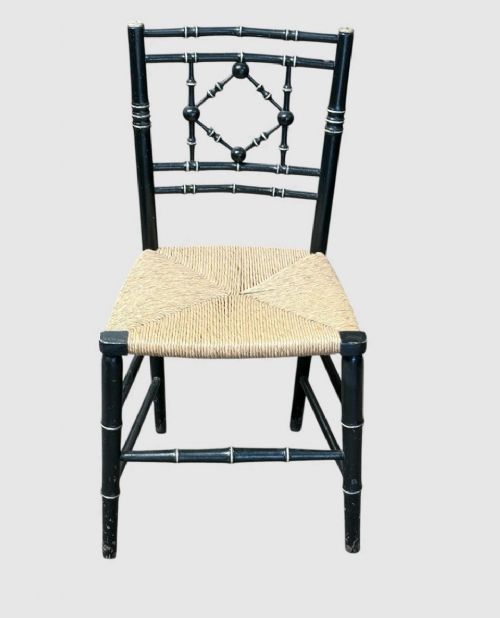
English interpretations often employ western furniture forms like canterburys and hall stands constructed from imported cane. Japanese domestic pieces focus more intensely on specialised vessels, woven baskets, and okimono utilising traditional regional techniques.