





Antique Italian Tazza
An antique italian tazza is a low-footed pedestal bowl shaped by classical antiquity, bringing monumental Italian stonework to a tabletop.
Antique Italian Tazza
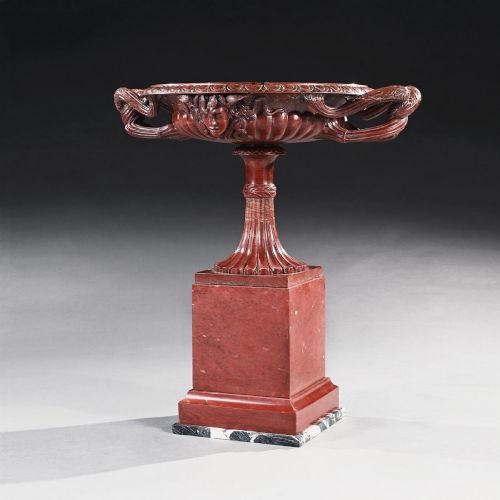
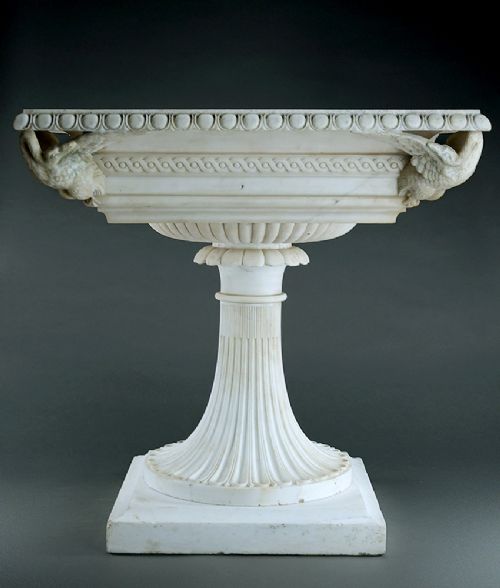
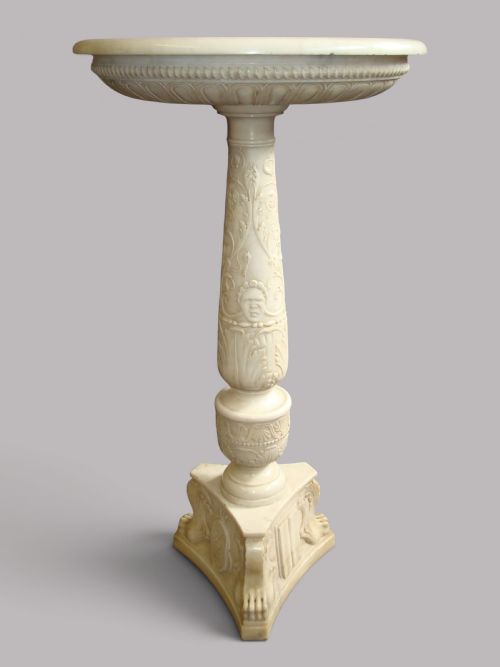
An antique italian tazza takes the form of a shallow pedestal bowl or labrum, typically modelled after archaeological finds from Rome and Pompeii. These pieces appear most frequently as nineteenth-century Grand Tour souvenirs and decorative vessels.
The materials range from rich stones like Rosso Antico, Sienna and alabaster to cast bronze and carved woods such as lime wood and walnut. Many examples pair a carved marble or alabaster bowl with contrasting black marble or rouge griotte bases.
Forms span from smaller-scale souvenirs to substantial architectural vessels, occasionally featuring twin handles or lidded cups. They sit within Neoclassical and Italian Renaissance Revival styles, echoing ancient sculpture and classical architecture.
Materials and construction
Makers shaped dense stones such as marble, alabaster and Rosso Antico using classical turning and hand-carving techniques. These carved vessels frequently rest upon contrasting marble block bases.
Bronze versions utilise lost-wax casting methods to render intricate classical designs, paired with fitted marble plinths. Wood examples demonstrate fine joinery and hand-carving in walnut and lime wood.
Antique Italian Tazza Retail Price Guide 2026
Typical asking prices for italian tazza among the pieces listed under this phrase on Sellingantiques today, from the lower quarter to the upper quarter. They describe what is for sale here now, not the wider market.
Assessing quality and execution
Quality rests in the precision of the carving and the distinct figuration of the stone. Highly-figured alabastro egiziano and richly coloured marbles separate superior pieces from standard works.
The complexity of the classical silhouette and the crispness of any cast bronze details define the upper tier. Harmony between the bowl and its supporting stone base indicates thoughtful proportion.
Benedetto Boschetti
The Antique Italian Tazza Glossary
- Tazza
- A shallow bowl set upon a foot or pedestal, used historically for display or serving. The plural form is tazze.
- Grand Tour
- A cultural journey undertaken by nineteenth-century travellers who acquired souvenir art and antiquities in Italy. These objects often copied ancient Roman and Greek masterpieces.
- Rosso Antico
- A deep red antique marble prized by classical sculptors and later revivalists. It provides a striking, uniform colour to pedestals and vessels.
- Alabaster
- A fine-grained, translucent stone easily carved into delicate vessels. Nineteenth-century artisans utilised it for miniature architectural models and souvenir tazzas.
- Pietra dura
- An artistic technique using cut and fitted polished coloured stones to create geometric or pictorial designs. It appears mounted on brass and alabaster surfaces.
Antique Italian Tazza: Frequently Asked Questions
What is a tazza used for?
Historically, a tazza functioned as a shallow vessel for display or serving during formal dining.
Today, collectors use these pedestal bowls primarily as decorative centrepieces on tables, mantels and sideboards.
How do I date a marble tazza?
Dating relies on examining the tool marks, the choice of marble and the specific revival style of the piece.
Nineteenth-century Grand Tour items frequently exhibit specific souvenir characteristics and typical nineteenth-century stone turning methods.
Where were these pieces made?
These works originated in workshops across Italy, particularly in Rome and Florence, catering to foreign travellers.
Artisans reproduced classical forms found in archaeological excavations to satisfy the demand for portable souvenirs.
What is Grand Tour marble?
Grand Tour marble refers to ornamental objects carved in Italy during the eighteenth and nineteenth centuries for travelling collectors.
These souvenirs replicated ancient architectural fragments and sculptures using native Italian stones like Sienna and Rosso Antico.