


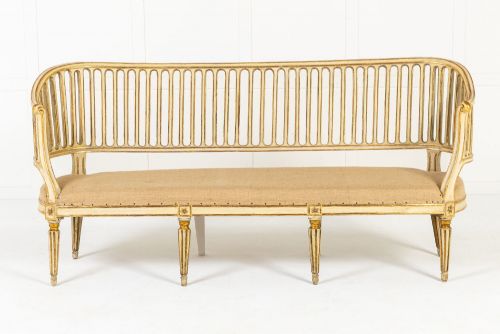


Antique Italian Sofa
An antique italian sofa brings dramatic carving and rich upholstery into a room, offering both historic presence and enduring comfort.

Antique Italian Sofa
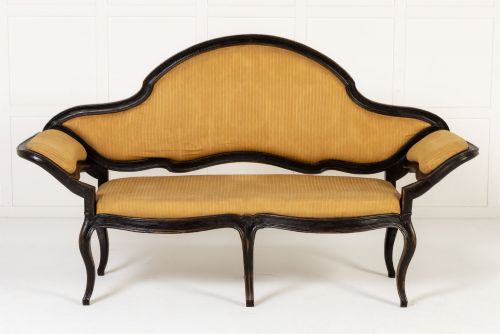
An antique italian sofa encompasses seating forms ranging from grand eighteenth-century carved giltwood pieces to nineteenth-century painted frames and settees. Buyers seeking an antique italian sofa encounter various regional aesthetics, including Venetian polychrome finishes and classical neoclassical outlines.
How they were made
Master artisans constructed these frames using solid hardwoods like walnut and mahogany, often applying elaborate hand-carved ornamentation directly into the timber. Many surfaces received intricate decorative treatments, including giltwood leaf, polychrome paint, and bone inlay.
Upholstery techniques relied on traditional stuffing and textile application, utilising period fabrics such as linen to finish the seating surfaces. Joinery methods matched the structural demands of ornate curves and heavy timber frames.
Some nineteenth-century makers evidently decided standard sofas lacked gossip potential and invented the S-shaped tête-à-tête instead.
What varies in quality
The distinction between ordinary and superior examples lies in the depth and crispness of the hand-carved detail across the wooden frame. Original surface treatments, such as untouched gilding or period polychrome paint, elevate the character and standing of a piece.
Proportion and structural integrity also dictate the calibre of the seating, as well-balanced neoclassical lines demonstrate superior design ambition. The survival of authentic materials throughout the frame and upholstery foundation marks the difference in standard.
The Antique Italian Sofa Glossary
- Giltwood
- Timber surfaces coated with a thin layer of gold leaf. This finish defines many high-status decorative frames.
- Polychrome
- Painted in several colours. This surface decoration appears frequently on Venetian seating.
- Tête-à-tête
- An S-shaped double seat allowing two people to converse face-to-face. This form is typical of opulent nineteenth-century salons.
Antique Italian Sofa: Frequently Asked Questions
How do I clean an antique sofa frame?
Dust the carved wooden elements gently with a dry, soft cloth to prevent accumulation. Avoid modern chemical sprays that can damage historic finishes like giltwood or painted surfaces.
For upholstered sections, rely on professional textile cleaning rather than household detergents. This preserves the surrounding timber and historic fabric integrity.
Can I use an antique settee daily?
These seating pieces suit everyday domestic use provided they receive gentle care and appropriate weight distribution. Historic joints and frames benefit from sensible placement away from direct heat sources.
Regular inspection of the upholstery foundation helps prevent sudden wear. Using them with mindfulness ensures they remain functional interior furnishings.
How do I identify neoclassical style?
Neoclassical pieces display straight tapered legs, symmetrical motifs, and classical architectural details. These designs move away from the asymmetrical curves typical of earlier rococo forms.
Look for urns, swags, and fluting carved into the mahogany or walnut framework. This aesthetic became prominent during the later eighteenth and nineteenth centuries.
Where should I place a giltwood sofa?
Position a giltwood sofa away from direct sunlight to protect both the metallic leaf and the surrounding fabric. A drawing room or formal parlour provides a traditional setting that complements the ornate character.
Ensure adequate clearance around the piece so the hand-carved frame remains visible. This placement highlights the craftsmanship without risking accidental impact from heavy traffic.