


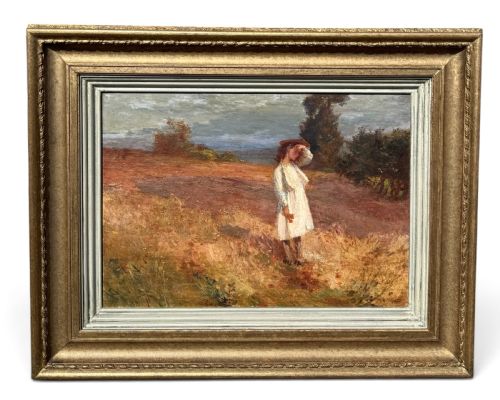
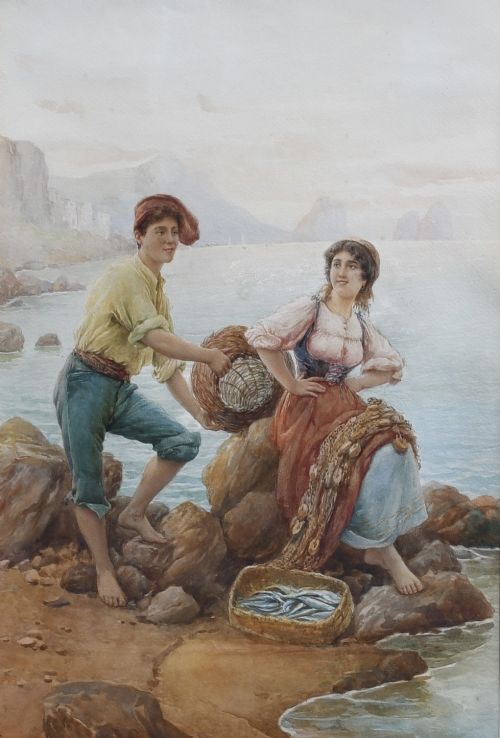
Antique Italian Landscape Artwork
Antique italian landscape artwork encompasses paintings and watercolours depicting pastoral scenes, architectural ruins and urban canals, prized for their romantic evocation of southern light and classical antiquity.
Antique Italian Landscape Artwork
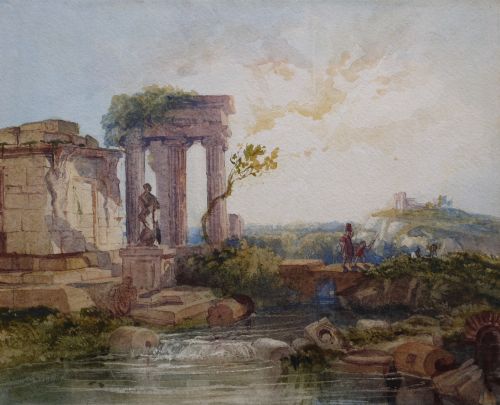
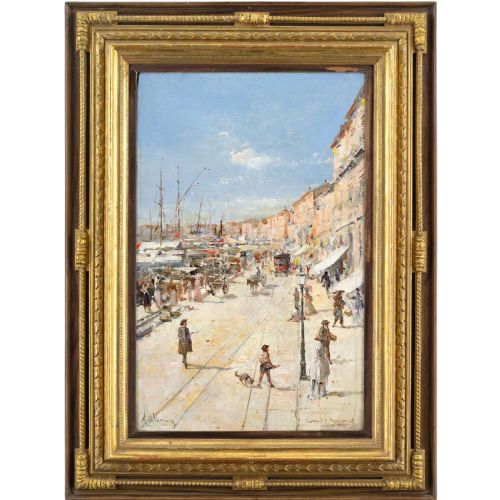
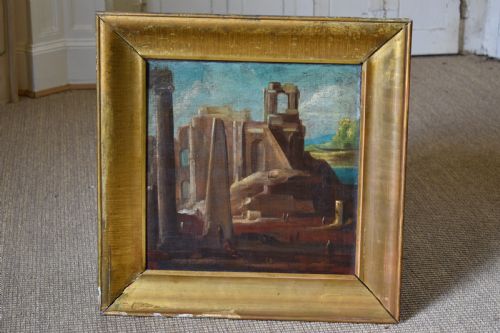
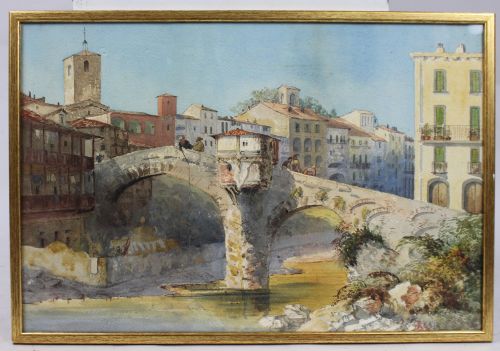
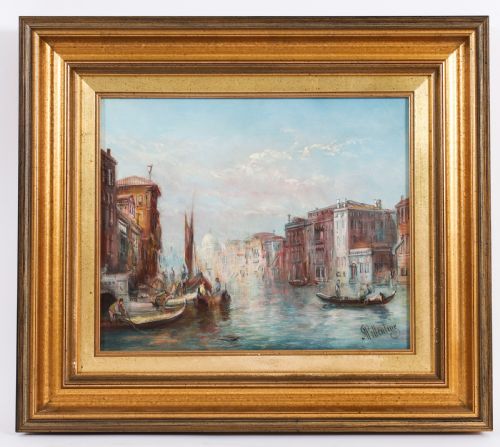
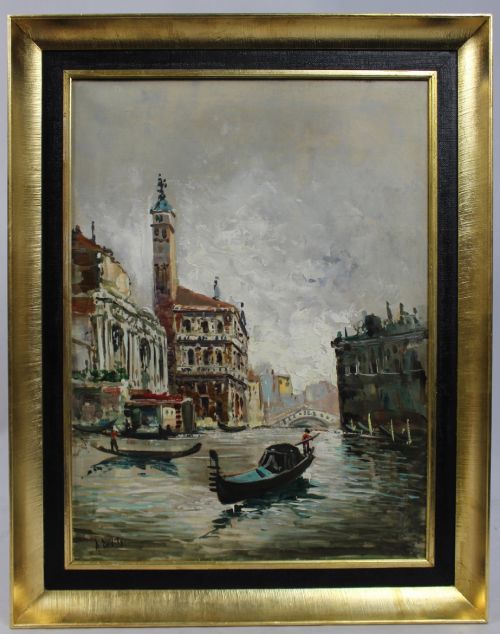
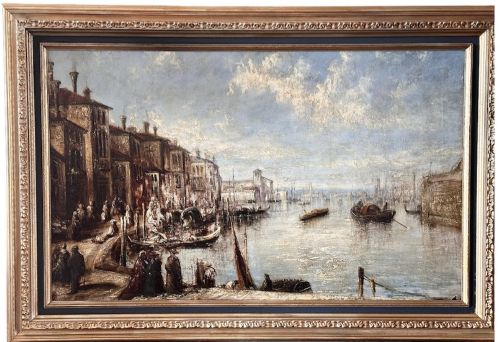
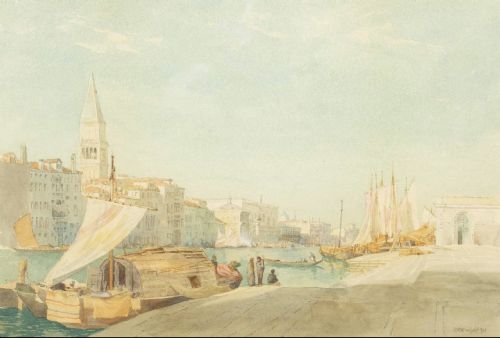
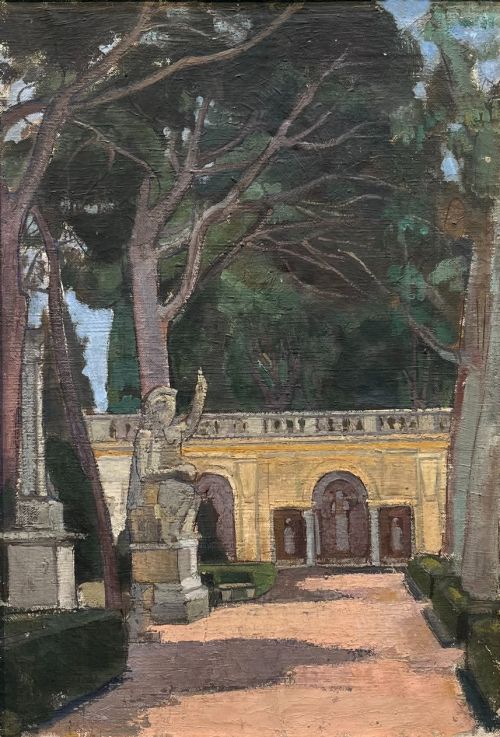
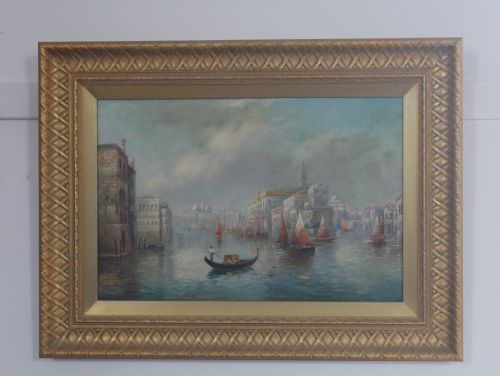
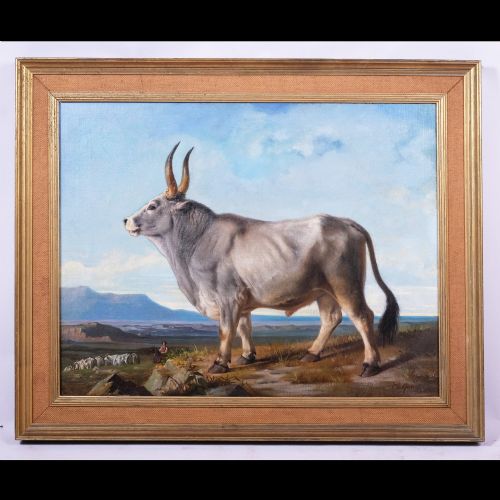
Grand Tour subjects and views of Venetian canals dominate the material encountered here. Many pieces record specific locations such as the Grand Canal, Lake Como, and Roman architectural ruins, created both by local artists and foreign painters travelling through Italy.
Materials and construction methods
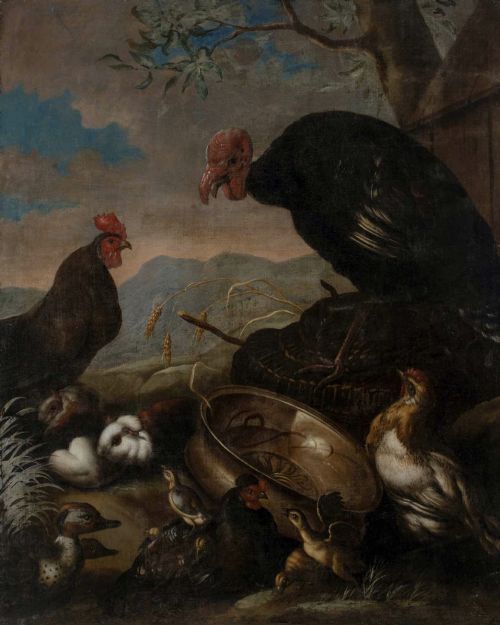
The works utilise traditional media including oil paint applied to canvas and board, alongside watercolour and bodycolour on paper. Gilded wood and giltwood frames frequently house these pieces, matching the ornate framing styles of the nineteenth and earlier centuries.
Supports range from heavy woven canvas to prepared paper and wooden panels, occasionally incorporating stone elements such as pietra dura. Pigments are handled through varied techniques, from meticulous architectural draughtsmanship to looser impressionist brushwork.
Depicted locations stretch across Venice, Rome, Sicily, Tuscany, and various alpine lakes.
Assessing quality in italian landscapes
Quality rests upon the handling of light, atmospheric perspective, and the precision of architectural elements within the composition. Finer examples demonstrate confident brushwork and accurate topographical detail rather than formulaic execution.
The integration of the original frame significantly impacts the integrity of the piece, particularly with Grand Tour items and period oils. Condition of the pigment layer, stability of the canvas or paper, and the presence of legible signatures further distinguish masterworks from standard studio output.
Angelo Maria Crivelli·Augusto Alberici·Alfred Pollentine·Francis Moltino·Richard Henry Wright·Umberto Volpato·Carlo Ferranti·Robert George Talbot Kelly·Jan Miel·Claude Lorrain·Giulio Cecchini·Claude Jousset·Franz Knebel·Antonietta Brandeis·Francesco Zuccarelli
The Antique Italian Landscape Artwork Glossary
- Grand Tour
- A cultural journey of Europe undertaken by wealthy young men in the eighteenth and nineteenth centuries, generating a demand for local landscape art and architectural watercolours. These mementos often captured specific classical ruins and famous vistas.
- Pietra dura
- An artistic technique using cut and fitted polished coloured stones to create geometric or figurative imagery. Such framed panels often depict architectural or landscape scenes using natural mineral colours.
- Watercolour
- A painting method in which the paints are made of pigments suspended in a water-based solution. Artists applied these translucent washes onto paper to capture light effects in Italian scenes.
- Oil on canvas
- Pigments bound in a medium applied to a stretched woven fabric support. This combination allowed artists to build rich textures and deep tones for grand architectural and landscape views.
Antique Italian Landscape Artwork: Frequently Asked Questions
What subjects appear in these landscapes?
The artworks predominantly show Venetian canals, Roman ruins, pastoral mountains, and coastal scenes from locations such as Naples and Lake Como.
Many pieces also record architectural landmarks, bustling markets, and figures resting among classical remains.
How do I care for framed watercolours?
Watercolour paintings on paper require protection from direct sunlight to prevent the fading of delicate pigments.
Displaying them away from moisture and sudden temperature changes preserves both the paper support and the original frame.
Are these paintings signed by the artists?
Numerous pieces feature artist signatures, monograms, or contemporary inscriptions detailing the depicted Italian location.
Unsigned works are frequently attributed to specific regional schools or named circles of painters based on style and technique.
What is a Grand Tour artwork?
Grand Tour pieces are paintings and watercolours acquired by travellers touring European cultural centres during the eighteenth and nineteenth centuries.
These artworks served as sophisticated souvenirs documenting famous antiquities and scenic Italian vistas.