


Antique Iron Sign Plaque
An antique iron sign plaque is a durable marker of commerce, transit or heraldry, built to last outdoors and worth collecting for its bold graphic punch.
Antique Iron Sign Plaque
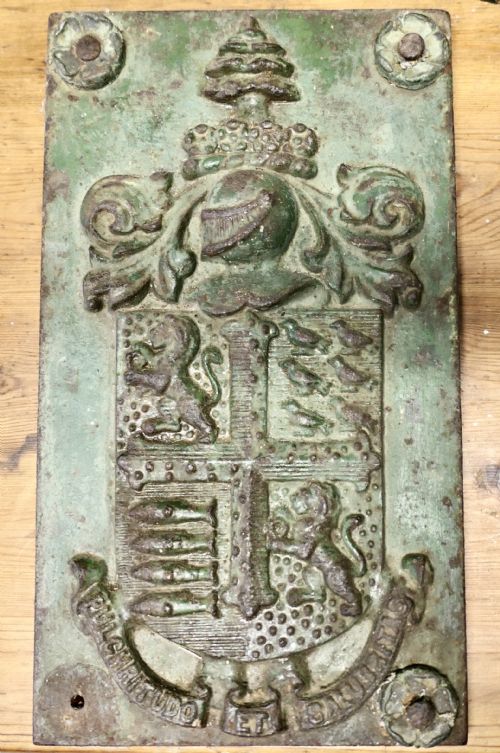
When you search for an antique iron sign plaque, you encounter heavy functional markers made for railways, streets, shops and architectural facades. These pieces span from the Georgian era through to the interwar decades of the twentieth century, reflecting the industrial expansion of Britain and beyond. The selection on this page leans heavily towards cast iron and enamelled metal, showing how public and commercial spaces communicated before the digital age.
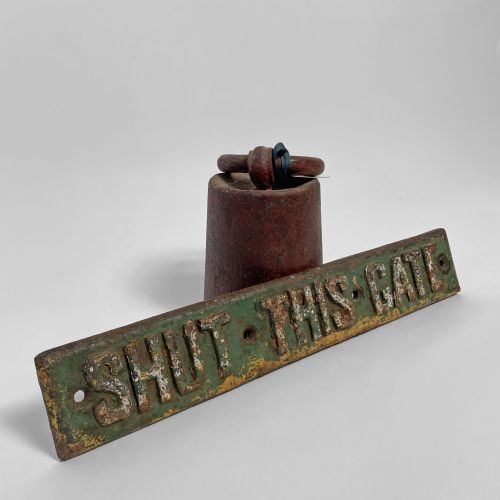
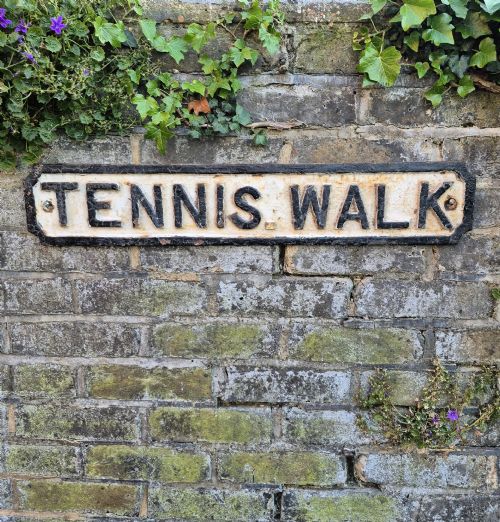
You will find everything from municipal street names and railway gate warnings to pictorial food advertising and heraldic coats of arms. Many of these survivals performed workaday tasks on station platforms, factory walls or pharmacy doors. Their survival relies entirely on the resilience of iron and enamel against decades of weather.
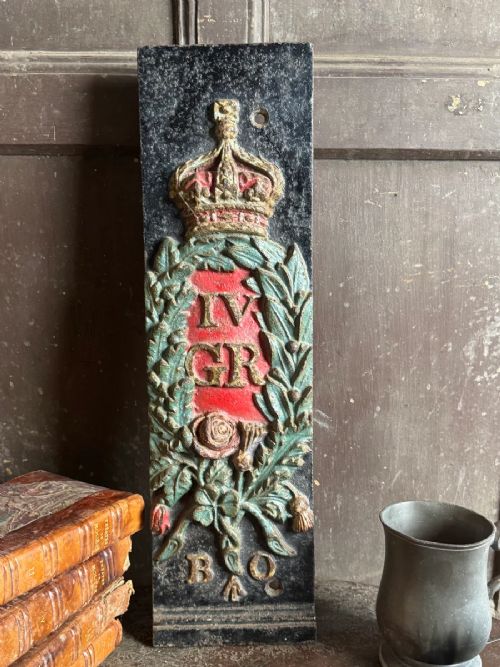
The regional variety ranges from local council street markers such as Jersey Road to railway notices and grand armorial plaques. Whether cast in solid metal or formed from sheet iron with vitreous coatings, each object carries the straightforward utility of its original commission.
Materials and construction methods
Foundries produced the heaviest plaques by pouring molten iron into sand moulds, creating crisp relief lettering and deep borders that could withstand constant outdoor exposure. Makers then applied lead-based paints directly to the cast surfaces, building up layers of contrasting colours for legibility. Over decades, this paint weathered into complex patinas with characteristic flaking and craquelure.
Alternatively, sheet iron and enamelled steel formed the basis for pictorial advertising and double-sided shop markers. Manufacturers fused powdered glass onto metal plates at high temperatures, creating a glossy vitreous enamel surface that resisted fading. This technique allowed for bright pictorial details, such as the sausages on a butcher's board or pharmacy symbols, which stayed vibrant through all seasons.
The inventory spans the nineteenth century through the 1930s, featuring cast iron, sheet iron, and vitreous enamel across railway, street, and trade formats.
Factors that separate the examples
Quality in these industrial survivals rests on the crispness of the casting, the complexity of the typography and the integrity of the original surface. A plaque with deep, hand-finished lettering and well-preserved armorial detail shows greater initial craftsmanship than a hurried utility casting. Furthermore, the survival rate of original paint or enamel significantly elevates an example, as untouched surfaces tell the true story of use.
The specific context of the piece also dictates its appeal, with bespoke trade signs and municipal coats of arms carrying more visual narrative than standard railway warnings. Proportion, weight and the clarity of the graphic design determine how successfully the piece translates from an outdoor marker to an interior wall display.
The Antique Iron Sign Plaque Glossary
- Cast iron
- An iron-carbon alloy poured into a mould to form rigid shapes. It provides the heavy, solid foundation for nineteenth-century armorials and directional notices.
- Vitreous enamel
- A material made by fusing powdered glass to a metallic substrate by firing. This glossy coating protected sheet iron signs from rust while allowing bright multi-coloured graphics.
- Armorial plaque
- A wall marker displaying a coat of arms or heraldic symbols. These pieces frequently marked civic buildings, railway properties or government installations.
- Architectural salvage
- Building components and attached signage rescued from structures slated for demolition. This category preserves street furniture and trade markers for modern interiors.
- Sheet iron
- Thinly rolled iron plates used for lighter signs and pictorial boards. It offers flexibility and a smooth surface suited to painted or enamelled advertising.
Antique Iron Sign Plaque: Frequently Asked Questions
How do I hang a heavy iron sign safely?
Because these pieces are cast in solid metal or thick enamel, you must anchor them directly into masonry or heavy wall studs using appropriate masonry bolts or structural screws.
Avoid relying on decorative chains or standard picture wire, as the dead weight of cast iron requires proper load-bearing fixings to prevent accidents.
Can I put these signs outdoors again?
While these markers were originally designed for exterior use, surviving examples often feature fragile historic paint or delicate enamel edges that will deteriorate further in modern weather.
Displaying them indoors protects their existing patina from moisture, frost and UV damage, preserving the surface history for the future.
What is the difference between cast iron and enamel signs?
Cast iron signs rely on raised lettering and direct paint on metal, creating a tactile, sculptural surface built for heavy municipal or railway duty.
Enamel signs use a fused glass coating on sheet metal, allowing for flat, multicoloured pictorial graphics used primarily in commercial advertising.