


Antique Iron Rack
An antique iron rack brings enduring utility and robust character to a hallway or kitchen, offering a dependable place for coats, sticks, and culinary ware.
Antique Iron Rack
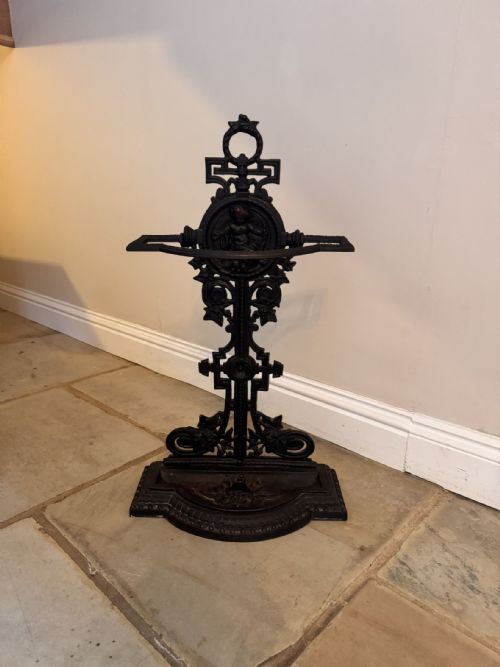
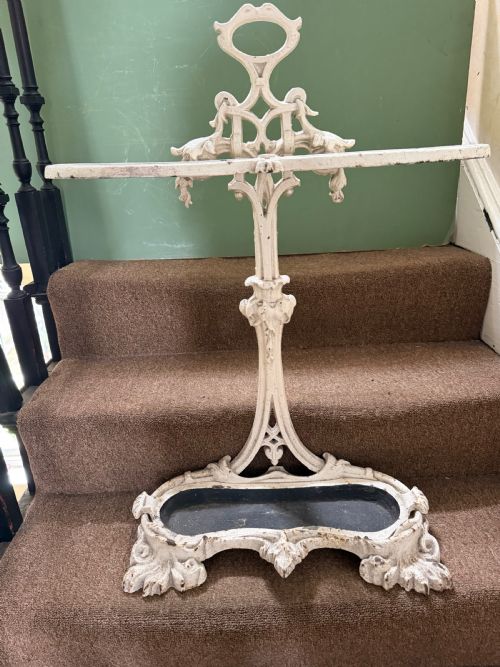
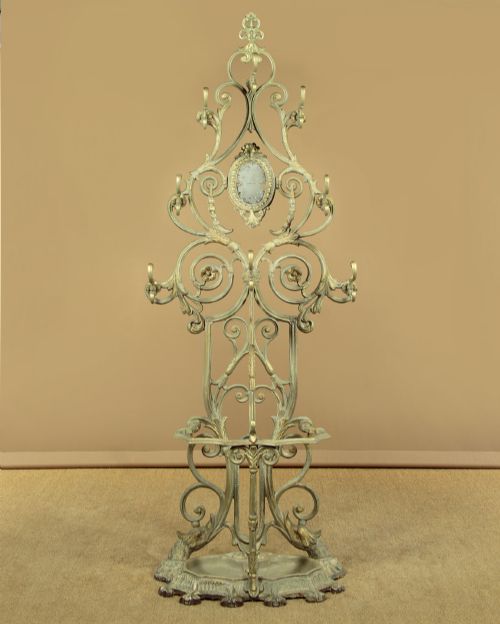
An antique iron rack encompasses a diverse selection of practical household furnishings, ranging from umbrella and stick stands to coat hooks, pot stands, and bakers racks. When searching this phrase, buyers encounter heavy utilitarian items made to organise domestic spaces.
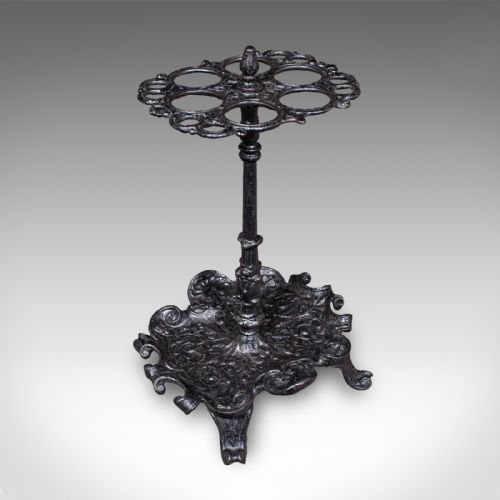
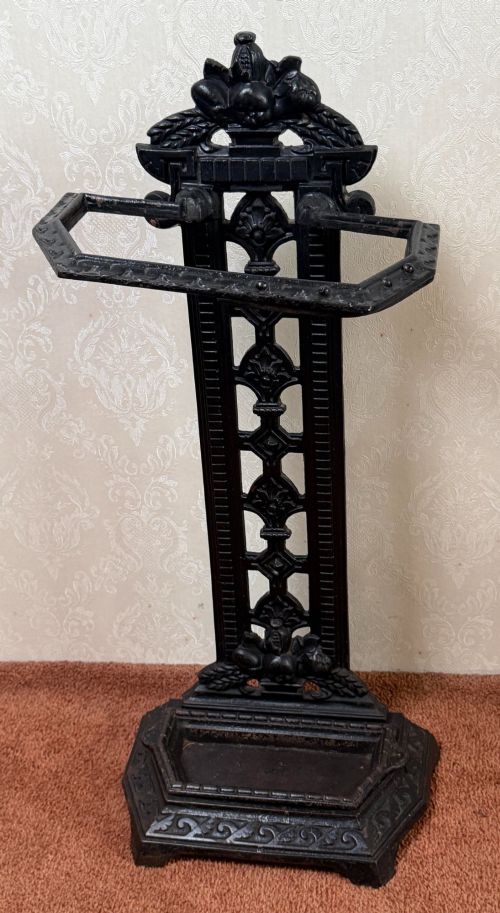
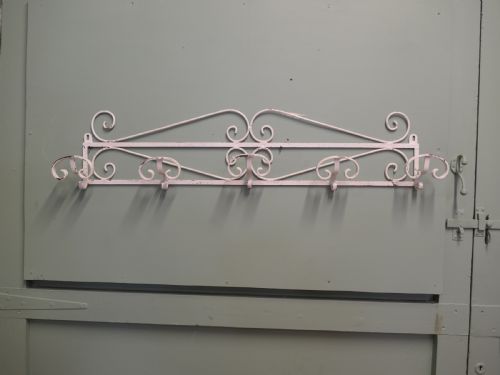
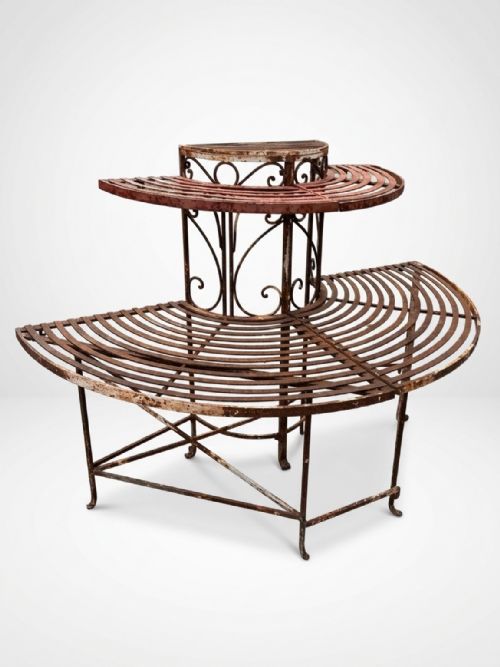
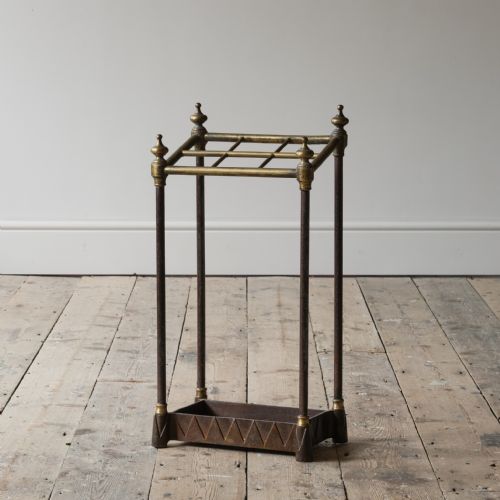
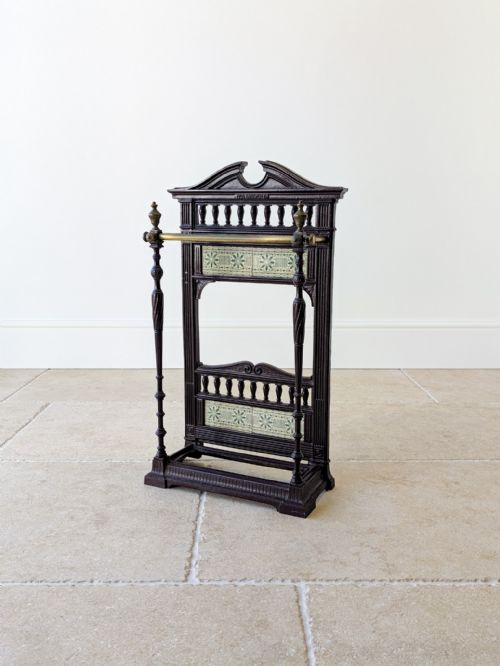
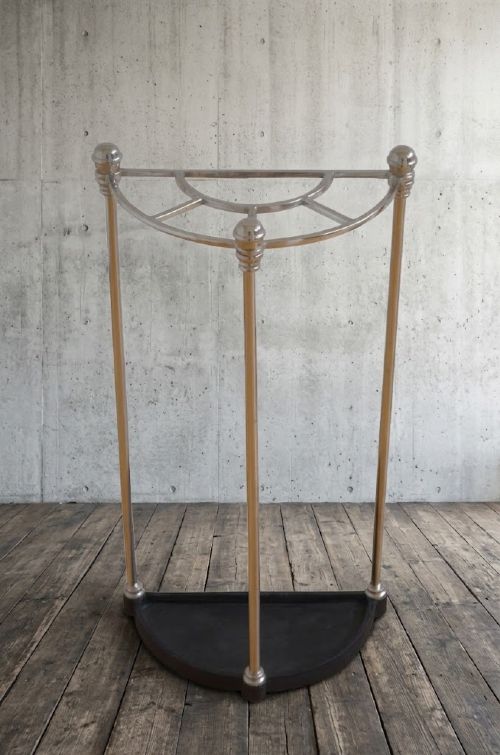
The versions most frequently met on this page date from the Victorian and Edwardian eras, constructed primarily from cast iron or wrought iron and often featuring auxiliary materials like brass or pine. Forms include demi-lune hall stands, kitchen game hook racks, and large freestanding plant or pan stands.
Origins span English, Irish, and French workshops, showing how utilitarian ironwork adapted to country houses, Parisian bakeries, and urban reception halls alike. The surviving examples demonstrate the heavy reliance on iron and steel for daily domestic organisation throughout the nineteenth and early twentieth centuries.
How they were made
Makers utilised cast iron for structural rigidity and decorative moulding, pouring molten metal into detailed sand moulds to achieve intricate patterns such as faux bois bamboo or Gothic tracery. Wrought iron was hammered and shaped by hand for linear elements like hat hooks, bakers racks, and garden frames.
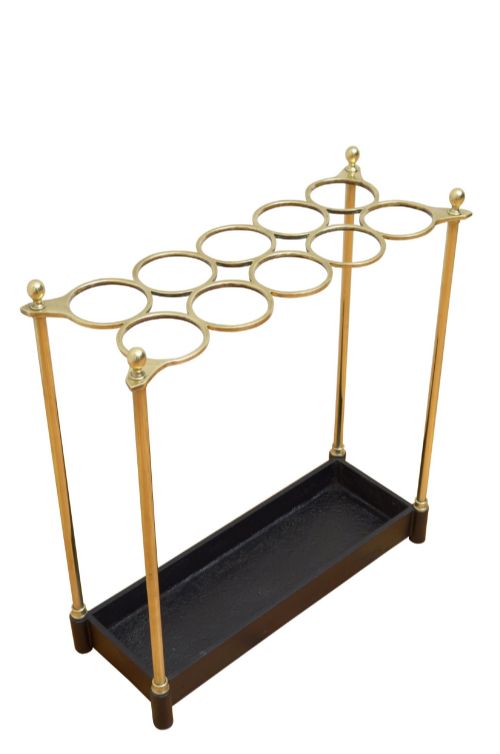
Brass elements such as ball finials, drip trays, and dog-tooth rails were frequently combined with iron and steel frames to introduce contrasting metallic tones. Paint, white enamel finishes, and nickel plating were applied to protect the underlying metal and provide a finished appearance.
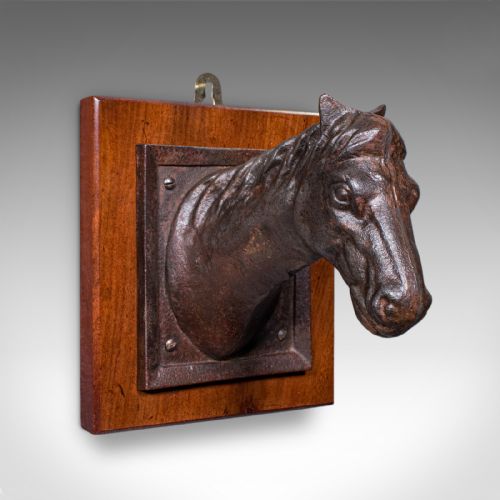
An antique iron rack shaped like a mounted horse bust stands ready to hold your heaviest riding gear.
What varies in quality
Quality separates pieces through the crispness of the iron casting and the presence of maker attribution, such as factory stamps from Coalbrookdale or Dubois of Lyon. Well-defined mouldings and substantial weight indicate superior production, whereas softer details suggest secondary foundry work.
The integrity of secondary materials, including intact glass liners, original brass drip trays, and sound structural joints in associated timber or steel components, distinguishes standard utilitarian output from finer decorative examples.
Coalbrookdale·Dubois of Lyon
The Antique Iron Rack Glossary
- Cast iron
- A hard, brittle alloy of iron and carbon poured into moulds to create complex shapes and decorative panels. It forms the structural base of many Victorian stick stands.
- Wrought iron
- A tough, malleable form of iron beaten and bent by hand into decorative scrolls, racks, and hooks. It is typically found on bakers racks and garden stands.
- Demi-lune
- A half-moon shape designed to sit flush against a hallway wall. This profile minimises floor space usage for umbrella stands.
- Stick loop
- A partitioned metal ring section built into the top of a stand to keep walking sticks and umbrellas upright. It prevents items from sliding sideways.
- Faux bois
- A decorative technique mimicking the appearance of natural wood grain. In ironwork, it takes the form of cast branches and bark textures.
- Finial
- A decorative terminal ornament attached to the top of a post or frame. Brass ball versions frequently top nineteenth-century umbrella racks.
Antique Iron Rack: Frequently Asked Questions
Where were antique iron racks used?
These racks served functional roles in various domestic and commercial settings, primarily positioned in entrance halls, kitchens, and gardens. Umbrella stands greeted visitors in Victorian hallway spaces, while bakers racks and pot stands organised commercial and large country kitchens.
Smaller hook racks were mounted in pantries or boot rooms to manage heavy garments and equestrian tack. Their robust construction suited areas subject to heavy daily use and moisture.
How do I care for an iron rack?
Maintenance involves keeping the metal dry and free from dust using a soft cloth, occasionally applying a light protective wax to painted or bare surfaces. For pieces with removable drip trays, regular cleaning prevents water accumulation and subsequent oxidation.
Avoid harsh chemical cleaners that can strip original paint finishes, nickel plating, or patinated brass elements. Gentle handling preserves the structural stability of older joints and attached finials.
Are these racks suitable for modern hallways?
Their narrow profiles, particularly demi-lune and wall-mounted formats, make them practical for contemporary entrances with limited floor space. They provide designated storage for umbrellas, walking sticks, and coats while introducing period character.
The sturdy construction ensures they can handle daily modern usage without tipping or flexing under heavy winter outerwear.
How do I identify the period of an iron stand?
Dating relies on stylistic markers, construction techniques, and occasional foundry stamps or registration marks found on the metal. Victorian pieces often display Gothic motifs, heavy cast frames, or specific manufacturer insignia, while Edwardian examples can feature lighter brass accents and simpler geometric divisions.
Art Nouveau and Aesthetic Movement pieces display characteristic organic plant forms, whiplash curves, or faux bois bamboo textures popular around the turn of the twentieth century.