

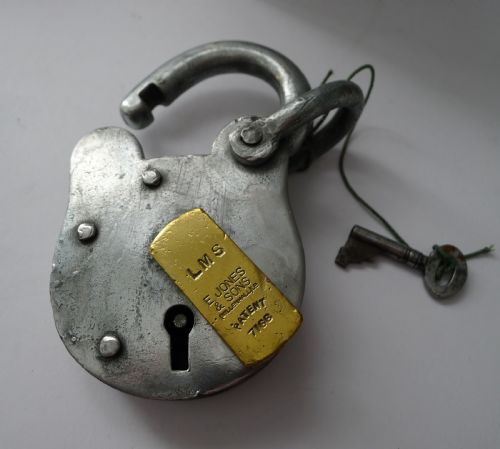


Antique Iron Key Lock
These antique iron key locks are robust functional survivals from domestic, industrial and transport settings, prized for their heavy mechanisms and tangible connection to past security.
Antique Iron Key Lock
When you search for an antique iron key lock, you encounter a range of heavy security devices spanning centuries of domestic, institutional and industrial use. The pieces listed here extend from the 16th century through to the Edwardian period, encompassing padlocks, stock locks and fitted boxes.
You are most likely to meet Victorian and Georgian items, particularly oak-cased stock locks and padlocks in wrought or cast iron. Railway and customs items appear alongside architectural salvage, demonstrating the utilitarian origins of these robust mechanisms.
The objects combine protective hardware with functional wooden enclosures, featuring walnut and oak boxes alongside heavy steel and iron lock boxes. Milners and George Price safes represent the height of Victorian secure storage, complete with working keys.
How they were made
Makers utilised forged iron and wrought iron for the internal mechanisms and external straps, pairing them with dense native timbers such as oak and walnut for box and door encasements. Cast iron and steel emerge in later Victorian safes and padlocks, reflecting industrial production methods.
Construction relied on hand-hammered plates, visible rivets and fitted straps that secured the locking bolts within wooden housings. The accompanying keys were individually filed and forged to fit intricate levers and wards.
Antique Iron Key Lock Retail Price Guide 2026
Typical asking prices for iron key lock among the pieces listed under this phrase on Sellingantiques today, from the lower quarter to the upper quarter. They describe what is for sale here now, not the wider market.
Listings span from the 16th century through to the Edwardian era, incorporating oak, walnut, brass, iron and steel.
What varies in quality
Quality rests upon the complexity of the internal mechanism and the survival of its original operational key. Finely wrought levers and decorative brass mounts elevate a standard utilitarian lock into a piece of master smithing.
The integrity of the housing matters deeply, distinguishing simple padlocks from elaborate oak-cased stock locks and fireproof safes retaining their maker plates. Pieces displaying complete original parts and functional movement command greater appreciation among collectors.
Milners of Liverpool·George Price
The Antique Iron Key Lock Glossary
- Stock lock
- A heavy locking mechanism enclosed within a wooden block or case, typically mounted to the surface of a heavy door. They are frequently found in oak housings dating from the Georgian and Victorian eras.
- Ward
- A stationary obstruction inside a lock that requires corresponding cuts in the key bit to pass. Only a key with matching notches will turn within the mechanism.
- Padlock
- A portable lock with a shackle that can be opened or closed to secure a hasp. Examples in the record range from French customs markers to railway items.
- Keep
- The metal plate or box on a door frame or lid into which the lock bolt slides when secured. It forms the counterpart to the primary lock mechanism.
- Safe
- A heavy iron or steel box designed for secure storage against fire and theft. Makers such as Milners and George Price specialised in these reinforced Victorian containers.
Antique Iron Key Lock: Frequently Asked Questions
What is the difference between a stock lock and a door lock?
A stock lock is contained entirely within its own wooden housing, usually oak, and is mounted directly onto the surface of a door. They were common in Georgian and Victorian interiors.
Standard door locks are typically mortised into the door edge itself, leaving only the faceplate and keyhole visible. The 16th-century examples on this page reflect earlier surface-mounted traditions.
Are these locks still secure for daily use?
While these mechanisms were state-of-the-art security in their day, modern security standards have surpassed them. They serve best as decorative historical pieces or functional fasteners for interior cabinetry.
Using them on exterior doors is generally discouraged due to the simplicity of period levers compared to modern deadbolts. Their primary appeal lies in their historical mechanics.
How can I tell a Georgian lock from a Victorian one?
Georgian pieces often feature hand-forged iron components fitted into handmade oak cases, showing the hand of the individual smith. They tend towards simpler, heavier domestic applications.
Victorian items frequently incorporate cast iron, stamped steel, and branded maker plates such as Milners. The advent of mass production in the nineteenth century introduced greater standardisation to the mechanisms.