

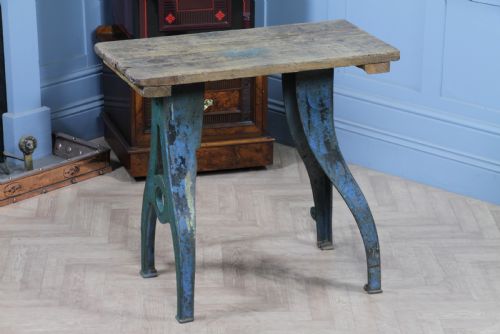
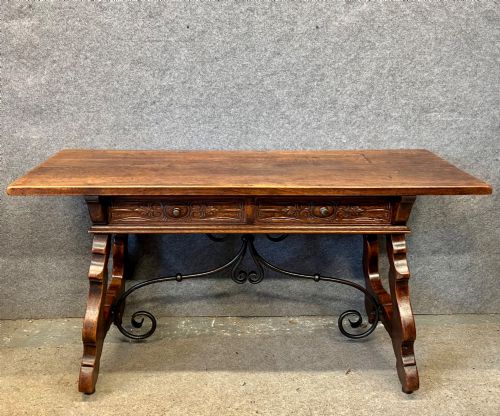


Antique Iron Hall Table
An antique iron hall table brings architectural weight and heavy mineral surfaces straight into a narrow entrance, and the pieces found here draw on centuries of French, Spanish and English domestic design.
Antique Iron Hall Table
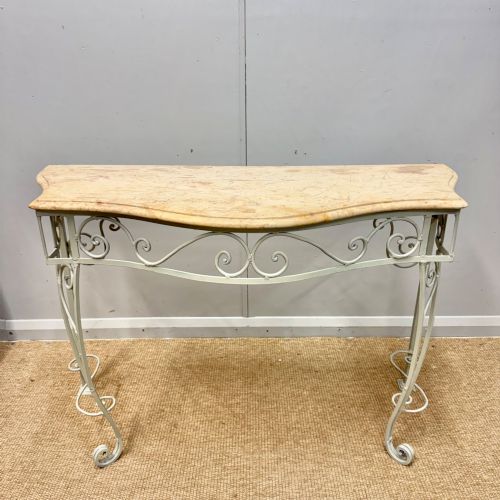
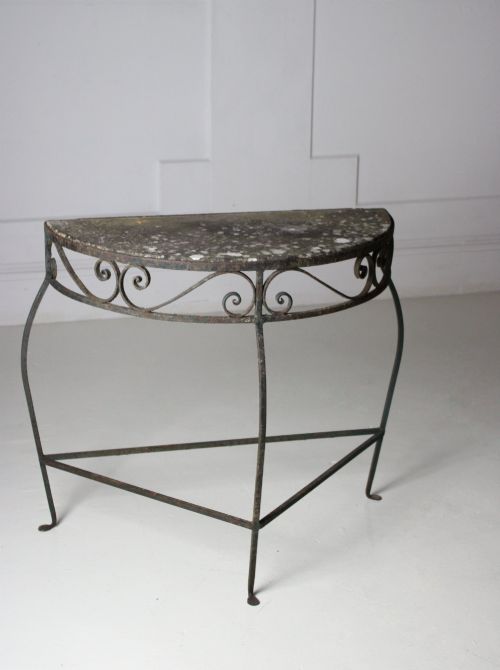
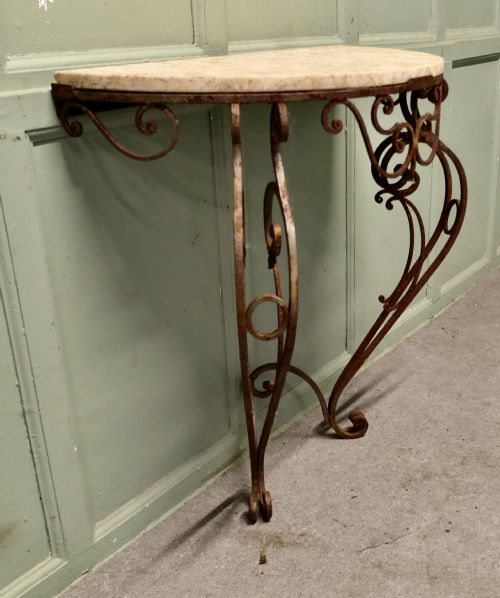
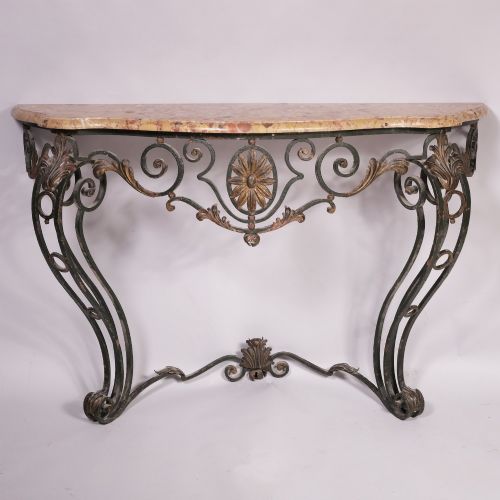
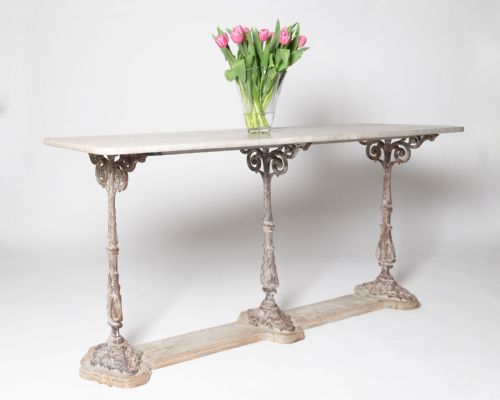
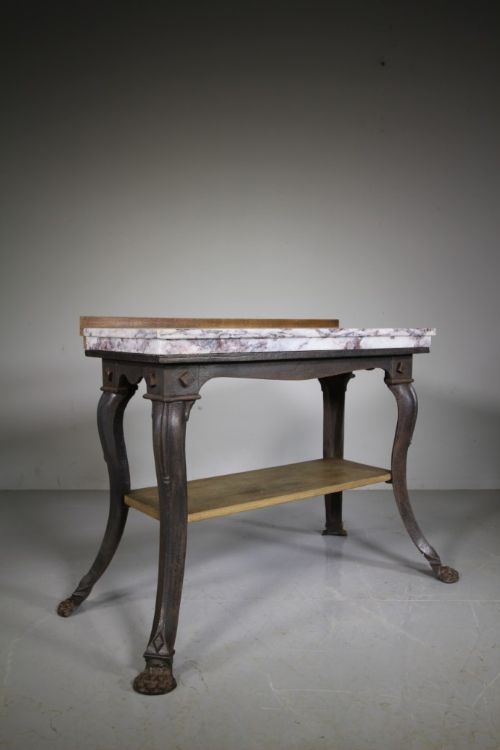
An antique iron hall table provides a narrow surface for an entranceway, frequently combining a heavy metal base with a stone or marble top. The examples met on this page span several centuries, originating from French, Spanish and English workshops across the nineteenth and early twentieth centuries.
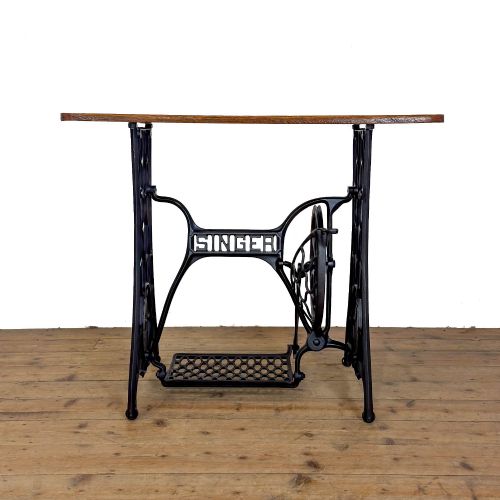
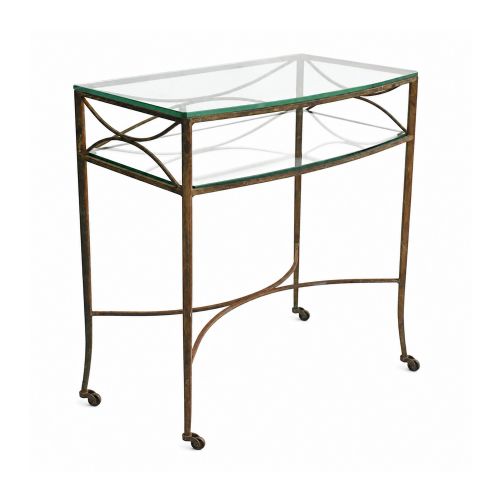
Most entries take the form of console tables designed to sit flush against a wall, alongside side tables and occasional centre tables. Materials range from wrought and cast iron frames paired with serpentine marble to solid walnut and oak timbers.
How they were made
Frames rely on forged wrought iron or poured cast iron, shaped by hand or in a foundry to create rigid structural bases. These heavy metal supports are frequently paired with thick slabs of marble, walnut, oak or fruitwood.
Surface treatments involve natural patination on timber and exposed metalwork, occasionally complemented by applied gold leaf or polished stone tops. Joinery utilises traditional methods appropriate to the period, from hand-forged rivets to pegged wood joints.
Materials span wrought iron, cast iron, marble, oak, walnut, fruitwood, glass and gold leaf across multiple centuries.
What varies in quality
Quality rests in the harmony between the metal base and the fitted top, where heavy marble slabs or solid hardwoods sit securely without excessive movement. The crispness of the ironwork forging and the depth of the original surface patina separate finer examples from simpler utilitarian pieces.
The Antique Iron Hall Table Glossary
- Console table
- A table designed to be fixed against a wall, typically supported by two front legs or brackets.
- Wrought iron
- Iron that has been heated and shaped with tools by a blacksmith, showing slight irregularities in texture.
- Cast iron
- Iron that has been melted and poured into a mould, allowing for consistent repetitive forms and heavier structural sections.
- Patina
- The surface sheen and colour developed on wood, stone or metal through age, handling and wear.
- Serpentine marble
- A marble top cut with a distinctive undulating edge featuring alternating convex and concave curves.
Antique Iron Hall Table: Frequently Asked Questions
Where should I place an iron hall table?
These narrow tables suit entrance halls, corridors and narrow landings where floor space is limited. Their shallow depth allows them to sit against walls without obstructing passageways.
Pairing a console with a matching mirror creates a traditional focal point by the front door while reflecting light into smaller spaces.
How do I care for a marble top?
Marble requires protection from acidic liquids, oils and sustained moisture to prevent staining and surface etching. Wipe the stone regularly with a damp cloth and mild soap.
Avoid abrasive cleaners and harsh scrubbing pads that can dull the polished surface over time.
Are these tables heavy?
Combinations of cast or wrought iron and thick marble slabs produce considerable weight. Two people are typically required to lift and position these pieces safely.
The substantial mass keeps the tables stable against walls without needing permanent wall fixings.
How do I identify the period?
Dating relies on examining the construction methods of the ironwork, the timber framing and the style of any carved ornament. Nineteenth-century examples often display heavier cast frames and serpentine marble, while earlier seventeenth-century pieces focus on solid walnut.
Matching stylistic cues from French, Spanish and English domestic traditions helps narrow down the origin and decade.