


Antique Iron Garden Urns
These antique iron garden urns bring classic proportion and heavy metal weight to a terrace or lawn, shaped largely through Victorian and 19th-century foundry work.
Antique Iron Garden Urns
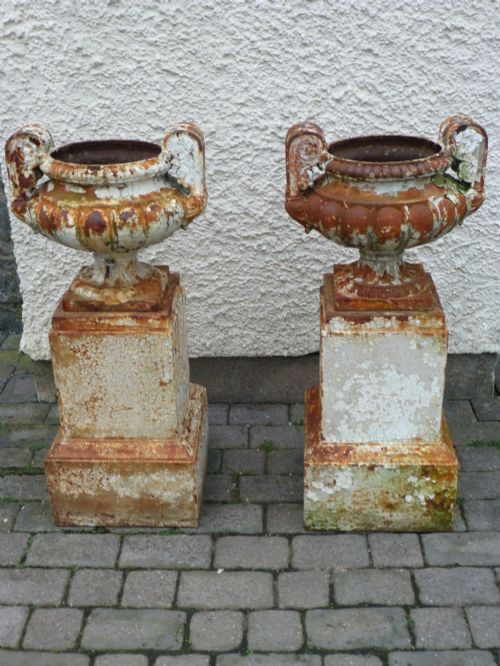
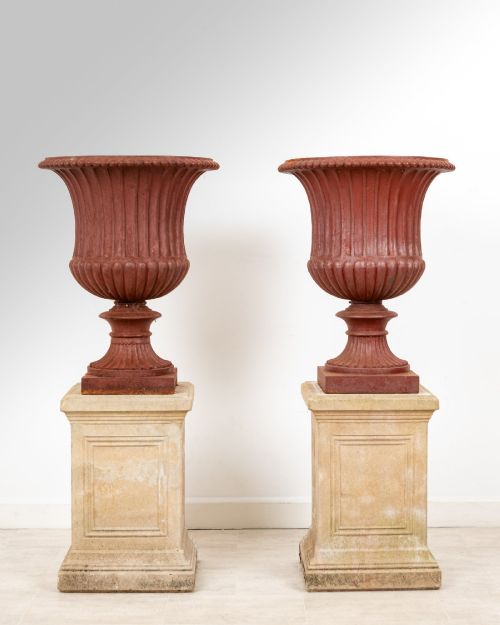
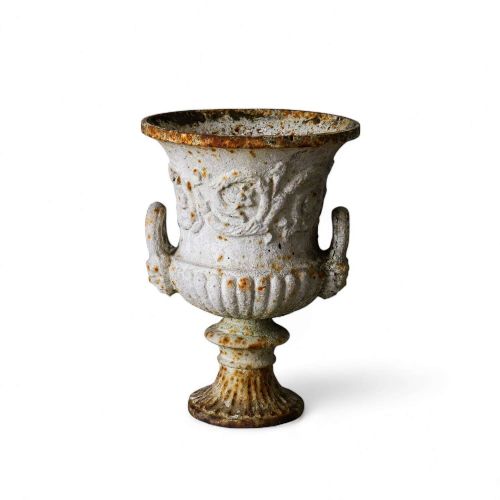
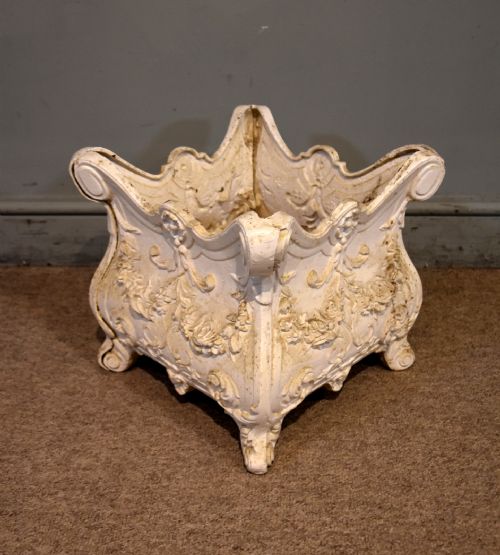
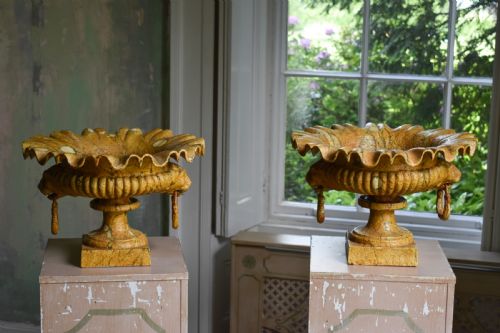
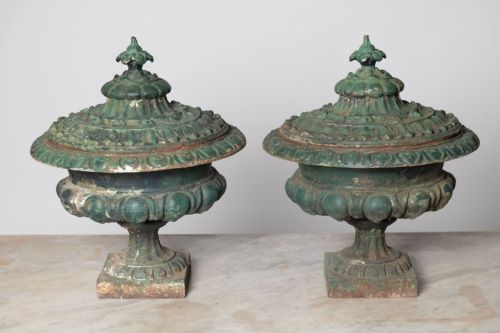
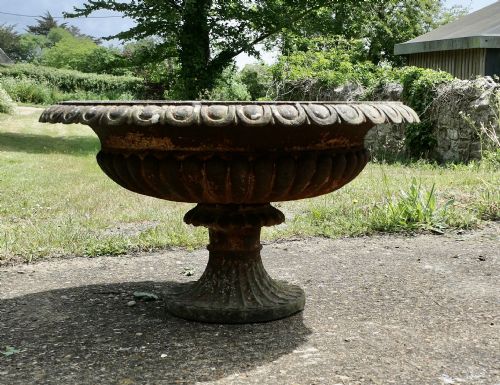
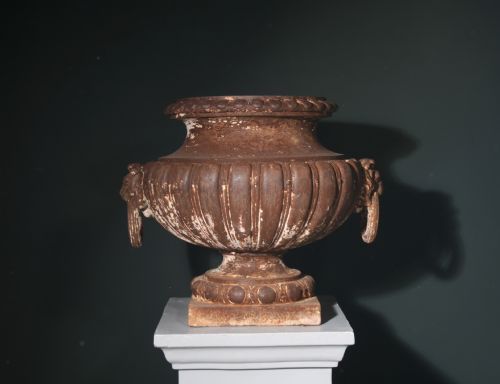
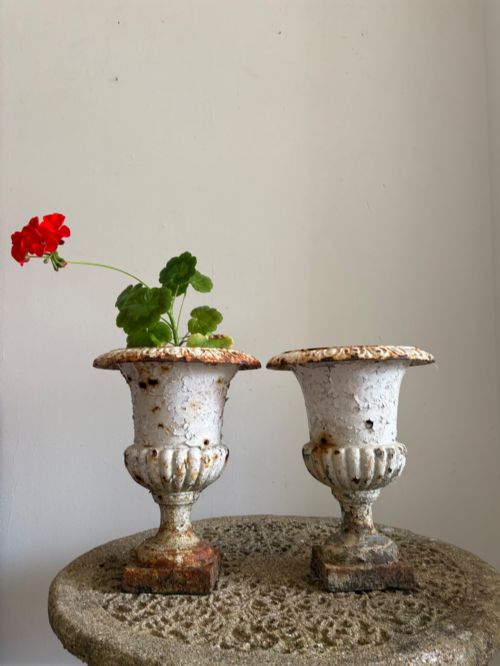
Antique iron garden urns are sturdy outdoor vessels designed for planting or architectural display, drawing heavily on classical and neoclassical forms. When you browse antique iron garden urns, you will most frequently encounter campana shapes, tazzas and square planters originating from nineteenth-century British and French foundries.
Most examples date from the Victorian period through to the early twentieth century, cast in iron and often paired with matching pedestals or stone plinths. These pieces range in scale from small table urns to large monumental pairs intended for formal garden paths and entranceways.
What Varies in Quality
Quality rests primarily in the sharpness of the casting detail and the depth of the foundry relief work. Pieces bearing clear marks from renowned makers display superior finishing in the chasing and clean alignment of the mould seams.
Materials range from traditional cast iron and wrought iron to zinc, sheet iron, stone, and terracotta.
Falkirk Carron foundry·Coalbrookdale·Andrew Handyside·VAL D'OSNE FOUNDRY·J. Jones Bankside London
The Antique Iron Garden Urns Glossary
- Campana
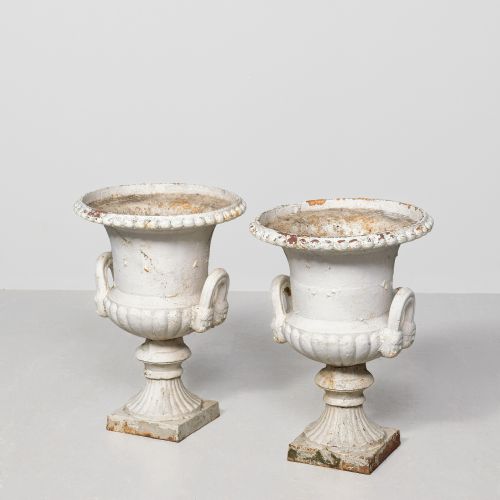
- A bell-shaped garden urn with a flaring rim and a tapered body, frequently seen on nineteenth-century pedestals. This form originates from classical antiquity.
- Tazza
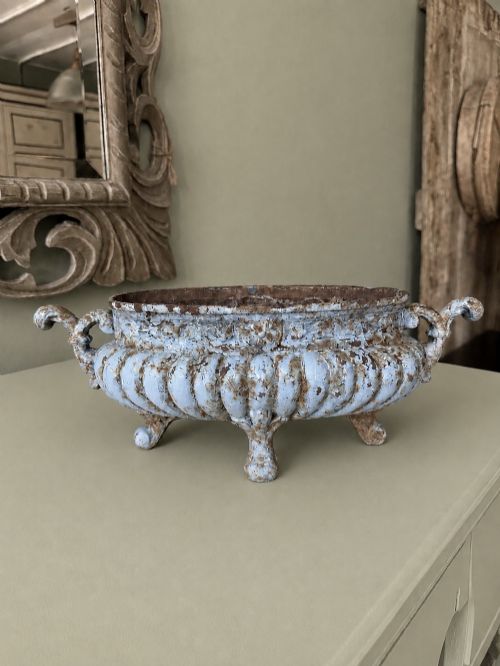
- A shallow bowl-shaped vessel mounted on a stem and foot, used both indoors and out. Victorian examples in cast iron often feature classical handles.
- Medici urn
- A bell-shaped classical urn decorated with low relief friezes and egg-and-dart moulding around the rim. French and English foundries reproduced this shape extensively in iron.
- Plinth
- A heavy base block or pedestal that elevates an urn above ground level. Original matching plinths significantly enhance the architectural presence of garden ironwork.
- Strapwork
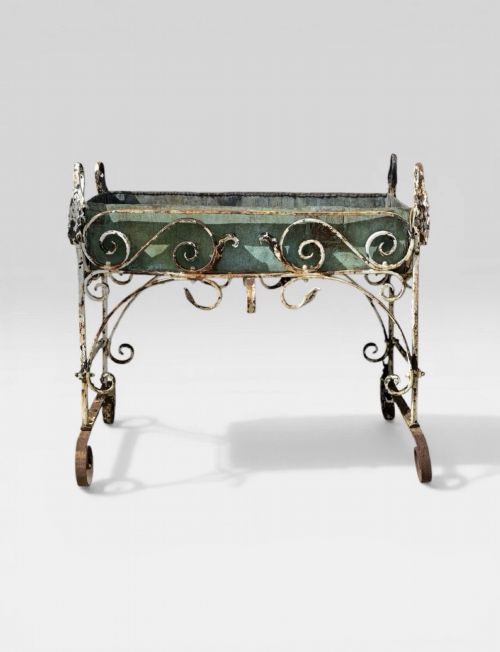
- Ornamental metalwork resembling flat bands or straps, crossed and scrolled in geometric patterns. This technique appears on lighter wrought iron planters.
Antique Iron Garden Urns: Frequently Asked Questions
How do I care for antique iron urns outside?
Keep the drainage holes clear to prevent trapped water from expanding during winter frosts. Apply protective metal wax or suitable exterior paint periodically to manage surface rust.
Position the urns on stable stone flags or timber blocks so the base does not sit directly in wet soil. This simple step prevents moisture retention beneath the heavy iron.
Can I leave cast iron urns out in winter?
Cast iron handles cold weather well, provided water does not pool and freeze inside the main bowl. Emptying heavy soil or lining the interior with protective material minimises freeze-thaw stress.
Ensure the base remains elevated off frozen ground to protect the metal from prolonged dampness. Heavy pairs handle the elements comfortably when properly maintained.
How do I identify a Victorian iron urn?
Look for neoclassical motifs such as acanthus leaves, egg-and-dart rims, and heavy cast iron construction typical of nineteenth-century production. Foundry marks or registration numbers stamped into the metal often confirm the exact era.
The weight, thick casting walls, and weathered paint layers also point towards nineteenth-century manufacture rather than later reproduction.
What is the difference between an urn and a planter?
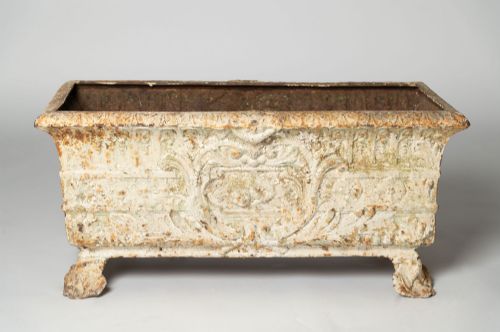
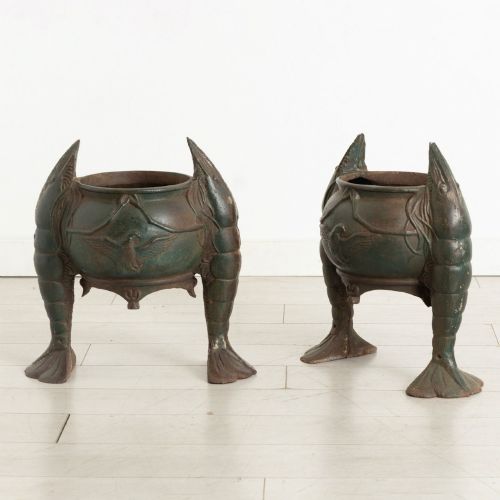
Urns typically feature a footed stem, a distinct bowl, and classical styling inspired by ancient pottery. Planters often take simpler rectangular, square, or tub-like forms designed primarily for holding large root systems.
Many nineteenth-century foundry catalogues used both terms interchangeably for vessels that served the same ornamental garden function.