
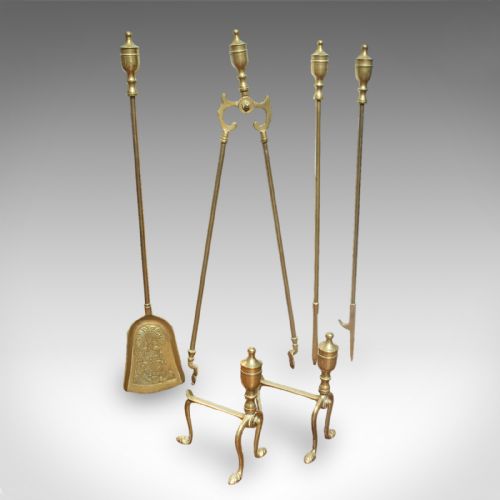


Antique Iron Fire Tongs
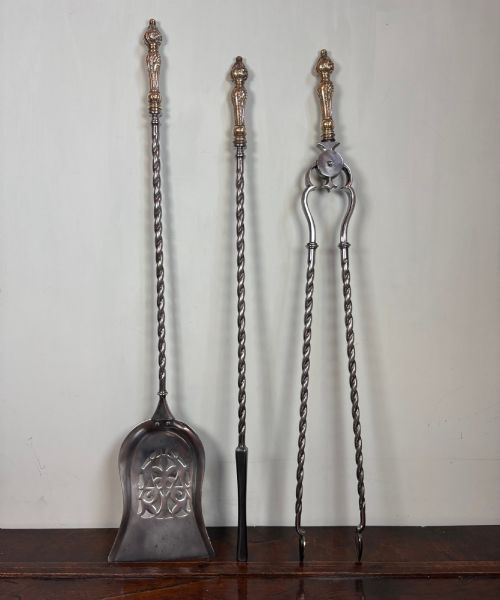
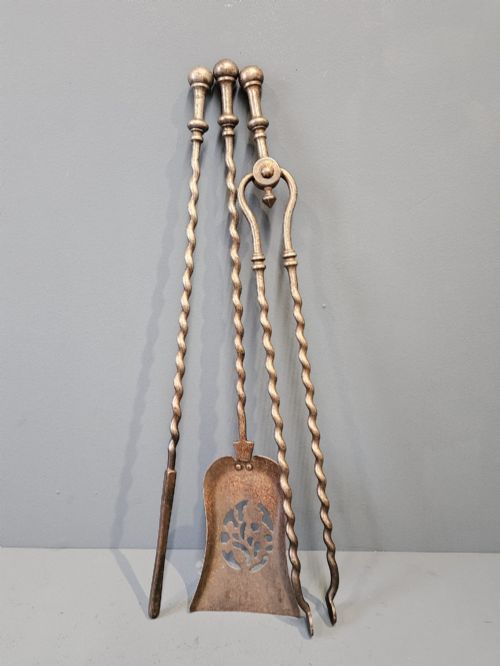
These antique iron fire tongs are heavy, hand-forged implements built to tend a hearth.
Antique Iron Fire Tongs
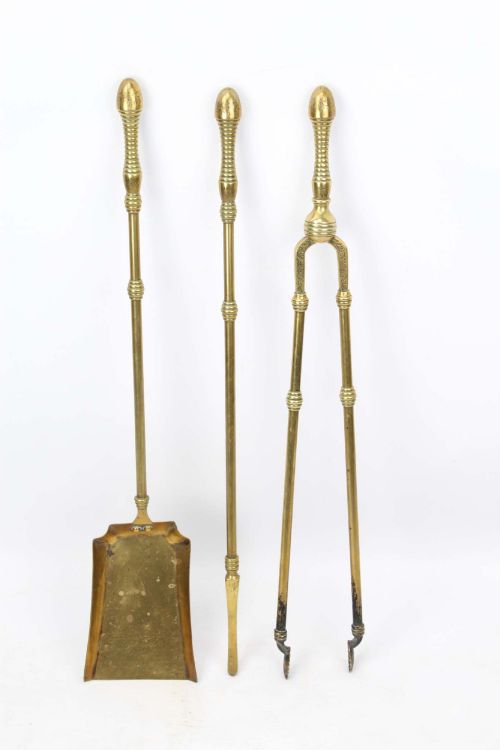
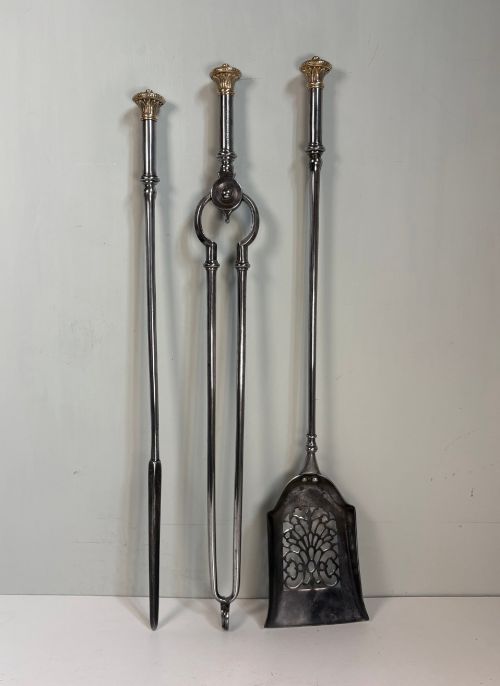
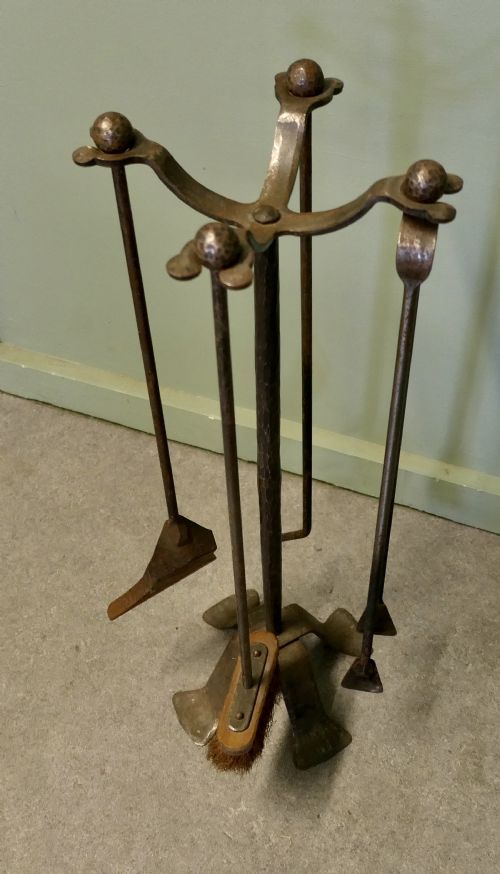
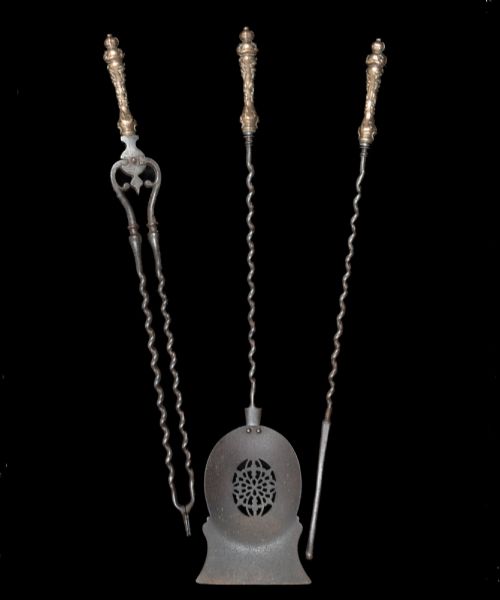
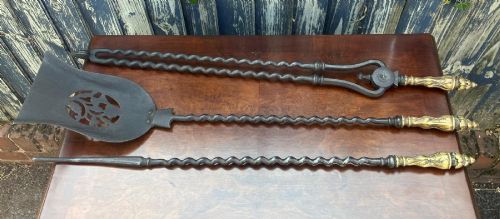
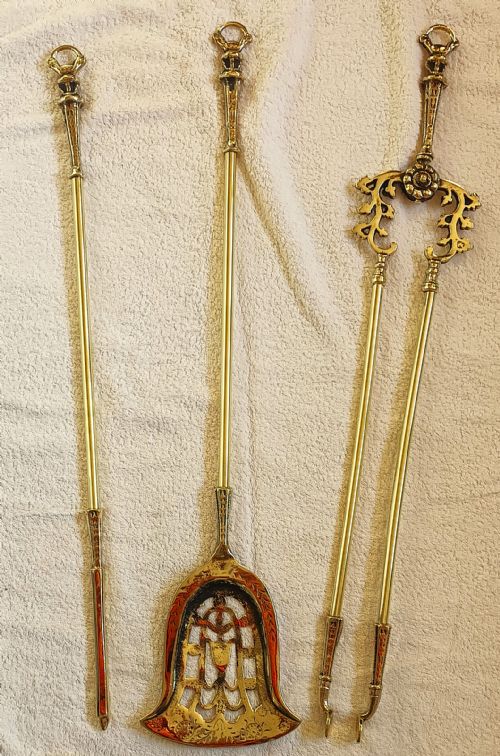
When you search for antique iron fire tongs, you look at robust hearth implements designed to grip and move fuel with precision. The examples appearing here range from sturdy individual pairs to full companion sets that include pokers and shovels.
You are most likely to meet nineteenth-century Victorian pieces and Georgian designs fashioned from iron, wrought iron, and polished steel. Many incorporate brass elements or handles, reflecting the decorative tastes of their respective periods.
The selection encompasses utilitarian manor house tools alongside finer Regency and Arts and Crafts sets. These implements served both functional duties in managing open fires and aesthetic roles within the hearth arrangement.
How they were made
Blacksmiths shaped these tools by hand, heating and hammering iron and wrought steel on an anvil to achieve durable forms. Early examples often display hand-forged details like stirrup or arrow head designs.
Makers combined materials by pairing iron or steel shafts with brass handles, gilt brass accents, or gunmetal components. Polished steel surfaces required careful finishing to resist corrosion and catch the hearth light.
Some nineteenth-century tongs were built so heavy they doubled as impromptu boot-scrapers when nobody was looking.
What varies in quality
The standard of forging dictates the primary tier of quality, separating plain utilitarian ironwork from balanced examples with refined handle details like rope twists. Metal thickness and the weight of the steel or brass determine the sturdiness of the tongs.
Cohesion within a set separates assembled groupings from pieces originally forged together as a matching companion suite. Surface finish, whether retained hand-hammering or fine nineteenth-century polish, marks the distinction between workshop stock and finer domestic items.
The Antique Iron Fire Tongs Glossary
- Fire irons
- A matched set of tools used for tending an open fire, usually comprising tongs, a poker, and a shovel. These implements often sat in dedicated stands or alongside fire dogs.
- Companion set
- A collection of fireplace tools arranged together for daily use and hearth presentation. Such suites frequently match in metal choice and handle design.
- Wrought iron
- Iron that is heated and worked with hand tools rather than cast in a mould. This material yields visible hammer marks and high tensile strength suited to heavy hearth use.
- Gunmetal
- A type of bronze composed of copper, tin, and zinc utilised for decorative fittings or tool details. It provides a dark greyish-brown metallic lustre.
- Fire dogs
- Andirons placed in a hearth to support logs for burning. They frequently accompany sets of fire irons in period settings.
Antique Iron Fire Tongs: Frequently Asked Questions
How do I clean antique iron tongs?
Remove surface dust with a dry cloth and apply a light coat of protective wax to steel and iron surfaces. Avoid harsh abrasives that strip the aged patina.
Keep them away from damp environments to prevent active rust formation on the working joints.
Are these fire tongs still usable?
Most wrought iron and steel examples retain the structural strength required for moving logs in an active fireplace. Check the pivot joint for secure movement before applying heavy pressure.
Finer brass-handled sets from the Victorian era work well for lighter duties or as decorative hearth accessories.
What is a stirrup top on tongs?
A stirrup top refers to the looped handle shape reminiscent of a riding stirrup, common on hand-forged Georgian iron pieces. This design provided a comfortable grip for the user's fingers.
Such handles indicate earlier hand-forging techniques before industrial casting methods became widespread.
How do I date a pair of fire tongs?
Examine the metal type, manufacturing marks, and stylistic clues such as Regency brass mounts or Arts and Crafts motifs. Hand-forged iron with arrow head designs typically points to earlier periods.
Compare the construction style against dated companion sets and documented nineteenth-century workshop practices.