




Antique Inlay Stationery Box
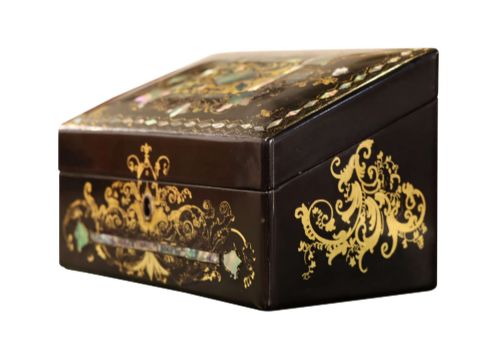
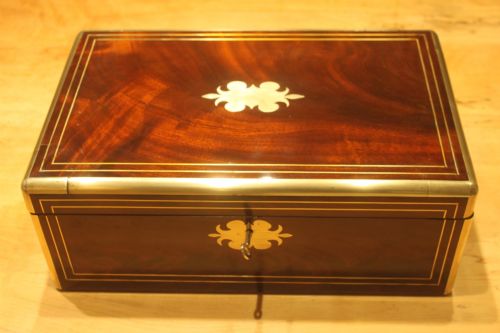
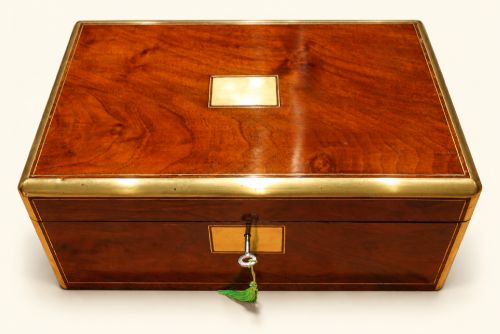
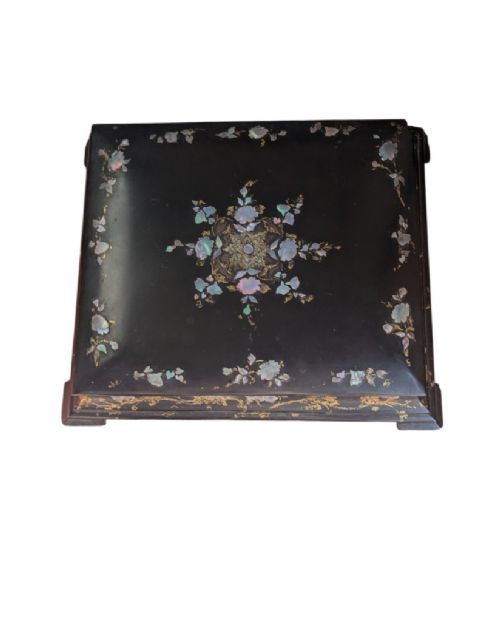
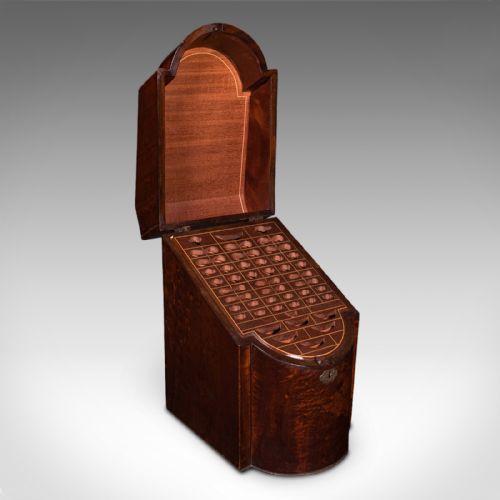
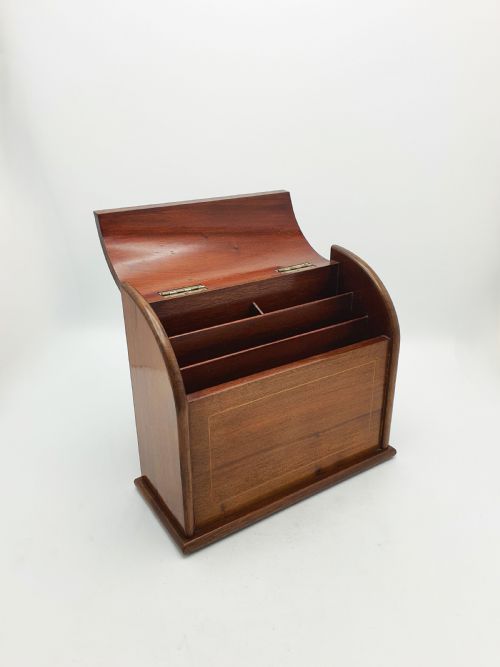
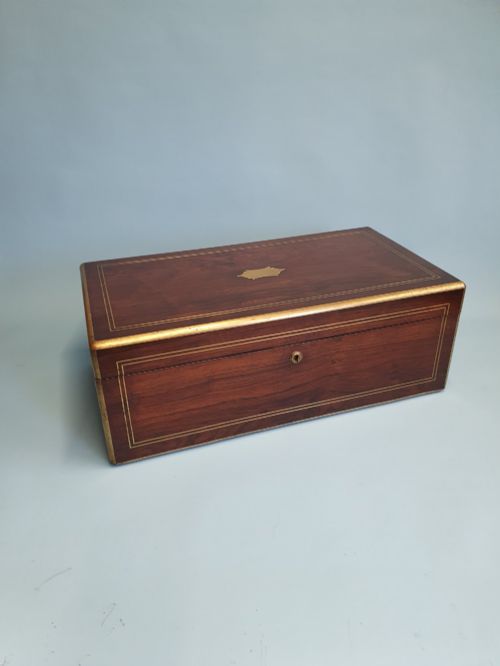
An antique inlay stationery box is a desk tidy crafted to hold letters and paper, offering fine cabinetwork and brass or mother-of-pearl embellishment.
Antique Inlay Stationery Box
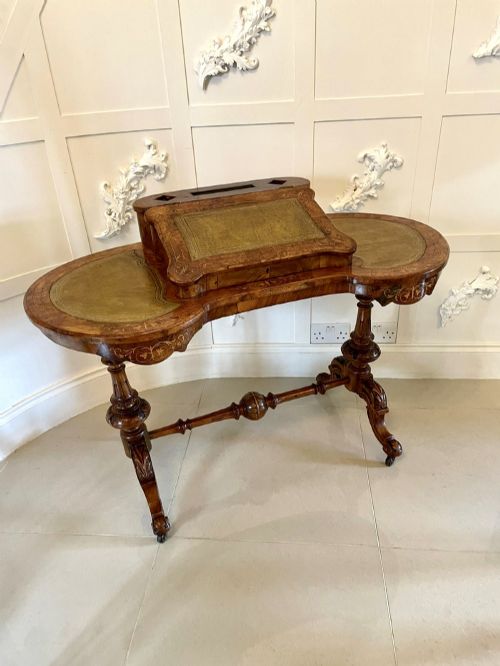
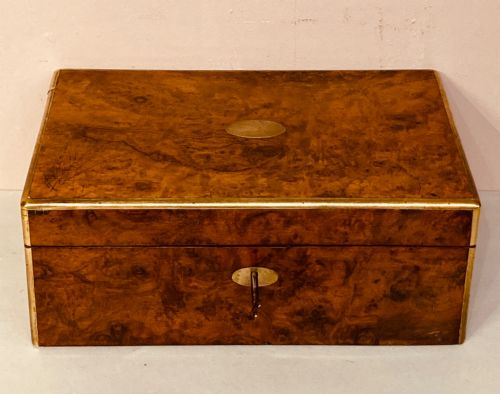
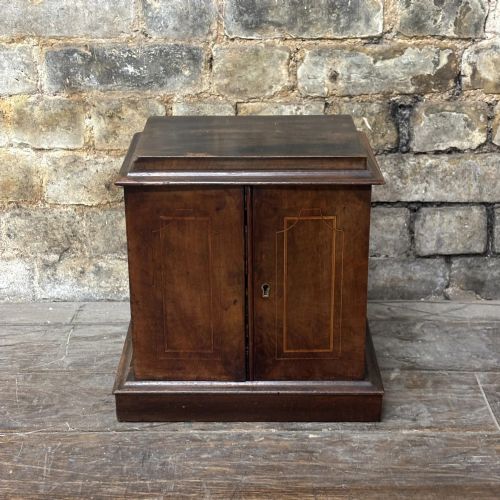
An antique inlay stationery box brings order to a writing desk, holding letters, envelopes and correspondence in compartmented interiors. The forms seen here range from sloping writing boxes and campaign cases to dedicated stationery cabinets and correspondence boxes.
Victorian and Georgian periods dominate the selection, alongside Regency and Edwardian examples. Woods like rosewood, mahogany, burr walnut and satinwood provide the foundation for delicate line inlay and Tunbridge ware decoration.
How they were made
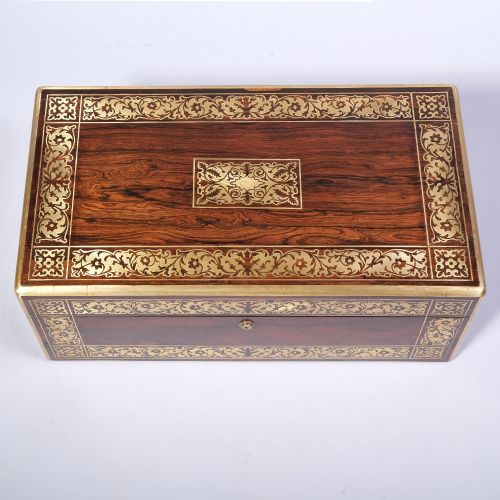
Cabinetmakers constructed the carcass from dense hardwoods such as mahogany and rosewood, often applying veneers of burr walnut, satinwood or coromandel to visible surfaces. Brass banding protected corners and edges during transport, while secret drawers relied on precise dovetail joints.
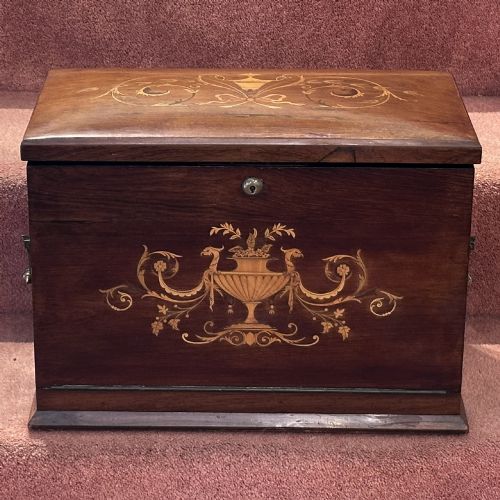
Inlay work incorporated contrasting timbers, bone or mother-of-pearl, set flush into the wood. Tunbridge ware utilised tiny blocks of coloured timber arranged in geometric mosaics to form pictorial panels.
Antique Inlay Stationery Box Retail Price Guide 2026
Typical asking prices for inlay stationery box among the pieces listed under this phrase on Sellingantiques today, from the lower quarter to the upper quarter. They describe what is for sale here now, not the wider market.
Secret drawers wait quietly inside these boxes, engineered to slide open only when hidden wooden pins are pressed.
What varies in quality
Quality rests in the precision of the cabinetwork and the choice of timber figure. Dense curl grain mahogany, highly figured burr walnut and richly grained coromandel indicate superior workshops.
Hardware and interior fittings reveal distinction. The presence of Bramah locks, heavy brass mounts, fitted compartments and intact correspondence tiers separate standard utilitarian boxes from finer pieces.
Edmund Nye
The Antique Inlay Stationery Box Glossary
- Inlay
- A technique where pieces of contrasting material are inserted into a recessed wooden surface to form a decorative pattern. This differs from marquetry by being set directly into the solid wood or ground rather than forming an entire veneer sheet.
- Writing slope
- A box with a hinged, slanted lid that opens to reveal a velvet or leather-lined writing surface and internal compartments. Many feature secret drawers concealed behind dummy partitions.
- Tunbridge ware
- A specific type of decorative woodwork produced in Kent, featuring mosaics made from thousands of tiny wood blocks. These create detailed pictorial or geometric designs on the lid.
- Bramah lock
- A high-security barrel lock invented by Joseph Bramah in the late eighteenth century, commonly found on superior nineteenth-century boxes. They require a cylindrical key and indicate a maker focused on security.
- Correspondence box
- A desk accessory designed specifically to hold folded letters, cards and envelopes upright in tiered slots. Examples often feature hinged doors or sloping lids.
Antique Inlay Stationery Box: Frequently Asked Questions
What is an antique inlay stationery box used for?
These boxes were designed to hold letters, writing paper and envelopes neatly on a desk or table. Interior compartments keep correspondence sorted by category.
Many incorporate inkwells, pen trays and secret drawers for stamps or valuables, serving as portable writing bureaus before the widespread use of fitted desks.
How do I date an antique stationery box?
Dating relies on timber choice, construction methods and hardware styles. Regency and Georgian boxes often feature mahogany or rosewood with fine brass stringing.
Victorian pieces frequently utilise burr walnut, coromandel or papier-mâché, sometimes incorporating brass banding and Bramah locks.
What woods are typical for these boxes?
Cabinetmakers favoured dense tropical hardwoods like mahogany and rosewood for structural stability. Walnut and satinwood appeared both as solid timber and decorative veneers.
Burr walnut and coromandel provided highly figured surfaces, enhanced with brass, mother-of-pearl or contrasting wood inlay.
Where should I place a stationery box at home?
These boxes sit well on writing tables, sideboards or bookcases where their polished veneers and inlaid lids remain visible. Keeping them in stable room conditions prevents timber movement.
Using the internal compartments for modern letters, stationery or desk accessories maintains their original purpose in a contemporary home.