



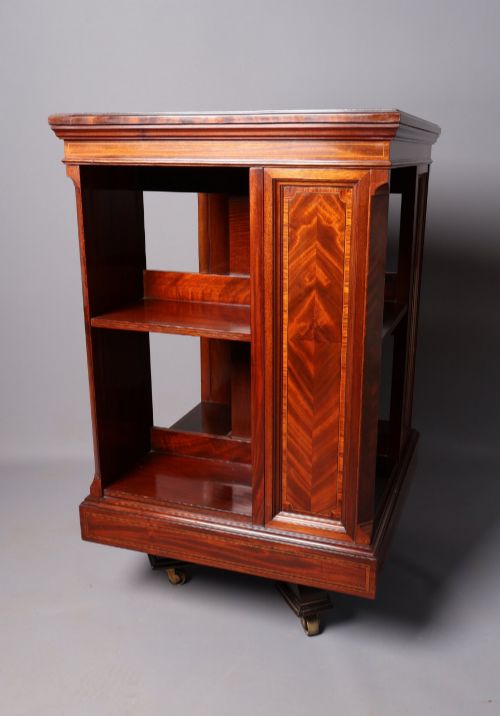
Antique Inlaid Tier Stand
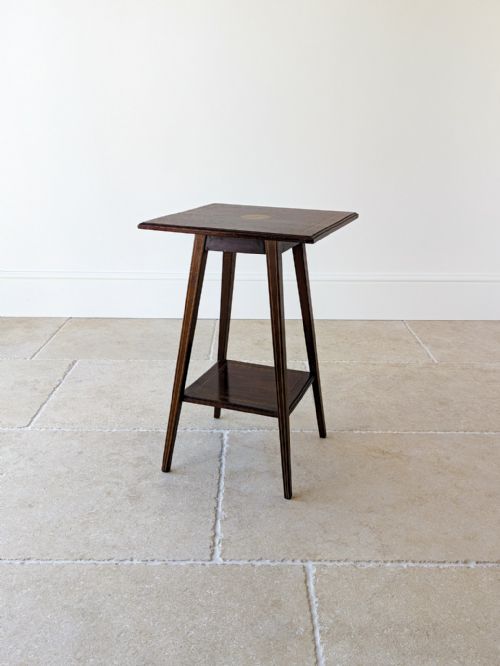
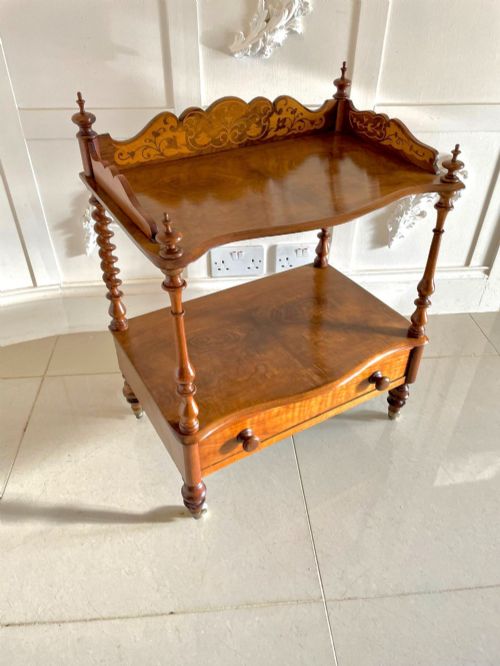
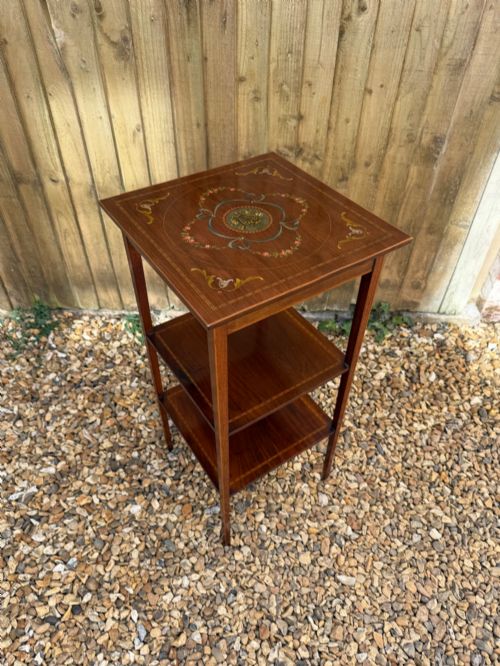
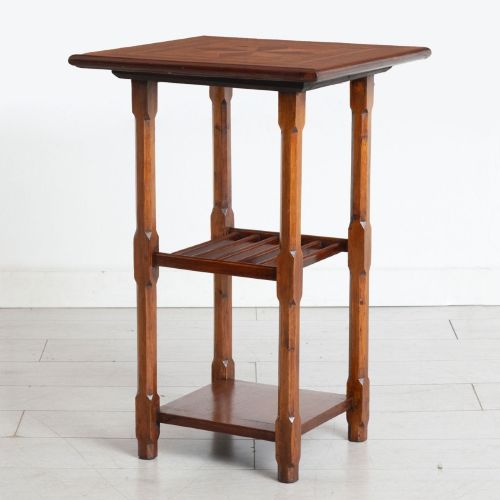
An antique inlaid tier stand brings multiple tiers of shelved display and refined wood-working into a room.
Antique Inlaid Tier Stand
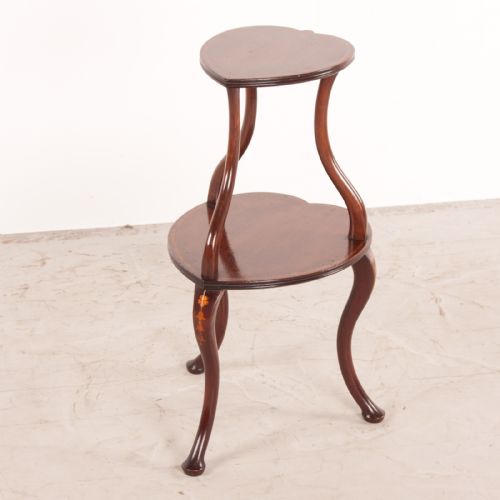
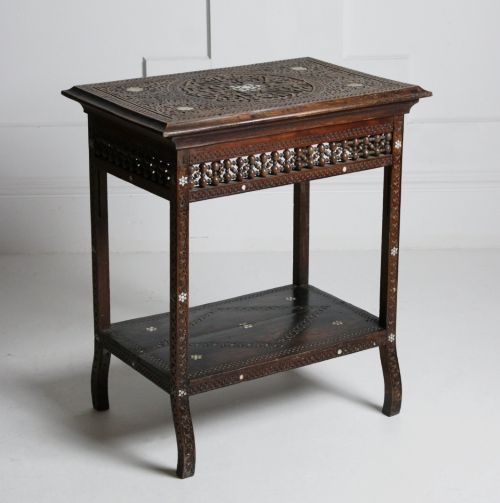
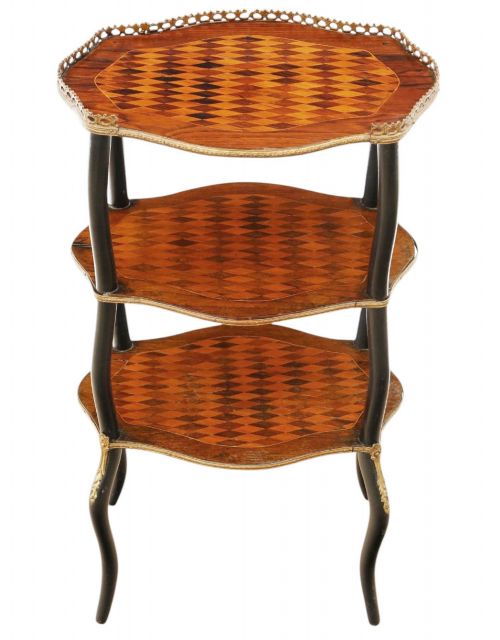
An antique inlaid tier stand appears across the Victorian and Edwardian eras, taking the form of etageres, cake stands, and occasional tables with multiple levels. These pieces serve to display objects or hold items in sitting rooms, utilising vertical space efficiently without dominating a floor.
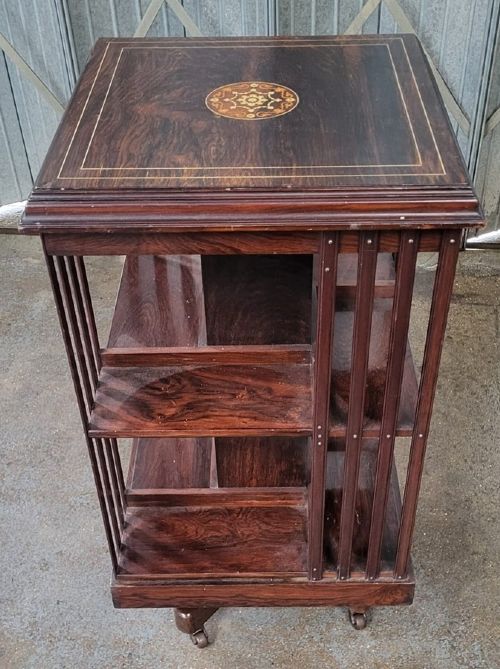
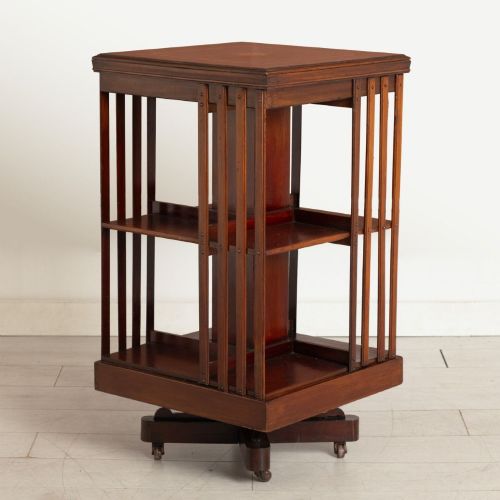
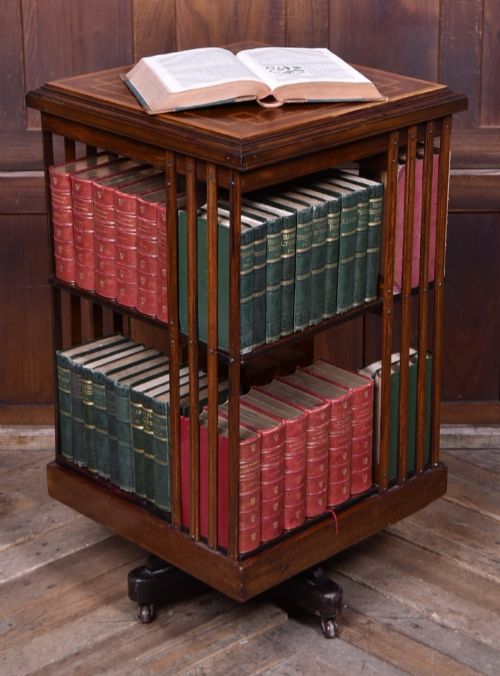
The Edwardian period contributes numerous mahogany and rosewood examples, often featuring gentle stringing or shell motifs, alongside revolving bookcases and cake stands. Victorian pieces lean towards burr walnut and rosewood, incorporating more elaborate marquetry and multiple tiers supported by slender uprights.
Materials and construction methods
Cabinet makers built these tier stands using solid and veneered timbers including mahogany, walnut, rosewood, and satinwood. Contrasting woods such as boxwood provided fine linear stringing and geometric details to enrich the surfaces.
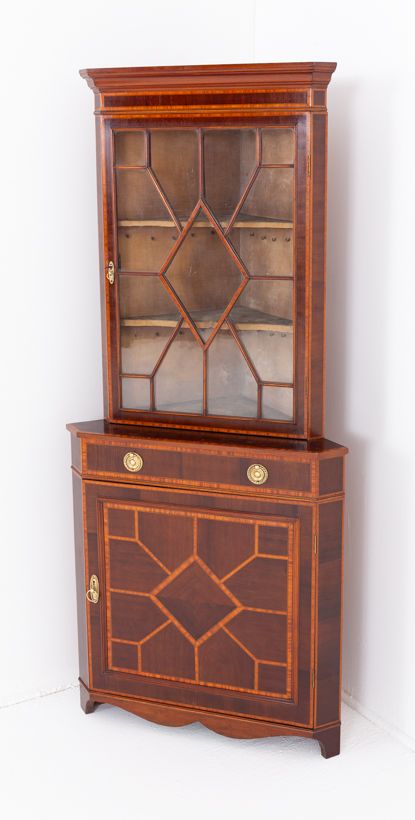
Marquetry and parquetry techniques decorated tabletops and shelves with floral patterns or repeating motifs. Brass castors and mounts frequently completed the lower extremities of these multi-level furnishings.
Some Edwardian revolving bookcases allowed readers to reach every volume from a single armchair.
Judging the execution and depth
Quality rests in the crispness of the timber selection and the precision of the inlay work. Burr walnut, flame mahogany, and figured rosewood distinguish superior examples from plain utility pieces.
The structural stability of multiple tiers and the finesse of the turning or joinery determine the standing of an individual piece. Makers who employed detailed marquetry and substantial brass mounts achieved a higher level of finish.
Edwards and Roberts·Gordovil Spain
The Antique Inlaid Tier Stand Glossary
- Etagere
- A piece of furniture consisting of a set of open shelves for displaying small objects. These tiered stands date predominantly from the nineteenth and early twentieth centuries.
- Inlay
- A technique where contrasting materials are inserted into depressions carved in a wood base to form a design. Boxwood and satinwood frequently serve this purpose on dark woods.
- Marquetry
- Applied decorative woodwork forming pictorial or floral patterns using various tinted veneers. This differs from simple linear stringing by creating complete pictorial surfaces.
- Revolving bookcase
- A tiered book stand mounted on a rotating base for ease of access. They appear commonly in Edwardian mahogany and rosewood.
- Torchere
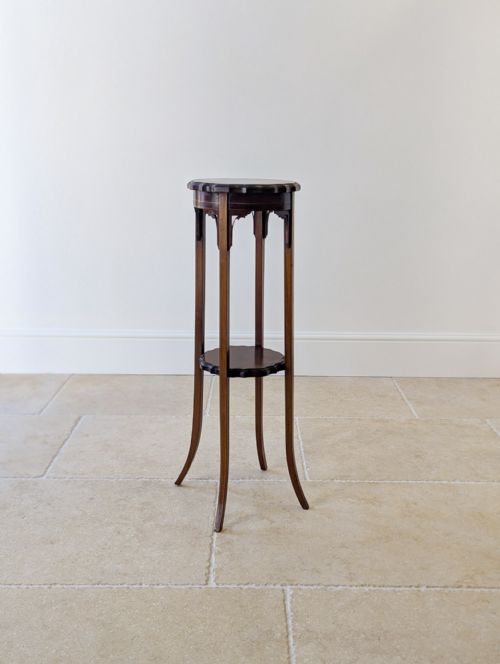
- A tall stand designed to support a lamp or decorative object. These slender supports share periods with standard tier stands.
Antique Inlaid Tier Stand: Frequently Asked Questions
What is an antique inlaid tier stand used for?
These stands provide stepped levels for displaying ornaments, books, or small plants within a living space. They make effective use of vertical dimensions in compact areas.
They function equally well beside seating or within corners to break up empty wall space.
How do I tell Victorian from Edwardian stands?
Victorian examples frequently utilise burr walnut or rosewood with dense marquetry and heavier proportions. Brass mounts and castors appear regularly on nineteenth-century pieces.
Edwardian stands often favour lighter mahogany or satinwood with restrained stringing and simpler geometric forms. The construction tends towards airier tiers and revolving book compartments.
Are tier stands structurally stable?
Well-constructed examples distribute weight evenly across their vertical supports and heavy bases. The joinery between shelves and uprights determines how steadily the stand holds items.
Placing heavier objects on lower shelves maintains proper balance during daily use.
How do I care for inlaid wood surfaces?
Dusting with a dry, soft cloth prevents particle buildup on delicate marquetry and polished timber. Avoiding direct sunlight and sustained moisture protects veneer and glue joints.
Periodic application of suitable wax maintains the lustre of mahogany and walnut without harming the inlay.