
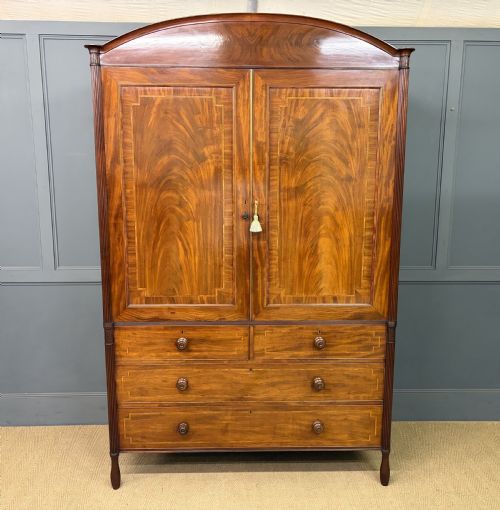


Antique Inlaid Clothes Chest
An antique inlaid clothes chest offers serious storage with the warmth of figured timber and precise stringing.
Antique Inlaid Clothes Chest
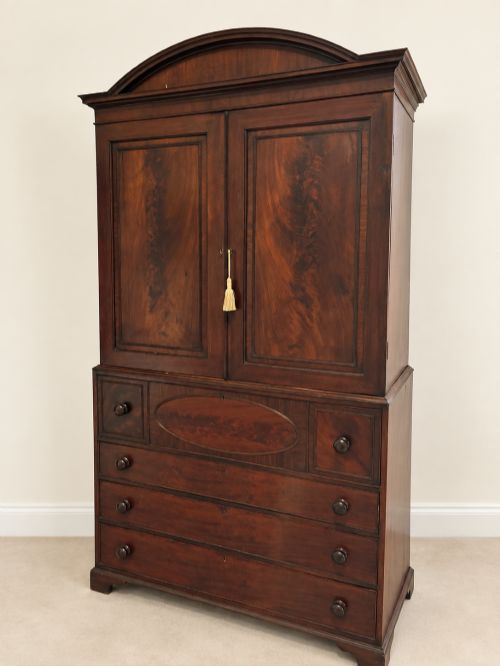
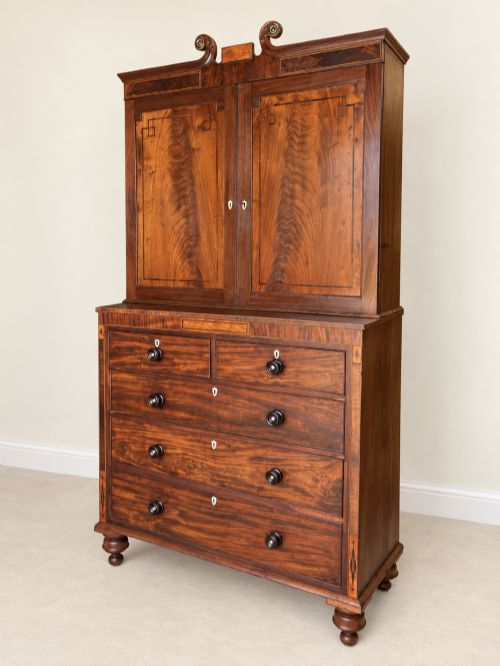
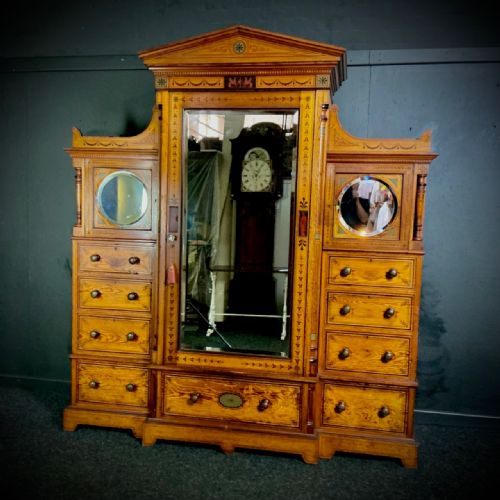
When you search for an antique inlaid clothes chest, you find substantial case furniture designed to store linen, garments, and personal effects. These pieces span the Georgian, Regency, Victorian, and Edwardian eras, combining deep storage drawers with upper cupboard sections.
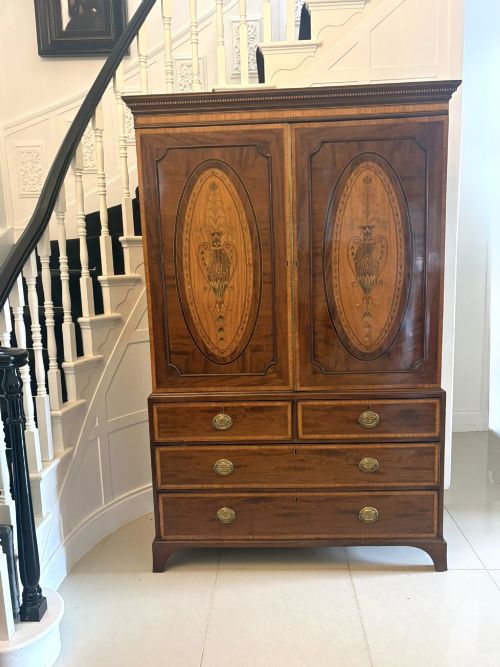
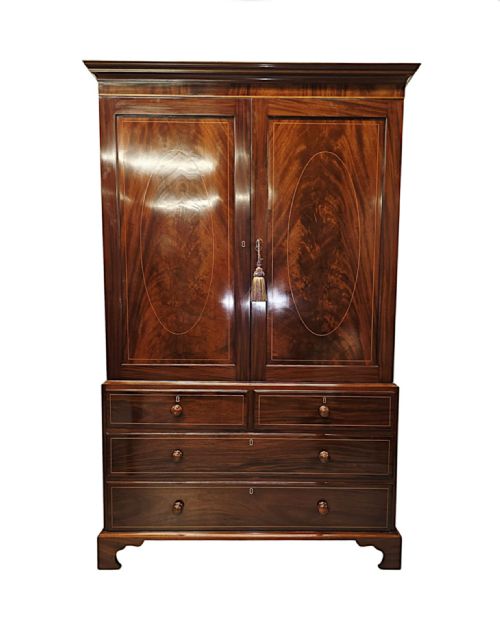
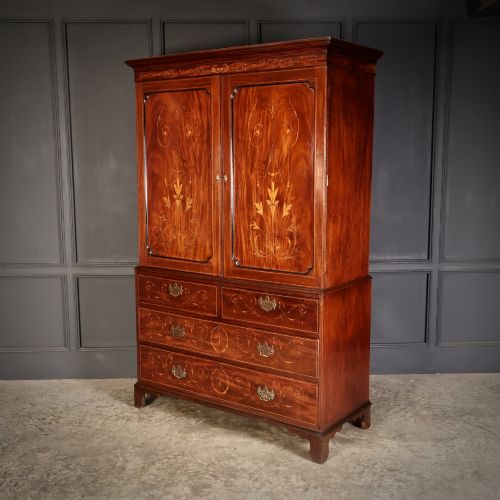
The most common form on this page is the linen press or housekeepers cupboard, often raised on bracket feet or short legs. They combine the capacity of a wardrobe with the practicality of a chest of drawers.
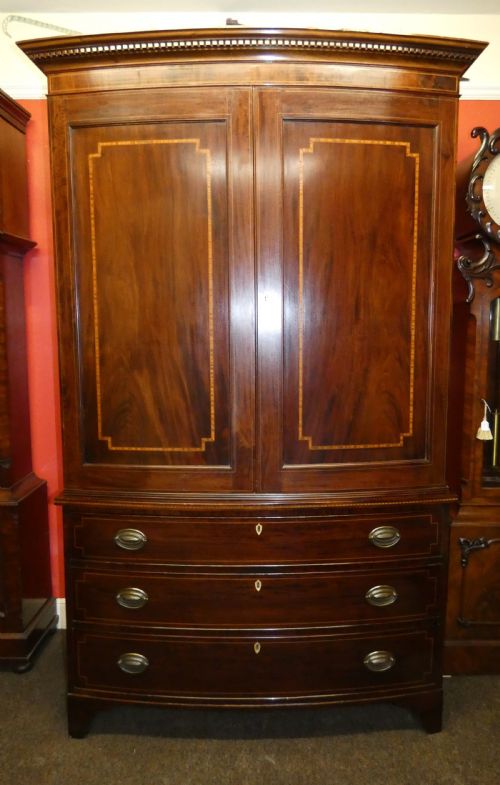
Makers utilised rich timbers such as flame mahogany, walnut, and oak, enhanced by contrasting bandings of satinwood and boxwood. The resulting forms range from straight-fronted carcases to graceful bowfront profiles.
Materials and construction methods
Cabinet makers built these chests using solid oak for internal framing and drawer linings, faced with figured mahogany veneers. Flame mahogany provided dramatic movement across large panel surfaces.
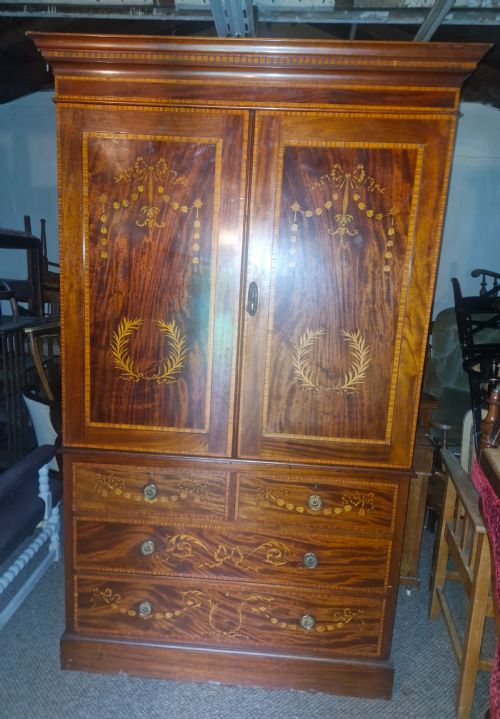
Decoration relied on fine stringing and marquetry inlay executed in satinwood, boxwood, and bone. Brass hardware, including handles and escutcheons, completed the construction.
Listings span from the mid eighteenth century through the Georgian and Regency eras to Edwardian times, showing a strong presence of mahogany and satinwood.
Judging the quality of craftsmanship
Quality rests in the selection of the timber veneers and the crispness of the inlay work. Finer pieces display continuous grain matching across drawer fronts and precise, tight mitres in the crossbanding.
The interior fitment also separates tiers of quality. Better examples retain original sliding trays behind the upper doors, while lesser ones have undergone alterations to hanging space.
Druce & Co.
The Antique Inlaid Clothes Chest Glossary
- Linen press
- A tall piece of case furniture featuring upper cupboard doors enclosing sliding trays, positioned above a base tier of drawers. They were originally built to store household linens flat.
- Flame mahogany
- A veneer cut from the fork of the mahogany tree where the branch joins the trunk. It produces a fiery, mottled grain pattern prized by Georgian cabinet makers.
- Stringing
- A narrow strip of contrasting timber inlaid into a shallow channel on the furniture surface. Boxwood and satinwood were common choices for creating dark and light borders.
- Marquetry
- The art of forming decorative patterns using thin veneers of different coloured woods, occasionally incorporating bone. It creates pictorial or geometric designs across door panels and drawer fronts.
- Bowfront
- A curved cabinet front where the central section sweeps outward in a convex arc. This shape softens the bulk of large clothes presses.
Antique Inlaid Clothes Chest: Frequently Asked Questions
What is inside a linen press?
Most linen presses contain a series of shallow sliding wooden trays behind the upper double doors. These trays kept folded textiles neat and accessible before modern hanging wardrobes became standard.
The lower section typically houses a chest of drawers, ranging from two small drawers over two long ones to deeper single drawers configured for bulkier garments.
How do I date a Georgian clothes chest?
Dating relies on timber choice, construction traits, and decorative motifs. Pieces from the mid to late eighteenth century often feature solid mahogany or walnut, hand-cut dovetails, and restrained bracket feet.
As the style moved into the Regency and nineteenth century, carcases grew wider, veneers became more flamed, and bowfront profiles gained popularity alongside satinwood bandings.
Can I remove the upper section for moving?
Yes, traditional clothes chests and linen presses were almost universally constructed in two major sections for transport. The upper cupboard lifts off the lower chest of drawers base.
This modular design allowed staff to manoeuvre heavy mahogany furniture up staircases and through domestic doorways during the Georgian and Victorian periods.
Where should I place one in a modern home?
These large pieces demand a wall with adequate depth and height, making them suited to master bedrooms or spacious hallways. Their substantial storage capacity easily replaces a modern wardrobe.
Ensure you position the chest away from direct heat sources and strong sunlight to protect the fragile mahogany veneers and delicate satinwood inlay from drying out.