





Antique Indian Stool
An antique indian stool brings rich colonial character into a room, offering low, solid seating or surface space shaped by intricate carving.
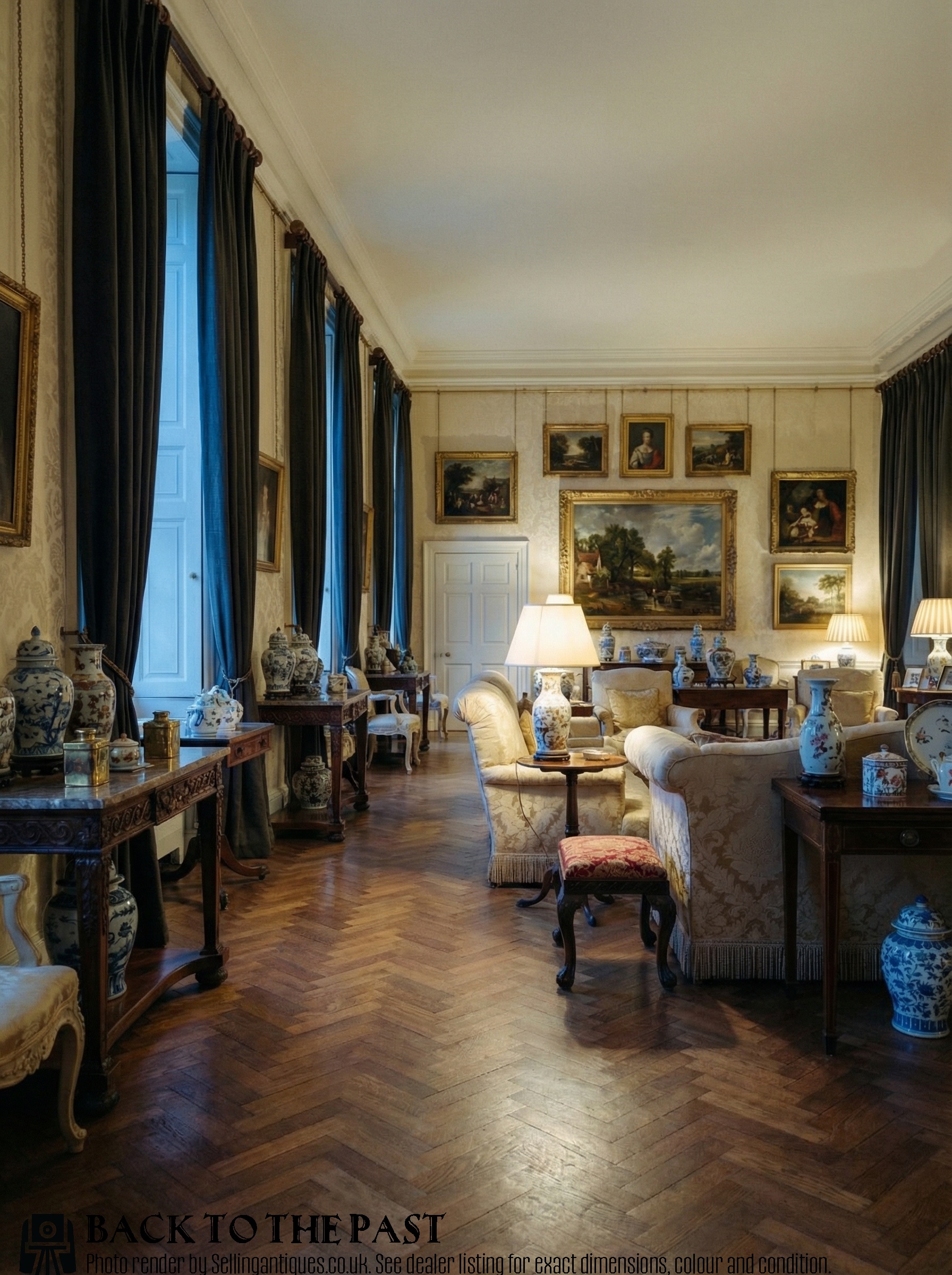
Antique Indian Stool
When you search for an antique indian stool, you encounter low seating, footstools, and small occasional tables spanning the nineteenth century and the early twentieth century. The selection includes pieces carrying Anglo-Indian, Anglo-Burmese, and Indian Ethnic styles.
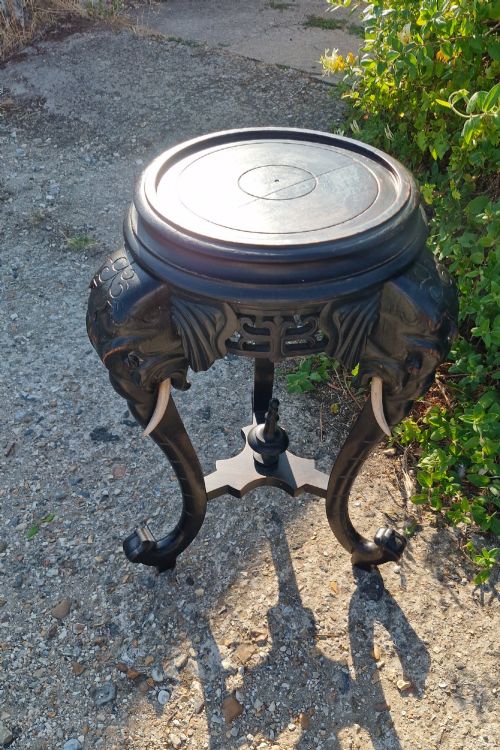
You are most likely to meet heavily carved wooden forms, including items designated as footstools, ottomans, and elephant tables with carved wooden tusks or legs. These items originate from periods such as the Victorian era, the 1880s, 1890s, 1900, and 1920.
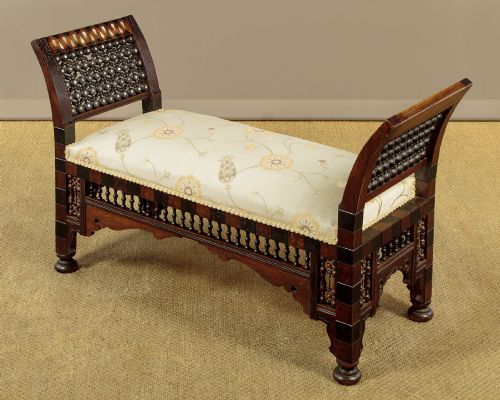
The objects serve diverse functions beyond simple seating, appearing as side tables, hall benches, window seats, and music chairs. Hardwoods dominate the structural forms, whilst specific regional pieces display distinct decorative traditions.
How they were made
The construction relies heavily on dense timbers such as teak, rosewood, padouk, and sandalwood, selected for their stability and capacity for intricate detail. Workshops utilised solid hardwood planks to build the frames for stools, benches, and occasional tables.
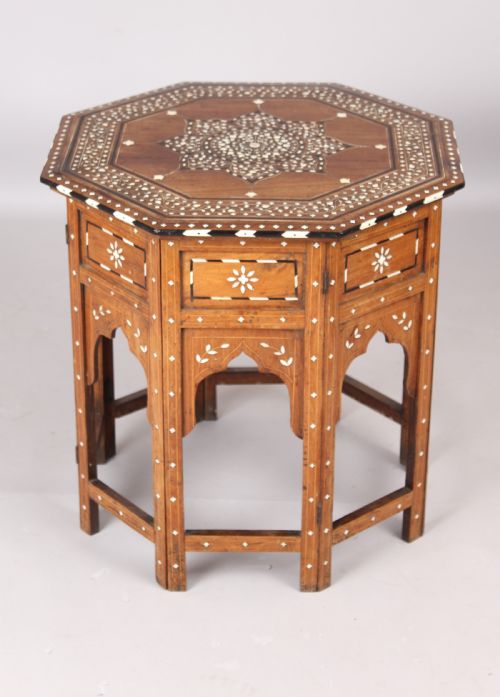
Master carvers applied deep, profuse relief carving directly into the wood surfaces, depicting figures, foliage, and animals like elephants. Artisans also incorporated bone and bone inlay to create geometric patterns, particularly on Hoshiarpur pieces.
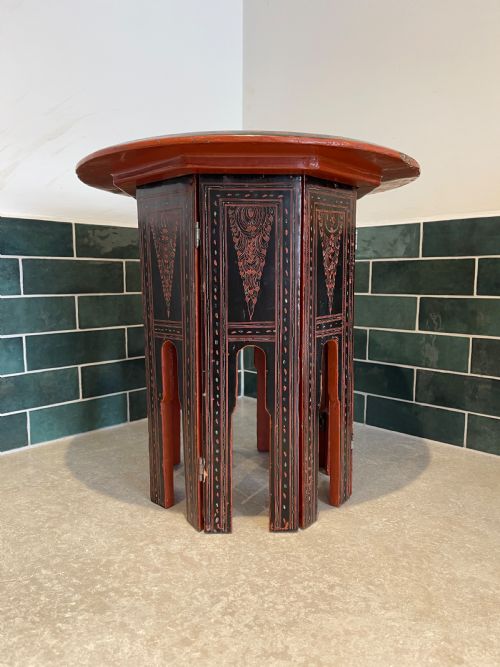
Object forms span side tables, footstools, ottomans, hall benches, music chairs, wedding chairs, and occasional tables with Anglo-Indian and Burmese styles.
What varies in quality
The depth, sharpness, and complexity of the hand carving determine the distinction between standard and superior examples. Pieces featuring crisp, deep undercutting and fully articulated animal forms demonstrate greater artisan skill than shallow surface incisions.
The choice of primary wood and the intricacy of any inlaid bone work also set pieces apart. Intact, stable joinery in dense timbers like rosewood or padouk elevates the standing of an individual stool or table.
The Antique Indian Stool Glossary
- Anglo-Indian
- A style describing furniture made in India during the British colonial period, often combining British furniture forms with traditional Indian carving techniques. These items frequently utilise native hardwoods such as teak and rosewood.
- Hoshiarpur
- A distinctive style of woodwork originating from the Punjab region, characterised by dense inlay work using bone or white metal on a wooden ground. Pieces from this tradition often feature geometric and floral motifs.
- Padouk
- A heavy, durable tropical hardwood with a reddish hue, utilised in nineteenth-century Burmese furniture making. It provides a stable base for intricate relief carving.
- Bone Inlay
- A decorative technique where small pieces of animal bone are fitted into recesses carved into the wood surface. This creates contrasting patterns of white against the dark timber ground.
Antique Indian Stool: Frequently Asked Questions
How were antique Indian stools used?
These pieces served multiple domestic purposes, functioning as low seats, footstools, ottomans, and small coffee tables. Their sturdy hardwood construction also suited them for use as hall benches and window seats.
In colonial households, smaller versions acted as occasional tables for displaying ornaments or holding books. Their versatile sizing allowed them to fit easily into various rooms around the home.
What is an elephant table?
An elephant table is a low occasional or side table supported by carved wooden elephant figures, sometimes featuring painted wooden tusks. These forms were produced in the nineteenth and early twentieth centuries within the Anglo-Indian tradition.
The animal motifs serve as both the structural legs and the primary decorative focus of the furniture. They reflect the ornate, figural carving style popular during the Victorian period.
How do I live with an antique Indian stool?
You can use a low stool or ottoman as supplementary seating or place it beside a sofa to hold drinks and books. Their compact proportions make them easy to position in smaller spaces or hallways.
Keep the timber conditioned and avoid placing the pieces in direct sunlight or near heat sources. Regular dusting of the deep carved recesses preserves the finish of the wood and bone inlay.
How can I tell the period of these pieces?
Dating relies on examining the timber species, construction methods, and stylistic markers recorded across the nineteenth and early twentieth centuries. Victorian and late nineteenth-century examples often display deep relief carving and dense hardwoods like rosewood and teak.
Items from around 1900 and the 1920s may incorporate painted elements or specific regional inlay work. Comparing the carving depth and motifs helps place an item within its manufacturing era.