


Antique Indian Serving Tray
These antique Indian serving tray pieces offer a rich glimpse into nineteenth-century craftsmanship, bringing functional history directly into modern homes.
Antique Indian Serving Tray
An antique Indian serving tray brings together diverse regional workshops and colonial influences across the nineteenth century. Buyers searching for an antique Indian serving tray encounter pieces ranging from Victorian afternoon tea slides to large circular platters.
The forms span straightforward teak platters and Kashmiri papier-mache trays alongside complex mixed metal designs. Most examples originate from the Victorian era and the decades immediately following around nineteen hundred.
Styles on this page include Anglo-Indian, Kashmiri, and Indo-Persian aesthetics, reflecting the varied production methods of the period. These items served functional dining roles as well as decorative display purposes in British homes.
Materials and construction
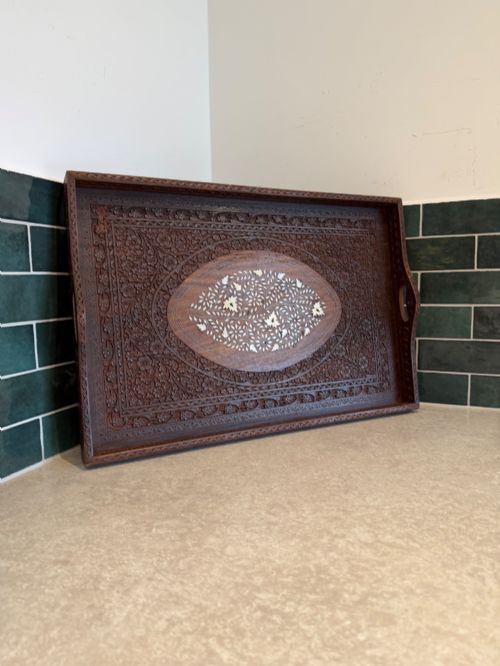
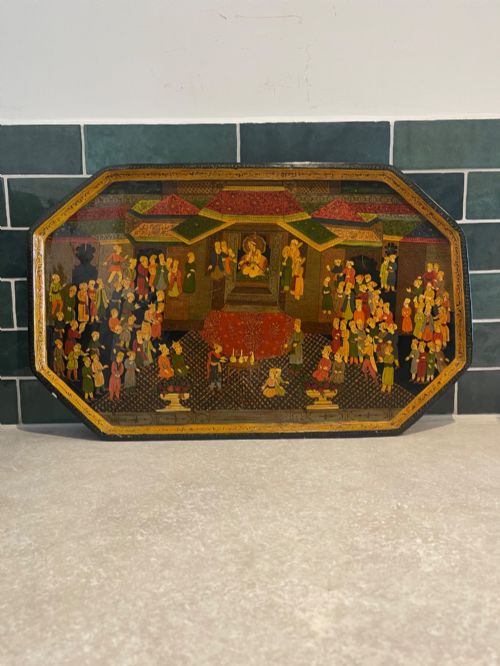
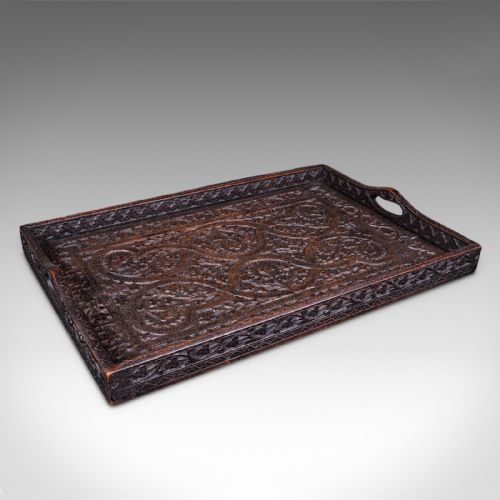
Makers utilised dense hardwoods such as teak and walnut, often applying deep carving to create textured surfaces. Papier-mache also appears as a primary material, particularly in regional Kashmiri pieces.
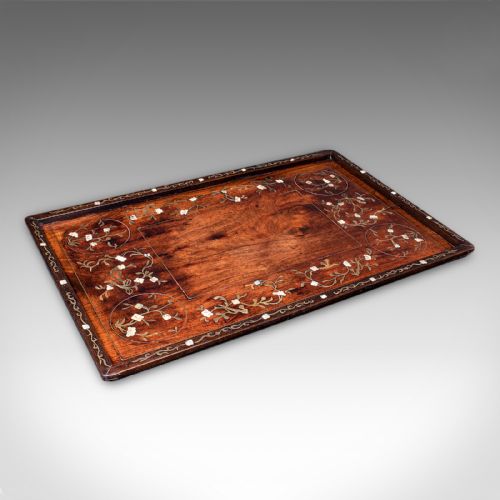
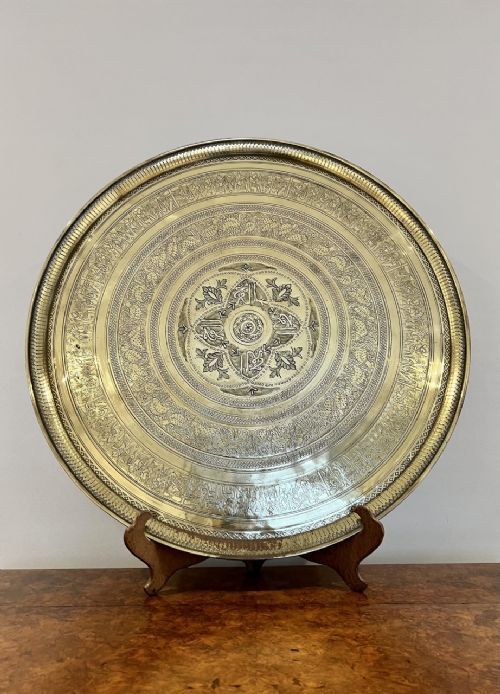
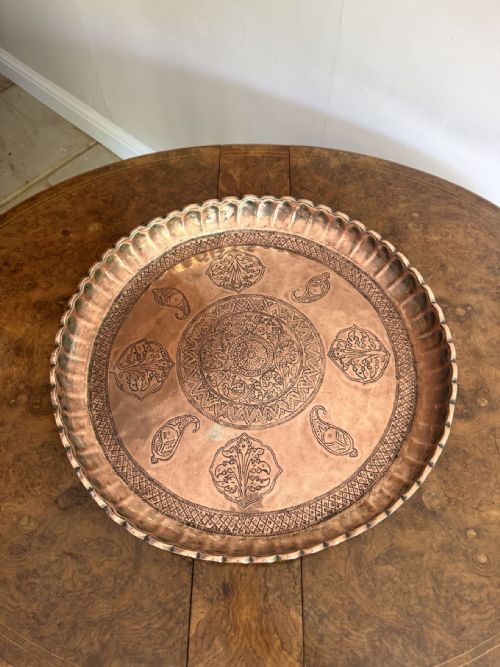
Metalwork forms a significant portion of the evidence, utilising brass, copper, and mixed metal compositions. Artisans decorated these surfaces through engraving, silver plating, pierced repousse work, and delicate bone inlay.
The listings on this site record materials spanning teak, brass, copper, bone inlay, and papier-mache across Victorian and early twentieth-century periods.
Distinguishing quality
Quality rests upon the depth and precision of the carving or metal engraving, where sharper details indicate superior workshop output. Dense hardwoods and robust mixed metals maintain their structural integrity better than lighter constructed alternatives.
The complexity of the decorative scheme, such as intricate pierced repousse work or precise bone inlay, separates standard production items from finer regional commissions.
The Antique Indian Serving Tray Glossary
- Anglo-Indian
- A descriptive term for items produced in India during the British colonial period, combining local materials with British domestic forms. These objects often display hybrid aesthetic elements.
- Repousse
- A metalworking technique where the artisan hammers the design from the reverse side to form a raised pattern on the front. This method creates tactile, dimensional surface decoration.
- Papier-mache
- A composite material made of paper pulp mixed with binding agents, moulded and painted. Kashmiri makers utilised this technique for lightweight decorative trays.
- Salver
- A flat tray typically used for serving drinks or presenting items formally. In colonial contexts, these were often fashioned from silver or mixed metals.
- Pierced
- Work that has been cut through completely to create openwork patterns. This technique appears frequently on copper and brass trays from Kashmiri workshops.
Antique Indian Serving Tray: Frequently Asked Questions
How were these trays used?
These pieces functioned primarily for serving afternoon tea, drinks, or food in colonial and Victorian households. They also served as decorative platters displayed on sideboards and tables.
Larger chargers and salvers often remained static as decorative centrepieces rather than undertaking daily serving duties.
What woods were used?
Makers relied heavily on dense regional hardwoods such as teak and walnut for carved platters and afternoon tea slides. These timbers provided the structural strength needed for regular handling.
Lighter materials like papier-mache served decorative functions rather than heavy service.
How do I date a tray?
Dating relies on stylistic markers tied to the Victorian era and the early twentieth century, alongside material choices. Records show pieces spanning from the mid nineteenth century up to nineteen ten.
Specific motifs and construction techniques help align individual items with these established periods.
What is Anglo-Indian style?
This style describes items manufactured in India under British rule that merged traditional local techniques with European furniture forms. Afternoon tea slides and serving platters represent typical examples of this cultural synthesis.
The resulting objects catered directly to British domestic tastes.