


Antique Indian Carved Box
These antique indian carved box pieces bring centuries of intricate artisan craftsmanship and rich regional materials straight into your home.
Antique Indian Carved Box
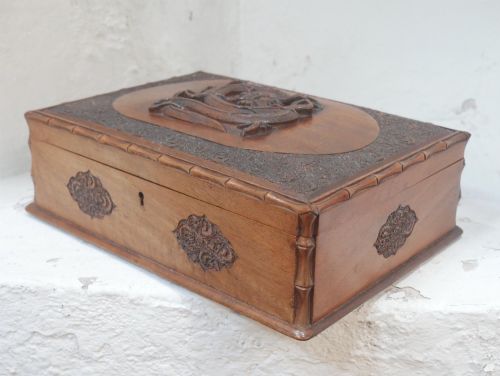
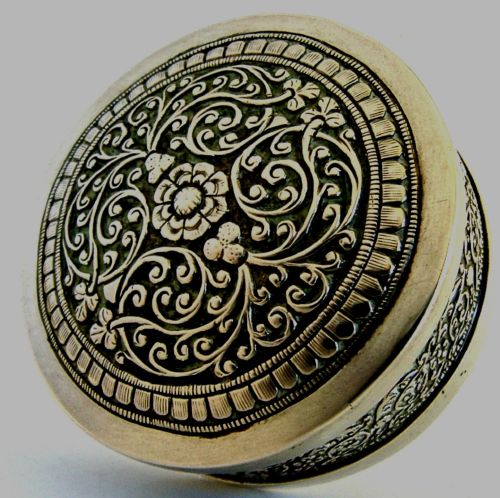
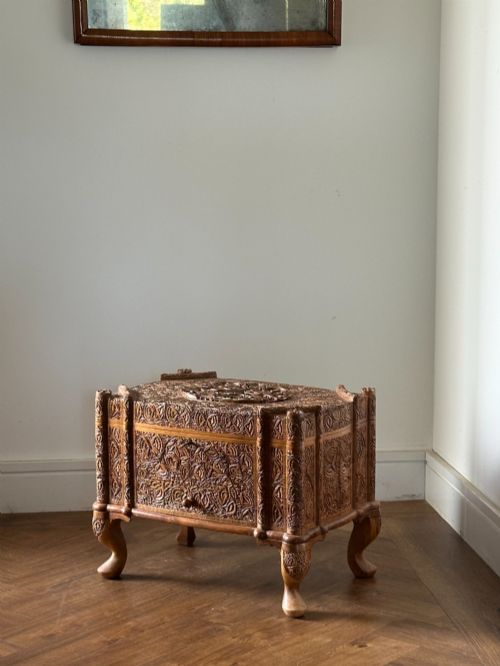
An antique indian carved box encompasses a diverse array of lidded containers, from small trinket boxes and jewellery caskets to substantial dowry chests and writing slopes. The examples found here span the nineteenth and early twentieth centuries, reflecting traditional domestic and ceremonial storage across different regions.
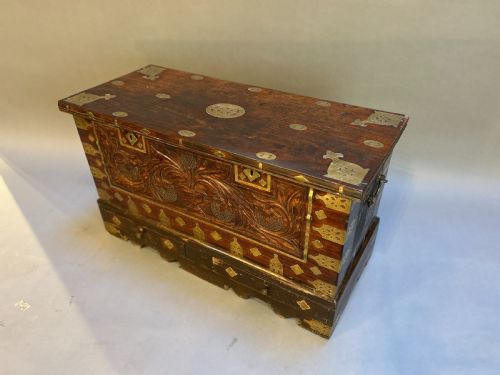
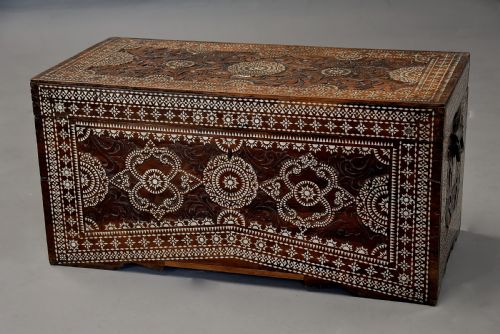
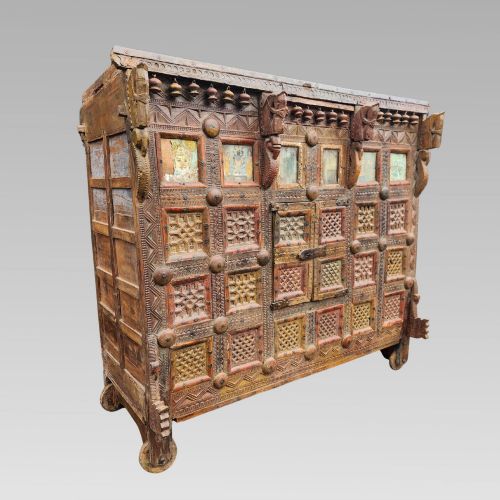
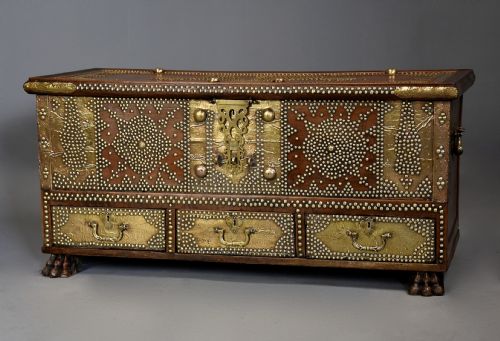
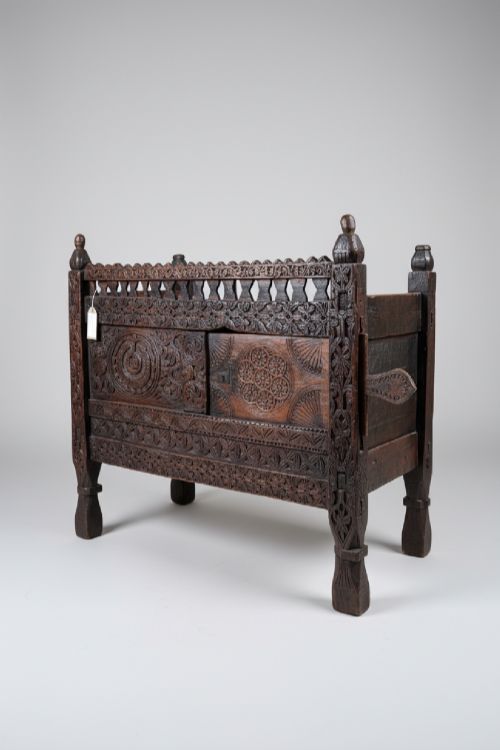
Buyers frequently encounter Anglo-Indian variations alongside robust local forms like the Damchiya dowry chest and Zanzibar chest. These objects served practical storage purposes for spices, documents, and valuables, combining utilitarian function with dense surface ornament.
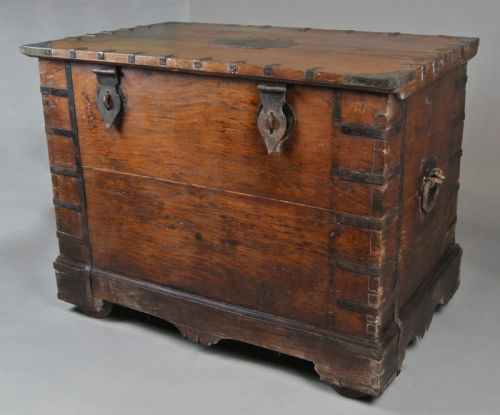
The selection ranges from intimate sandalwood and porcupine quill boxes to heavy teak and iron-bound coffers. Each piece demonstrates specific regional traditions, drawing on stylistic idioms from the Swat Valley to Ceylon.
What Varies in Quality
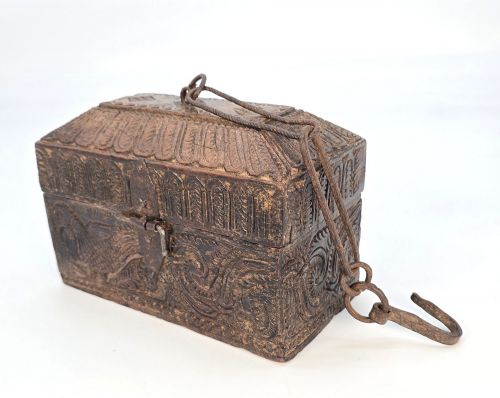
Quality rests primarily in the depth, precision, and sharpness of the carved detail. Master carvers achieved clean undercutting and high relief that create deep shadow and tactile richness, whereas lesser work appears shallow and flat.
The selection of materials also dictates standing, with dense solid ebonies, fragrant sandalwoods, and intricate porcupine quill work commanding greater appreciation. Original hardware, intact internal fittings, and surviving secret compartments elevate the standing of individual writing boxes and chests.
Antique Indian Carved Box Retail Price Guide 2026
Typical asking prices for indian carved box among the pieces listed under this phrase on Sellingantiques today, from the lower quarter to the upper quarter. They describe what is for sale here now, not the wider market.
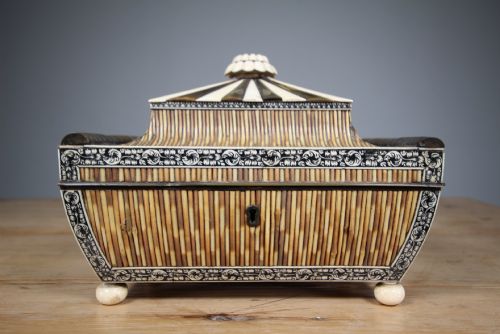
Porcupine quill boxes transform prickly quills into surprisingly smooth geometric mosaics.
The Antique Indian Carved Box Glossary
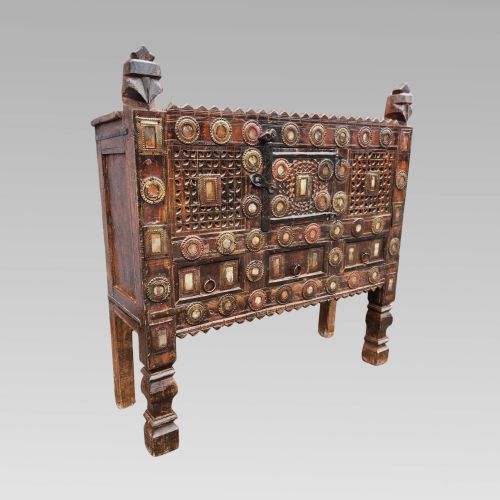
- Damchiya
- A traditional low wooden dowry chest or storage cabinet from Rajasthan, often featuring carved panels and heavy iron banding. These regional pieces served as essential marriage furniture.
- Sarcophagus
- A box shape characterised by a domed or sloping lid resting on a rectangular base, frequently seen on nineteenth-century writing slopes and jewellery caskets.
- Porcupine Quill Box
- A decorative container adorned with alternating sections of porcupine quill and contrasting light woods or bone, largely associated with nineteenth-century Ceylonese craftsmanship.
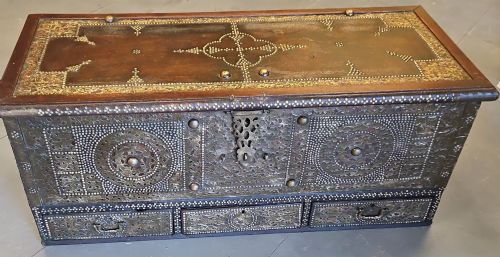
- Zanzibar Chest
- A heavy hardwood storage chest featuring brass studding, strapwork hinges, and often a central partitioned drawer, reflecting trade routes between India and East Africa.
- Writing Slope
- A portable desk with a hinged, slanted lid that opens to reveal a lined writing surface, inkwell compartments, and secret drawers.
Antique Indian Carved Box: Frequently Asked Questions
How were these boxes used?
These boxes held valuable personal items, correspondence, spices, and textiles. Smaller caskets preserved jewellery and trinkets, while massive chests stored dowry goods and household valuables.
Writing boxes doubled as portable desks for letter writing during travel or colonial service. Their internal compartments kept ink, nibs, and paper secure.
What woods are most common?
Teak and sandalwood appear frequently, alongside exotic dense hardwoods like ebony and padouk. Ceylonese pieces often utilise camphor wood and satinwood.
Carvers selected these timbers for their stability, grain patterns, and ability to hold crisp, intricate relief carving over centuries.
How do I care for carved wood?
Keep wooden boxes away from direct sunlight and sudden temperature shifts to prevent splitting in the dry grain. Dust gently with a soft, dry brush to protect delicate carved undercuts.
Avoid applying modern polishes or oils, which can build up within the recessed carving and darken the natural patina of the wood.
What defines Anglo-Indian style?
Anglo-Indian style blends traditional South Asian carving techniques with European furniture forms popular during the nineteenth century. This fusion created portable writing boxes, sarcophagus caskets, and stationery chests tailored for British tastes.
Local artisans applied dense floral and geometric motifs to familiar Western furniture shapes using native timber.